Why is the Manaslu Trek Popular for a Private Trek in Nepal?
The Manaslu Trek offers a rare balance of wilderness isolation, Tibetan Buddhist culture, and majestic mountain scenery dominated by Mt. Manaslu (8,163 meters)—the world's eighth-highest peak. Most newly married couples planning a trip to Nepal are drawn to standard beach resorts or heavily commercialized trekking routes. But couples who love nature and outdoor challenges may find commercial trails crowded and disengaging.
In recent years, more couples looking for a quieter, more personal trek in Nepal have chosen the Manaslu Circuit. Instead of navigating jammed trails and crowded teahouses on the standard commercial routes, Manaslu gives you space, silence, and the freedom to move at your own pace. It feels raw, unhurried, and authentic—a chance to truly connect while surrounded by vast wilderness.
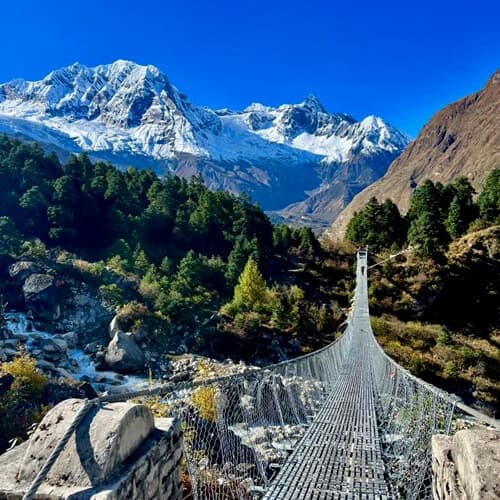
Part of what makes this route work so well for two people—even if it’s your first high-altitude journey together—is how naturally the elevation builds. You start low in warm, green river valleys, giving your bodies time to adjust step by step without feeling rushed or overwhelmed. Day by day, as the trail winds along rushing mountain rivers and through dense forests, the scenery gradually opens up until you stand beneath towering Himalayan peaks.
Apart from the spectacular mountain vistas, you are also treated to the local mountain village life. The trail leads you through high-altitude stone villages with a long tradition of Tibetan Buddhism, where you will find local people and families coming out to meet you in their teahouses and share with you their simple hospitality.
This adds a whole new dimension to the trekking experience, providing a genuine insight into the lives of these remote mountain residents. Stopping for a hot drink in a local village on a cold afternoon or evening, or simply watching the sunset from a remote village as it sinks behind the world's highest peak, is an experience you won't forget.
Latest Updates Regarding Manaslu Trek Route
A sudden flash flood at Therang Khola near Namrung washed out the Suksam suspension bridge over the Budhi Gandaki River, briefly cutting off the main route. But within just four days, crews and villagers in Chumnubri Ward 4 built a sturdy temporary wooden bridge using local timber and traditional building techniques.
According to Ward Chairperson Pema Gyalpo Lama, a short detour bridges the gap seamlessly. Trekkers can now push up toward Samagaun and tackle the 5,160-meter Larke Pass right on schedule.
Quick Trail Notes for Your Trip:
- Current Route: Follow the local signs near Namrung to cross the new wooden bridge; the bypass adds only a slight detour before rejoining the main path.
- Trail Conditions: The trail remains safe, but late monsoon runoff means rivers run high. Always trek with a licensed guide—a mandatory rule for the Manaslu Restricted Area Permit (RAP)—and check local weather updates before heading to higher elevations.
Why is Manaslu the perfect getaway for couples?
Trekking around Mt. Manaslu used to be considered for experienced trekkers only. Today, it has quickly earned a reputation as one of Nepal’s best choices for couples seeking an adventure that combines quiet mountain trails with comfort and relaxation.
Here is why more couples are skipping the heavily commercialized circuits and choosing a private Manaslu trek instead:
Real Trail Solitude Without the Crowds
If you have ever trekked the popular routes in the Everest or Annapurna regions, you know how busy they can get—narrow paths choked with mule trains, noise, and steady streams of large tour groups. Because the government restricts entry by issuing only limited area passes, Manaslu feels totally different. The number of hikers is just about 7,000 to 8,000 per year, compared to over 180,000 in Annapurna. You can enjoy trails of silence, wide-open vistas, and the time to chat, listen to the nature around you, and enjoy each other's company.
Gradual Elevation Gain
High-altitude sickness can quickly ruin a trip. Unlike treks where you fly straight into high altitudes (like landing at Lukla at 2,860 meters), the Manaslu Trek starts down at Machha Khola around 900 meters. The trail follows the Budhi Gandaki river valley which gradually rises, passing through dense forests and gorges for a few days until it reaches the alpine region. This gentle slope allows your body and lungs to slowly adapt to the altitude. By the time you land at Samagaun (3,530m) for a well-deserved rest day, your body will have been acclimatized appropriately to save you from any altitude-related illness.
Upgraded Lodges with Upgraded Facilities
The teahouses along the Manaslu route have improved significantly in recent years. Villages like Jagat, Deng, Namrung, and Lho now feature family-run lodges offering private rooms with clean beds, warm blankets, and furniture. In lower villages like Jagat or Namrung, you can even stay at places like the Nubri Four Season Resort or Majestic Manaslu, which offer attached bathrooms and reliable hot gas showers. Having your own quiet space to wash up and relax after six hours on the trail makes a massive difference in how comfortable you feel throughout the trip.
Deep Cultural Roots Preserved by Restricted Status
The trail passes through the Nubri Valley where age-old Tibetan Buddhist traditions are preserved due to the area’s restriction to tourists. Thus, your journey will be a true pilgrimage through authentic communities that are used to a simple way of life. Following ancient traditions, locals create unique stone mani walls with their own hands, spin weathered prayer wheels, and decorate the valley’s high mountains with colorful prayer flags. Additionally, a short walk from the village of Lho towards the fascinating Ribung Gompa monastery will offer a stunning view of the double summit of 8,163-meter-high Mount Manaslu, which will stick in your heart long after you have left the trail.
The Right Mix of Challenge, Comfort, and Connection
A mountain honeymoon should be an achievement to be celebrated, not a battle to be fought and won. Manaslu offers the perfect balance between challenging climbs and high-altitude adventure without giving up the comforts of home. At the end of each day, you can sit down in a heated dining hall, surrounded by a central wood-burning stove, enjoy freshly prepared and hot meals, and rest in a private room. This is a celebration of your union. It takes effort, builds attachment, and creates wonderful memories.
Fun and Romantic Things to Do for Couples (Honeymoon)
Trekking around Manaslu isn't just about logging hard miles. It’s about slowing down together in raw, quiet places far removed from everyday busy life.
Catching the Golden Hour Over Mt. Manaslu
In the higher villages, Lho and Samagaun it is magical to be able to witness late afternoon sunsets. Around 5:00 pm, you can put on your warmest down jackets, order a hot ginger-lemon tea from the local teahouse, and head up to the open terrace to see the 8,163-meter peak glow from cold white ice to deeper golds and pinks. It is a wondrous experience to share with the cold, but an intimate one nonetheless.
Write a Travel Journal
Bring a small paper notebook on the trail. Each evening, while sitting near the warm stove in the communal dining room, pass the book back and forth. Write down the day's highlights, funny trail incidents, or quick notes to one another. Reading those handwritten pages years later brings the trail right back to life.
Take It Slow at Scenic Stops: Lho, Samagaun, and Birendra Lake
Don't rush through the upper Nubri Valley to check off distance. In Lho, wake up early and walk hand in hand up to Ribung Monastery for front-row views of Manaslu’s north face. When you reach Samagaun, use your rest day for an acclimatization hike to Birendra Lake (3,620m). Sitting together by the turquoise glacial water, listening to the crack of distant ice walls with no crowds around, is one of the quietest highlights of the whole circuit.
Celebrate Crossing Larkya La Pass (5,160m)
It takes a lot of teamwork to get to the top: you'll set off from your lodgings at around 3:30 in the morning, navigating your way up the glacier through darkness, breathing cold mountain air and keeping pace with your companion. It's all worth it when you arrive at the pass, 16,900 feet above sea level, around the time that the sun breaks over the peaks in the distance, its pale light spilling over the horizon, and you tie a prayer flag to the summit cross and cherish a moment of triumph and wonder at the sheer majesty of your surroundings while on one of the highest trails in the world.
What Are Teahouses Like on the Manaslu Trek for Couples?
Accommodation in the Manaslu region consists of family-run mountain teahouses. It is an important part of the Manaslu Trek for couples, especially for comfort, privacy, and proper rest. Along the route, room quality improves as you move into the upper villages, and some places offer very good accommodation by trekking standards. Upon request, the teahouse can also arrange a honeymoon setup for a special night as per your preference.
Handpicked Lodges Booked by Outfitter Nepal
- Machha Khola (870m): Tsum Valley Guest House or Hilltop Guest House. Both have clean private rooms with attached bathroom options and hot showers.
- Jagat (1,340m): Rubii Nala Guest House or Jagat Guest House. Both have comfortable stone lodges with good dining and clean sanitation.
- Namrung (2,630m): Nubri Four Season Resort – One of the trek's standout comfort lodges, offering wood-paneled private rooms, cozy mattresses, and superior dining.
- Lho (3,180m): Majestic Manaslu – Features private rooms directly facing the sunrise over Mt. Manaslu.
- Samagaun (3,530m): Peace Heaven Guest House or Sama Gaun Guest House – Spacious dining halls, hearty menus, and comfortable bedding.
- Samdo (3,860m): Yak Hotel or Tibetan Twin Hotel – Cozy, high-altitude wooden partition rooms built to shelter against night winds.
- Dharamsala / High Camp (4,460m): Jambala Guest House or Ganga Manaslu – Basic high-camp stone shelters; cozy but rustic, built strictly for rest before crossing the pass.
- Bhimthang (3,720m): Mountain Ponker Cottage – Welcoming lodges set in a broad alpine meadow, perfect for celebrating after crossing Larkya La Pass.
What Special Honeymoon Setups and Mountain Dining Can Couples Expect?
Although trekking in the wilderness is a thrilling experience, it doesn't mean that a couple cannot enjoy a romantic setting or have proper nourishment. Outfitter Nepal offers services that can be incorporated into their private itineraries to make the journey of a traveler into a celebration.
Special Services for Couples
- Hot Water Bottle Sleeping Service: High-altitude teahouse bedrooms do not have central heating. Every evening after dinner, your guide fills rubber hot water bottles to tuck into your sleeping bags, keeping your bed warm through cold alpine nights.
- Private Scorpio 4WD Transfers: Instead of taking dusty, crowded public buses on rough mountain roads, you travel comfortably in a private 4WD Scorpio Jeep from Kathmandu directly to the trailhead and back.
- Post-pass celebration in Bhimthang: After a successful cross of Larkya La Pass (5,106m), your guide will throw a little private party for you at the Bhimthang lodge, where they serve hot appetizers, local apple brandy or wine and fresh baked desserts.
What are the meal options like?
Meal options for couples on the Manaslu trek involve simple, calorie-dense teahouse food. The menu options in the teahouses feature a mixture of traditional, Nepali, and Western delicacies. You can also request special meal items and beverages during your stay, which your trek operator will arrange.
BREAKFAST
- Freshly baked Tibetan bread served with wild honey or jam.
- Free-range eggs (scrambled, fried, or boiled)
- Warm porridge or muesli with hot milk
- Hot ginger-lemon-honey tea or fresh coffee
LUNCH & DINNER
- Traditional Dal Bhat: Steamed rice, lentil soup, vegetables, and fresh pickles (unlimited refills included!)
- Freshly prepared garlic soup (a natural local remedy for altitude)
- Vegetable momos (dumplings), Tibetan thukpa noodle soup, or pasta
- Hot herbal teas and seasonal fruit desserts served in the evening.
When Is the Best Time to Trek Manaslu?
Spring and autumn are widely considered the best seasons for the Manaslu Trek because of stable weather, clearer mountain views, moderate temperatures, and safer trail conditions. As autumn begins, summer rains have just scrubbed the air clean of dust, giving you razor-sharp mountain visibility and firm, dry trails underfoot.
Spring (March to May) on the other hand brings a completely different vibe, with lower valley trails bursting open in blooming red and pink rhododendron forests. You will also have mesmerizing views of the surrounding mountains and the landscape.
Besides, if you venture out in winter, you get quiet, empty trails and stark blue skies, but you'll be fighting chilly winds and potential snow blockades at Larkya La. Similarly, in summer or monsoon season, the lower Budhi Gandaki gorge becomes slippery with occasional landslides and muddy roads—making it tough for most trekkers.
How Difficult is the Manaslu Circuit Trek for Couples
The Manaslu Trek is moderately difficult to challenge (about a 6–7 out of 10), making it an achievable yet demanding adventure for couples with reasonable physical fitness and good stamina. Here is a quick outlook on what you will experience on the journey ahead.
Bumpy Road Sections
Your journey will start with a bumpy 4WD jeep ride from Kathmandu to the Machha Khola Valley. The trail follows the river up towards Philim and consists of a dirt road. Although this is not the most scenic part of the hike, the gradual climb up from the river basin will help your body to get used to the altitude changes and prepare you for the more challenging climbs ahead.
The First Three Days Are Demanding
This section is the hardest on the first few days as you take the longest trails. Couples can expect to walk for 18 to 20 kilometers per day, which takes about 6 to 8 hours. It is a steep climb from the Budhi Gandaki gorge through Machha Khola (900m) to Jagat (1,340m). These trails are quite challenging on the body, especially since it is warmer at lower altitudes.
Crossing Larkya La Pass: The Big Test
The most challenging part of the circuit is crossing the Larkya La Pass at 5,160m (16,929ft). This involves an early-morning start (3:00 am) from Dharamsala High Camp (4,460m) and a strenuous hike over rocks and snow. Technical climbing or ropes are not required, but it is an 8- to 9-hour day hike that will test one's endurance in the cold and the altitude.
Where is Manaslu Circuit Trekking?
The journey to the world’s eighth-highest peak at 8,163 meters is one of the Himalayas’ most rewarding treks. The trail starts down in the lush Budhi Gandaki River gorges, climbing steadily through subtropical woods and quiet pine forests before opening into the stark, high-altitude snowscapes around Larkya La Pass at 5,160 meters. From the pass, you get a front-row view of Manaslu’s towering summit, rivaling any sight in Nepal.
Manaslu Trekking offers the same spectacular mountain scenery as the Everest Base Camp or Annapurna Circuit treks, with the major difference being the solitude. Because of restricted-area rules that require a guide and special permits, crowds are few and far between. And family-owned and run teahouses are abundant on the trail, providing quality dining and sleeping facilities. A challenging yet rewarding trek, Manaslu is a great option if you are looking for an alternative to the other popular treks in Nepal.
14 Days Custom Private Manaslu Honeymoon Trek Itinerary
This 14-day itinerary is structured specifically for couples, ensuring proper acclimatization, comfortable walking distances, and time to enjoy the journey together.
Day 1: Arrival in Kathmandu (1,345m). Your guide will pick you up from the airport in a private vehicle and take you to the hotel in Thamel.
Day 2: Drive Kathmandu to Machha Khola (870m) | ~8–9 hours. Travel comfortably in a private 4WD Scorpio Jeep past terraced hillsides and along the Budhi Gandaki River gorge directly to Machha Khola.
Day 3: Trek Machha Khola to Jagat (1,340m) | ~6–7 hours. Cross suspension bridges over turquoise rivers and pause at Tatopani to soak your feet in natural riverside hot springs before reaching the stone-paved village of Jagat.
Day 4: Trek Jagat to Deng (1,860m) | ~6–7 hours. Enter the bamboo and pine forests of the gorge, crossing the river multiple times as the valley narrows.
Day 5: Trek Deng to Namrung (2,630m) | ~6–7 hours. Ascend into the Nubri Valley, where the culture transitions into traditional Tibetan Buddhism. Settle into the Nubri Four Season Resort for a comfortable night.
Day 6: Trek Namrung to Lho (3,180m) | ~4–5 hours. A scenic walk brings you to Lho. Explore Ribung Gompa in the afternoon and watch the sunset over the summit of Mt. Manaslu from your lodge.
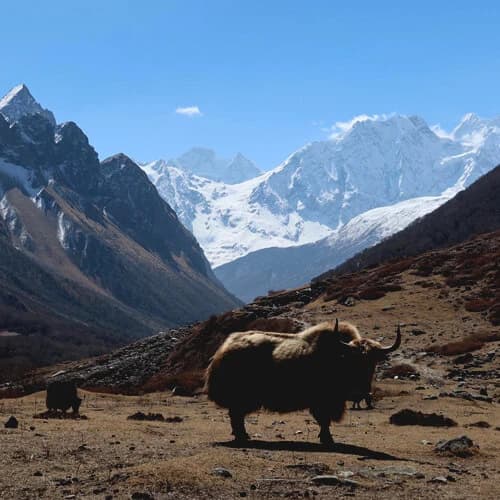
Day 7: Trek Lho to Samagaun (3,530m) | ~4–5 hours. Walk past ancient mani walls and yak pastures into Samagaun, the largest Tibetan village along the route.
Day 8: Acclimatization Day in Samagaun (3,530m) Take a quiet morning walk hand-in-hand to Birendra Lake, a glacial lake sitting directly beneath the icefalls of Manaslu.
Day 9: Trek Samagaun to Samdo (3,860m) | ~3–4 hours. A short, easy walking day designed to protect your lungs and body as you move closer to 4,000 meters.
Day 10: Trek Samdo to Dharamsala / Larkya Phedi (4,460m) | ~4 hours. Ascend gradually toward the high camp. Rest early at your lodge to prepare for tomorrow's pass crossing.
Day 11: Cross Larkya La Pass (5,106m) to Bhimthang (3,590m) | ~8–9 hours. Start early under a starry sky. Ascend along glacial moraines to reach the prayer-flag-draped summit of Larkya La Pass (5,106m), taking in views of Himlung Himal, Cheo Himal, and Annapurna II. Descend into the alpine meadows of Bhimthang for a well-earned celebration.
Day 12: Trek Bhimthang to Dharapani (1,860m) | ~6–7 hours. Descend through rhododendron and pine forests along the Dudh Khola stream to Dharapani.
Day 13: Drive Dharapani to Kathmandu | ~8–9 hours. Board your private jeep for a smooth return drive to Kathmandu. Check back into your hotel for a relaxing evening.
Day 14: Farewell & International Departure. Enjoy breakfast at your hotel before your private transfer takes you to the airport for your flight home.
Can I make a Last Minute Booking?
We can certainly accommodate you if you give us your preferred start dates. We will check availability of your preferred guides, permits, and timings and let you know.
While it's best if you book a few weeks ahead so that we can get you the best local guides and private jeeps during the busy autumn and spring seasons.
The only limiting factor for a last minute booking is your Restricted Area Permit (RAP) from the Department of Immigration in Kathmandu. We can process this for you normally as long as you give us notice 2 business days before your intended start date.
We only need your actual passports and visa information to be sent to us in Kathmandu so that we can apply for your permits, which takes about 24-48 hours.
Is there a risk of altitude sickness? How to prevent it?
Altitude sickness occurs when the body struggles to adjust to the lower oxygen levels at higher elevations. The risk becomes significant above approximately 2,500 meters (8,202 feet), although some people can develop altitude illness at lower elevations.
On the Manaslu Trek, the route first reaches this range at Namrung, around 2,630 meters (8,629 feet). From Namrung, the trail rises quickly toward Shyala at 3,500 meters (11,483 feet) and Samagaun at 3,530 meters (11,581 feet).
This is where trekkers should start paying closer attention to symptoms of altitude illness.
Watch out for these common warning signs:
- A stubborn, throbbing headache (typically the very first sign)
- Dizziness, lightheadedness, or feeling off-balance
- Nausea, an upset stomach, or vomiting
- A complete loss of appetite
- Extreme fatigue and feeling drained of energy
- Shortness of breath during basic movements
- Trouble sleeping or waking up repeatedly gasping for air
- General muscle aches and heavy limbs
Red Flag Symptoms You Can't Ignore
If mild symptoms are brushed off, altitude sickness can escalate into two life-threatening emergencies:
- High Altitude Pulmonary Edema (HAPE): Fluid builds up inside the lungs. Watch for a persistent cough, extreme breathlessness while sitting still, chest tightness, and a rattling sound in the chest.
- High Altitude Cerebral Edema (HACE): Fluid swells the brain. Watch for confusion, slurred speech, weird behavior, and a total loss of coordination (stumbling around like you're intoxicated).
Both HAPE and HACE require immediate descent. Waiting it out at high altitude can be fatal.
How to Prevent and Manage Altitude Sickness
- Pace yourself and walk slowly. Your guide will always encourage you to keep a slow, steady pace. If you're breathing too hard to hold a conversation, you're moving too fast.
- Drink 4 to 5 liters of fluids daily. The cold mountain air dehydrates you much faster than you realize. So, drink water periodically throughout the day.
- Eat a carb-heavy diet. Fill up on simple, warm meals high in carbohydrates (like rice, lentils, porridge, or pasta). Carbs require less oxygen for your body to break down and convert into energy than fats or proteins.
- Skip the alcohol, tobacco, and sleeping pills. Booze and sedatives slow down your breathing rate, which drops your blood oxygen levels even further—especially while you sleep.
- Follow the "Climb High, Sleep Low" rule. Build rest days into your itinerary. Take day hikes to higher viewpoints to expose your body to thinner air, then head back down to a lower altitude to sleep.
- Be honest with your guide. Never hide a headache or nausea to keep up with the group. Additionally, guides carry pulse oximeters to check your blood oxygen and know how to handle early warning signs.
- Drop down in elevation. The golden rule of high-altitude travel is simple: if you feel sick and rest doesn't help, go down. Heading down even 300 to 500 meters usually brings immediate relief and is the only guaranteed cure.
How to prepare yourself physically for the trek
You can use this preparation plan as a 12–16-week progressive training program to get ready for the Manaslu trek (elevation 5,106m at Larkya La Pass). This program builds fitness without overexhausting your body, which could lead to injury. Here’s how to get started.
Training during the first 4 weeks.
- Cardio: 30 to 40 minutes of easy walking, jogging, or cycling, three days a week to wake up your lungs.
- Strength: Stick to simple bodyweight moves—squats, lunges, and planks—to build core stability for carrying a daypack.
Weeks 5-8: Building Core Muscle Strength
- Cardio: Increase the duration to 45-60 minutes of incline cardio (treadmill, hills, or stairs).
- Rest & Recovery: Take a 30-40% reduction in overall workload to allow your body to peak at the right time.
- Trek Simulation: Take on 4- to 5-hour weekend hikes while carrying a 5- 8 kg pack. Getting used to your daypack early saves your back and shoulders later on.
Weeks 9–12
- Rest & Recovery: Take a 30-40% reduction in overall workload to allow your body to peak at the right time.
- Final Preparations: Get plenty of sleep, drink lots of water, and break in your boots and wool hiking socks. Check that your trekking poles are in good condition. You want to arrive in Nepal rested, energized, and ready to hike!
Get a Health Checkup Before Joining the Trek
It is advisable to get checked by a doctor before the trek. It's recommended that you get routine blood tests and make sure your heart and lung function are fine. This is because the atmospheric pressure and oxygen levels have a significant effect on your body.
It is very important to be absolutely frank with the doctor about the possibility of climbing up to Larkya La Pass (5,160 meters) if you have any heart or lung problem as the doctor can then help you calculate the risk or set a maximum altitude limit.
Lastly, keep all your personal daily medications in their original pharmacy packaging with the prescription label clearly visible. Pack them directly in your carry-on or daypack—never in porter duffels—and bring at least four or five extra days' worth of supplies to buffer against unexpected trail or weather delays.
Insurance and Emergency Evacuation Options
Before you embark on your Manaslu Circuit trek, it is vital that you get enough insurance coverage. The insurance that covers you at altitudes higher than 3,000 or 4,000 meters is mandatory as the permits from Nepal will only be issued if they know that you are covered.
Remember that most travel insurance policies provide a maximum payout of 3,000 or 4,000 meters. This is a problem if you go up Larkya La Pass at 5,160 meters. Make sure you get coverage up to 6,000 meters to ensure a sufficient margin of safety.
Always read the fine print in the actual policy document, and look for explicit inclusions of emergency helicopter rescue and high-altitude medical care. Because without proper coverage, an airlift out of high villages like Samagaun or Dharamsala easily runs anywhere from $3,000 to $7,000 out of pocket.
In case of an emergency, your trekking guide will assess the situation and inform the main office in Kathmandu of your condition and the nearest option of evacuation by helicopter if necessary. Your insurance company would then be contacted and billed directly. Note that often due to weather conditions – particularly thick fogs – flights may have to be postponed for hours or even days.
Speak up and tell your guide the moment you feel altitude symptoms so they can act while a weather window is open. Save offline copies of your policy on your phone, print out a paper copy for your jacket pocket, and hand your policy numbers to your agency before leaving Kathmandu.
What Permits and Legal Requirements Do Couples Need
for Manaslu?
Manaslu sits along the border with Tibet; Nepal’s Department of Immigration tightly controls who enters the region. You can't simply lace up your boots and head out on your own. Crossing into the trail requires three specific permits, an authorized Nepalese agency to handle the paperwork in Kathmandu, and a certified local guide. Here is how the system actually works on the ground:
The Essential Paperwork
- Restricted Area Permit (RAP): This is your primary border pass. Price tags shift with the season—expect USD $100 per week during the autumn rush (September through November) and USD $75 per week for the rest of the year. Only registered agencies can apply for this on your behalf.
- Manaslu Conservation Area Permit (MCAP): Flat fee of NPR 3,000 (around USD $22-$25) that goes towards the maintenance of trails within the conservation area, as well as supporting environmental conservation efforts and community initiatives in the region.
- Annapurna Conservation Area Permit (ACAP): Another NPR 3,000 entry fee. You need this because after crossing Larkya La Pass, the trail exits through Dharapani, bringing you into the Annapurna park boundary.
A quick heads-up: All three permits must be processed in Kathmandu before you hit the road. Checkpoints like the one in Jagat do not issue permits on the spot—if your documents aren't stamped in advance, you won't be allowed past the gate.
The Mandatory Guide Rule
By law, you must hire a licensed mountain guide accredited by a specific agency. Independent operators and local freelance guides do not have the authority to take hikers through military and police checkpoints in the Manaslu Valley.
While the old rules required at least two people on a trekking expedition to secure a Restricted Area Permit (RAP), recent immigration regulations allow solo travelers with an authorized agency guide to apply for the pass. So, whether you are a family of two or a solo adventurer, it is wise to hire a local guide as your authorized liaison in case of bad weather or topographical complications.
Packing List for Couples on the Manaslu Circuit Trek
Conquering the challenging Manaslu Circuit demands careful planning to ensure you're well equipped. The Manaslu trek also presents countless challenges, and conquering them requires thorough preparation. Packing the right gear for your trek is not only important for comfort, but also for safety in the unpredictable Himalayas. Therefore, we have compiled a list of things you can pack to tackle the trek's challenges without being weighed down by an overpacked backpack.
Layered Clothing (Per Person)
- 2 pairs of quick-dry trekking pants
- Thermal base layers (top & bottom)
- Fleece sweater or mid-layer
- Down jacket
- Windproof & waterproof shell jacket
- 3–4 Moisture-wicking T-shirts
- Warm beanie & brimmed sun hat
- 2 Pairs of gloves
- 4–5 pairs of wool trekking socks & moisture-wicking underwear
- Thermal sleepwear:
Footwear
- Broken-in trekking boots
- Camp shoes or sandals
Personal Care & Hygiene
- Basic travel toiletries
- Biodegradable wet wipes & hand sanitizer
- High-SPF sunscreen & zinc lip balm
- Sanitary products
- Quick-dry microfiber towel
Shared Gear for Couples
- First aid kit
- High-capacity power bank (20,000 mAh)
- Headlamps with spare batteries
- Water purification drops or SteriPEN:
- Small padlocks
- Trail snacks & electrolytes
Personal Backpack Gear
- 30L–40L Daypack
- Water bottles or hydration bladders
- UV-Protection sunglasses
- Trekking poles:
Essential Documents & Cash
- Passport & passport photos
- Permit copies
- Travel insurance documentation
- Nepalese Rupees (NPR) in cash
Worthwhile Side Trips
- Birendra Lake (3,620 m): A simple 45-minute walk from Sama Gaun brings you to this glacier-fed lake. The round trip takes about 2 to 3 hours, passing past yak pastures and a small monastery. It’s the easiest walk to stretch your legs on a rest day without draining your energy.
- Pungyen Gompa (4,050 m): Branching off the trail between Shyala and Sama Gaun, this historic Tibetan monastery sits on a high plateau right below Manaslu’s east face. It takes 5 to 6 hours round-trip through open alpine meadows, offering massive mountain views far away from the main crowd.
- Manaslu Base Camp (4,800 m): A steep, grueling 6 to 7-hour round-trip climb up loose glacial moraine directly above Sama Gaun. It is a physical test, but if you are feeling strong, it offers the single best altitude workout to prepare your lungs before heading higher.
- Tsum Valley: This is a multi-day trek extension rather than an afternoon detour. Exploring this ancient, sacred valley adds 7 to 10 extra days to your itinerary and requires a separate restricted area permit.
- Serang Gumba (3,100 m): Located in a quiet side valley near Bihi Phedi under the shadow of Shringi Himal, this 500-year-old monastery sits in a hidden spiritual sanctuary. Very few trekkers turn off here, making it one of the quietest stops along the entire region.
- Kal Tal / Kamochan Lake (3,680 m): A high mountain lake reached by a steep, 5- to 6-hour round-trip hike through pine forests starting from Prok village. Locals call it "Death Lake," but the open-water reflections are clear—leave early, as fog tends to cover the peaks by mid-morning.
- Hinang Gumba (3,120 m): Sitting just 20 minutes off the main trail near Lihi village, this active lama school rests against a backdrop of yellow pine forests and Mount Himalchuli. If you have extra time, you can follow the trail past the monastery up toward the Hinang Glacier.
- Milarepa’s Cave: This place is a sacred destination close to Sama Gaun, associated with the famous 11th-century Tibetan poet and yogi. The exploration also offers spectacular views of the surrounding ice fields.
- Rui La Pass (4,998 m): A 4- to 5-hour round-trip hike heading straight north from Samdo up to Border Pillar No. 35 on the Nepal–Tibet border. It gives you a look right onto the Tibetan plateau, though you should always check with your local guide about current border security before making the climb.
Final Thoughts
If you want a honeymoon that feels genuinely personal, the Manaslu Circuit makes a lot of sense for a couple. Because it’s a restricted zone that limits visitor numbers, you get a level of quiet you won't find on Nepal's more commercial routes.
A trip like this has a quiet intimacy, too. You give each other a hand on the steep climbs, share loving memories, and sit together in the evening watching the light shift across the high peaks.
And standing together at the top of Larkya La Pass at 5,160 meters gives you a shared accomplishment that stays with you long after the trip ends. It isn't a luxury resort vacation, but if you want a journey where you slow down, rely on each other, and create real memories, Manaslu is tough to beat.
Frequently Asked Questions
Is Manaslu Trek Honeymoon Package for couples suitable for first-time trekkers?
Yes, absolutely—as long as you have decent physical fitness, you can complete this trek. You don't need any technical climbing skills, but you must have the stamina to walk 4 to 6 hours a day over varied terrain. Your guide will also set a steady, comfortable pace with built-in acclimatization stops, making the ascent feel manageable and natural as you gain elevation.
Is Manaslu Private Couple Trek Safe for Couples?
It is completely safe because the trails are well marked, and several stops along the way have army checkpoints for search and rescue. And as per the restricted area permit rules of Nepal, solo trekking is not allowed. So, you will need to hire a local guide for the trek. They will be responsible for your safety and will be equipped with standard first aid and an oximeter to track your daily SpO2 and heart rate.
Do we get a porter on the Manaslu trek for couples?
Yes, you get a dedicated support team. You’ll have a personal porter who carries your main duffel bag (up to 20–22 kg total for the couple). That leaves you both carrying only light daypacks with water, a camera, and extra warmth layers.
Are private rooms with attached bathrooms available during the trek?
You will have a private twin room every night of the trip. In lower-elevation villages like Machha Khola and Jagat (below 2,500 m), many lodges provide private attached bathrooms with gas-heated hot showers. However, as you climb higher—particularly in places like Deng, Samagaun, and Dharamsala—facilities become simpler. In those high-altitude stops, bathrooms are shared, and bedrooms are unheated, so packing a cozy sleeping bag liner is recommended.
Can the Manaslu trek itinerary be customized for couples?
Yes, we can tailor every part of the schedule. You can build in extra rest days in scenic Tibetan villages like Samagaun—allowing time for side trips to Birendra Lake or Manaslu Base Camp—upgrade your hotel in Kathmandu, or arrange private jeep transfers to avoid public bus travel.
Do we need to pay an advance amount to book this trek?
You can secure your booking in advance with a 10% down payment and pay the full package price upon arrival in Kathmandu by cash, credit card, or bank transfer.