Why Timing Matters on the Annapurna Circuit?
The Annapurna Circuit is a diverse trekking experience that sets it apart from other high-altitude routes. It covers a distance of approximately 160 to 230 km (100 to 145 miles). The journey starts in the humid subtropical forests, saturated with lush vegetation, and leads to a high desert landscape that resembles an entirely different planet.
As a result, there is a shift in climate as you hike from lower to higher altitude areas. The weather patterns in the Besisahar and Chame regions are usually wet and warm, while those in the Ghorepani and Manang regions are normally cold and dry.
The geographical diversity of the region is why the "best time" is an important subject to discuss. The weather affects what you will see while trekking, as well as how safe the higher-altitude passes are and whether the trails are in good condition.
So, your choice of month will completely reshape your trekking experience. Being aware of the characteristics of a particular season helps you avoid harsh weather, crowded trails, and poor visibility, so you can get the most out of trekking the Annapurna Circuit.
By choosing the optimal window, you ensure that your Himalayan adventure is defined by breathtaking scenery and great memories.
Annapurna Circuit Trek in Spring and Autumn Season
Let’s dive deeper into the trekking conditions during the peak season to ensure you understand how the journey offers spectacular views and unforgettable moments!
Spring (March, April, May): Blooming Trails and Clear Skies
Spring is widely considered a prime time for embarking on the Annapurna Circuit, offering a near-perfect balance of mild weather and picturesque mountain views. As the region shakes off the deep chill of winter, trekkers are greeted by bright, sun-drenched days and a noticeable rise in temperature. The wind speed is around 5 to 15 km/h (3 to 9 mph) at higher elevations, especially near Thorong La Pass.
You may encounter snow or flurries at high elevations, but these usually melt quickly. The air feels fresh, the skies stay blue, and the climate becomes ideal for long treks. In the lower tropical zones around Besisahar, temperatures range from 15°C to 25°C, creating an ideal environment for local flora. The hillsides become a canvas, with rhododendrons in vivid red, pink, and white. You might spot the rare Himalayan blue poppy, the "Queen of the Himalayas."
Autumn Weather Conditions
| Daytime Temperature (Lower & Mid-Region) |
10°C to 20°C (50°F–68°F) |
| Night Temperature (Higher Elevations) |
–5°C to 5°C (23°F–41°F) |
| Precipitation |
Low rainfall with minimal snowfall |
| Trail Conditions |
Drytrails ideal for long trekking days
|
| Visibility |
Clear skies with pristine views of the mountains
|
Reasons to Choose Autumn
- After summer rains, you have clear, haze-free skies, perfect for photography of snow-capped peaks.
- Cool daytime temperatures and stable weather make crossing the Thorong La Pass safer.
- You’ll walk past revitalized forests and active waterfalls that are still booming from the recent rains.
- Dry trails during Autumn mean you can cover distances easily, without delays from mud or rain, making the trek more predictable.
Challenges of Trekking in Autumn
- Expect muddy trails on lower elevations, and use sturdy boots to avoid slips and falls so you can hike safely and comfortably.
- Use insect repellent as the forested areas have leeches and bugs.
- The rain increases the danger of landslides, rockfalls, and mudslides in the lowlands.
- Unexpected weather changes cause fog and thickening, disrupting mountain views.
- Book rooms in advance at higher elevations due to the high number of trekkers.
What is it like trekking the Annapurna during Summer and Winter?
While spring and autumn attract the vast majority of trekkers, the off-seasons of summer and winter offer a unique, raw, and often more solitary experience for the well-prepared adventurer. Choosing these months means buckling up for an unpredictable yet adrenaline-pumping experience through a showery atmosphere and frozen wilderness.
Annapurna Circuit in Summer/Monsoon: Solitude and Lush Scenery
While summer is often the least popular season, the region has a unique magic if you know what to expect. It coincides with the monsoon, meaning early June starts off warm and dry before transitioning into a period of frequent afternoon showers.
In July and August, rain intensifies, especially in the southern lower trails. The landscape becomes lush and vibrant.
Lower elevations like Besisahar and Chame get muddy, slick stone paths, requiring steady footing.
Humid forests become havens for leeches, which are mainly a nuisance. Heavy rain also swells rivers and, at times, raises the risk of landslides or mudslides on steep trails.
Monsoon brings thick clouds and fog, often obscuring views of the Himalayas and delaying flights. Still, for those who continue, the weather adds a fascinating contrast.
While the lower trails are hot and humid, the upper regions of the circuit remain surprisingly cool and dry. With average wind speeds hovering between 10 and 20 km/h, the air feels fresh, and the dust from the atmosphere and surrounding landscapes is entirely washed away.
Summer/Monsoon Weather Conditions
| Daytime Temperature |
15°C to 25°C (59°F–77°F) |
| Night Temperature |
6 °C to 14 °C (43 °F to 57 °F) |
| Sky & Visibility |
Often cloudy with mist and reduced visibility |
| Rainfall |
Frequent rainfall during afternoon, and evenings |
| Trail Conditions |
Wet and slippery in some sections |
Note: While mornings are clear and rainfall is less likely, travelers must be prepared with proper rain gear to safely trek during the Monsoon season.
Why can you trek during the Monsoon season?
While the monsoon might not seem like a favorable time for Himalayan trekking, the Annapurna Circuit hides a geographical secret that makes it a surprisingly viable choice for an experienced trekker. The key lies in the massive Annapurna Massif itself.
This giant wall of rock and ice acts as a formidable physical barrier, intercepting the moisture-heavy clouds rolling in from the south. This creates a "Rain Shadow" effect; while the southern slopes are drenched, the regions tucked behind the peaks stay remarkably dry.
While the lower regions, like Besisahar or Chame, remain wet and humid, the Manang valley and Muktinath remain dry in the rain shadow of the Annapurna and Dhaulagiri ranges. SO, you might lose out on the crisp, 360-degree mountain panoramas common in October, but you gain a unique, moody atmosphere and a glimpse into a side of the Himalayas that few others witness.
The advantages of trekking in the summer and Monsoon Season
The real reward for trekking in the summer is the profound sense of solitude. With very few hikers on the trail, you can experience the lush, rejuvenated vegetation in total peace. The teahouses are quiet, offering a more intimate glimpse into local life, and you may even find yourself taking advantage of seasonal discounts.
For the trekker who values a quiet, introspective journey over perfect summit photos, the monsoon window offers a rare, lush, and budget-friendly perspective of the world's highest mountains.
Is it Safe to trek the Annapurna Circuit in the monsoon?
Trekking the Annapurna Circuit in the monsoon is generally considered safe but high-risk, provided you are an experienced hiker or traveling with a professional guide. While it is not "dangerous" in the sense of being impossible, it requires a much higher level of vigilance than a spring or autumn trek.
Terrain Hazards: Slope instability is the biggest safety risk. Heavy rain can trigger landslides and mudslides, especially at lower elevations. To stay safe while hiking, you need to keep track of local trail conditions, since trails can sometimes be completely covered in debris due to washouts.
Logistical Risks: Isolation can also affect safety. Roads are often blocked, causing delays in transport. You will need to factor in sufficient buffer days and additional funds to cover unforeseen extra nights at tea houses.
Expert Recommendation: Most top-rated trekking agencies advise against solo trekking in the monsoon. A local guide is essential for navigating obscured trails in the fog and identifying the safest routes through landslide-prone zones.
Trekking the Annapurna Circuit in Winter (December, January, February)
If you are looking to trade the crowds for a world of silence, winter transforms the Annapurna region into a serene, high-altitude sanctuary. While it is an off-season, the landscape evolves into a winter wonderland, with a thick blanket of snow draping the peaks and valleys.
Because the air remains crisp and dry during these months, you are often rewarded with some of the clearest, most unobstructed views of the towering giants above. It is the perfect time for photographers to witness the mountains at their most raw and majestic.
However, this serenity comes with a challenge. Temperatures are at their lowest, typically plummeting to -10°C in the lower foothills and dropping as far as -20°C once you reach the higher elevations. February, in particular, is known for its piercing chill.
Beyond the cold, the trails themselves become difficult to navigate due to heavy snowfall, which can obscure paths or cause temporary closures. So, it is a season that demands a proper understanding of its risks, as the trekking becomes significantly more physical and technically demanding.
Winter Weather Conditions
| Daytime Temperature (Lower Elevations) |
8 °C to 14 °C (43 °F to 55 °F) |
| Daytime Temperature (Higher Elevations) |
5°C to 10°C (41°F–50°F) |
| Thorong La Pass |
Often snow-covered; may be difficult or temporarily closed |
| Night Temperature (High Altitude Areas) |
10°C to –20°C (14°F to –4°F) |
| Weather Stability |
Dry but extremely cold |
| Trail Conditions |
Snow-covered and icy terrains |
| Precipitation & Visibility |
Hazy atmosphere with beautiful views of the snowcapped mountains |
Navigating the Challenging Thorong La Pass
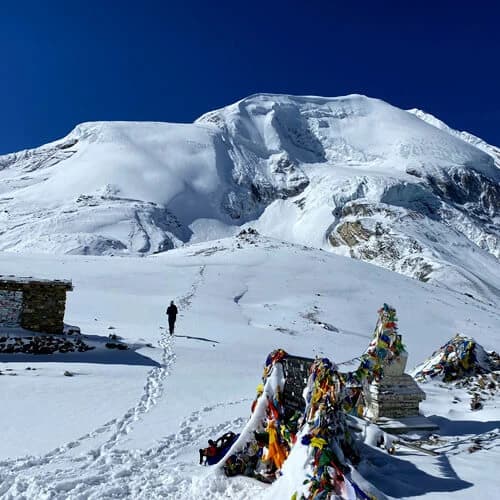
Temperature at Thorong La Pass in winter can plummet to -20°C or lower, turning the high-altitude landscape into a beautiful but dangerous frozen wilderness. Travelers have to begin the ascent early and stand beginning the descent by 2 PM to avoid dangerous high-altitude winds.
Ultimately, this environment demands the highest level of preparation, as the risk of hypothermia and frostbite becomes a very real threat for those without high-grade thermal gear. The terrain also poses a technical challenge for trekkers, as snow piles up on the trail, turning standard paths into icy, slippery hazards.
Taveling in these conditions safely requires specialized equipment, such as microspikes and crampons, to maintain a grip on the frozen ground. Beyond the footwork, the threat of avalanches and sudden snow blizzards is ever-present.
Besides, because heavy snowfall can block the pass entirely for weeks at a time, this is not a trek to be taken lightly or alone; it is strictly recommended for well-prepared hikers supported by professional guides who understand the mountain's shifting weather conditions.
Is winter trekking budget-friendly, and is it a safe option?
If you’re looking to save expenses, winter is actually the most affordable time to take on the Annapurna Circuit. Since it’s the off-season, you’ll find that prices for accommodation and services are at their lowest, making it a budget-friendly option.
Beyond the savings, the real "win" is the solitude; the trails are nearly empty, offering a tranquil and unmatched perspective of the Himalayas that most trekkers miss during the crowded peak seasons.
However, that peaceful travel experience comes with a serious reality check regarding safety. This isn't your hike; you’ll be facing cold winds between 10 and 25 km/h on exposed ridges and navigating trails that can be completely obscured by heavy snowfall.
The freezing temperatures and potential for significant snow at high altitudes mean this trek is strictly for those with plenty of experience and the mental grit to handle the elements.
Ultimately, whether it’s a "safe" option depends entirely on your preparation. If you have the right technical gear and the expertise to navigate harsh winter conditions, the reward is a breathtaking, snow-covered landscape that feels like your own private mountain range.
It’s a high-stakes challenge, but for the seasoned trekker, the combination of lower costs and stunning, silent vistas makes the winter struggle well worth the effort.
Effect of Rain/Snow line on crossing of Thorong La Pass
For trekkers starting the Annapurna Circuit, the "rain/snow line" is more than just a meteorological term; it's a crucial factor that dictates your daily gear and safety margins. This elevation marks the point where rain transforms into snow and ice.
Depending on the season, temperature fluctuations, and wind patterns, this line in the Annapurna region can range from 2,800 m to 5,500 m. Knowing where this shift occurs allows you to anticipate when a damp walk through the woods will turn into a grueling trek through deep snow.
The positioning of this line has a massive impact on the feasibility of crossing the Thorong La Pass, which sits at a formidable 5,416 m. During the colder months or during sudden weather shifts, the snow line drops significantly, often burying the trail under heavy drifts and making the pass inaccessible or highly dangerous due to avalanche risks.
On the other hand, during warmer trekking seasons, the line climbs higher, potentially leaving the pass free of deep snow and making the high-altitude crossing a much more manageable endeavor for well-prepared hikers.
Because this line is constantly in flux, successful navigation of the Annapurna region requires constant vigilance and tactical planning. Monitoring how the rain/snow line moves throughout the year helps you decide whether to pack light waterproofs or heavy-duty mountaineering boots.
By understanding these shifts, you can better time your ascent, ensuring that you reach the pass when conditions are at their most stable, rather than being caught off guard by a sudden descent of the snow line mid-trek.
| Season |
Rain/snow line altitude |
Impact on trail |
| Spring |
3,500 to 4,500 m (rising) |
Slippery path due to melting snow in early March. |
| Autumn |
5,000 to 3,800 m (falling) |
Dry and stable route |
| Summer/ Monsoon |
5,000 to 5,500 m (high) |
Wet and muddy trails |
| Winter |
2,800 to 3,500 m (low) |
Snow builds up on the route, and the pass is often closed. |
Packing Gear according to Seasons for Annapurna Circuit Trek
Preparing for the Annapurna Circuit will depend on the month you are traveling. As you’re moving through varied landscapes from subtropical heat to high-altitude alpine terrain at the Thorong La Pass, your backpack needs to be versatile for every situation.
So, a rule of thumb for a safe trek is to layer your clothes. Your gear must be made of high-quality, quick-drying fabrics that keep you comfortable as temperatures and weather shift throughout the day.
Here is a breakdown of what you’ll actually need out on the trail:
Core Gear for every season
- The Basics: Moisture-wicking base layers (tops and bottoms). Pair these with quick-dry trekking pants and a mix of insulation, like a fleece hoodie or a lightweight down jacket.
- Outer Shield: You need a high-quality, windproof, waterproof jacket and pants to block those high-altitude gusts.
- Footwear: Sturdy, trekking boots and sandals or camp shoes for the evenings. Also, pack several pairs of dedicated trekking socks to prevent blisters.
- Packs & Protection: A 50–65L backpack is a must, but if you have a porter, you'll just need a 25–35L daypack for your essentials. Always include a rain cover and a hydration bladder or water bottle.
- Accessories: A headlamp (with extra batteries), trekking poles to save your knees, and a "buff" or neck gaiter for dust and cold.
- Health & Hygiene: High-SPF sunscreen, polarized sunglasses, and a basic first aid kit. For toiletries, stick to the basics: biodegradable soap, wet wipes, and a quick-dry towel.
- Mandatory essentials you must have based on season
Spring (March – May)
- A sleeping bag rated to −10°C.
- Lightweight gloves and a beanie. If you struggle with allergies, bring a pollen mask for the blooming rhododendron forests at lower elevations.
Summer/Monsoon (June – August)
- Heavy-duty rain gear and dry bags for your electronics.
- Waterproof boots are vital, and a pair of lightweight trail shoes helps when things get muddy.
- Pack anti-leech socks and strong insect repellent for the lower, lush sections of the trek.
Autumn (September – November)
- You’ll need a three-layer system (base, mid, and outer) and a warmer down jacket.
- A heavier sleeping bag rated to −15°C.
- The air gets very dry; bring lip balm and heavy-duty moisturizer.
Winter (December – February)
- A heavy-duty down jacket, insulated trousers, and a sleeping bag rated to −20°C.
- Microspikes or crampons are essential for icy sections near the pass.
- Cold drains electronics fast, so bring an extra power bank and keep your batteries inside your sleeping bag at night.
Making your Decision for the Annapurna Circuit Trek 2026
Choosing the right moment to step onto the Annapurna Circuit is less about finding a "perfect" date on the calendar and more about matching the trek experience to your own preference. Whether you're chasing a photography opportunity or a quiet solitude in the Himalayas, the Annapurna region offers a different perspective and experience every few months.
Overall, there isn't a "wrong" time to begin the trek, only the choices that align with your goals. If you’re still confused and have a few lingering questions, the team at Outfitter Nepal is always ready to help you prepare for the trek and handle the logistics for your Annapurna journey.
Is solo trekking allowed on the Annapurna Circuit in 2026?
No, solo trekking for foreign nationals is strictly prohibited in most of Nepal’s high-altitude regions, including the Annapurna Conservation Area. As a result, all foreign trekkers must be accompanied by a licensed guide or part of a group organized through a registered trekking agency.
What are the ACAP permit requirements and costs for 2026?
The Annapurna Conservation Area Permit (ACAP) is mandatory for every trekker entering the region. For foreign nationals, the fee is 3,000 NPR, and for SAARC nationals, it is 1,000 NPR. Children under 10 do not require an ACAP permit. Please be aware that the permit is valid for a single entry and must be carried in physical form, as digital copies are often not accepted at remote checkpoints.
Is a guide mandatory for the Annapurna Circuit trek?
Yes, under the Mandatory Guide Policy 2026, hiring a government-licensed guide is now mandatory to ensure your safety on the trail. Additionally, he will provide essential support during weather disruptions, medical emergencies like AMS, and cultural translation.
What is the e-TIMS card, and is it required for 2026?
The digital e-TIMS (Trekkers' Information Management System) card has replaced the old paper "Green TIMS" for 2026. In the new system, only the Blue TIMS (for group/guided trekkers) exists. It includes a QR code storing your insurance details, emergency contacts, and guide license number. For foreign trekkers, the e-TIMS costs 2,000 NPR and must be issued through a registered trekking agency.
What are the New Annapurna Trekking Trails (NATT)?
The New Annapurna Trekking Trails (NATT) are a series of alternative paths designed to bypass the recently constructed motor roads in the Marsyangdi and Kali Gandaki valleys. These trails use traditional footpaths to keep trekkers in serene, road-free environments while offering superior views of peaks such as Annapurna II and Dhaulagiri. In 2026, using NATT trails is the definitive way to preserve the circuit's authentic "wilderness" feel.