“Lace up your running shoes and take on the world’s highest endurance challenge by joining the world's highest marathon right from Everest Base Camp. Every May 29th, runners from across the globe gather here to retrace the historic footsteps of Tenzing Norgay Sherpa and Sir Edmund Hillary.”
Everest Marathon Trek Highlights
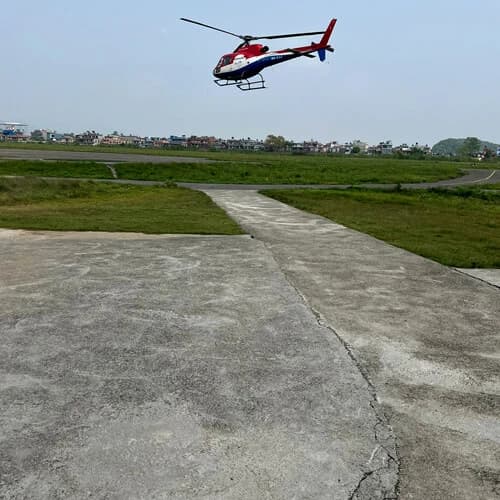
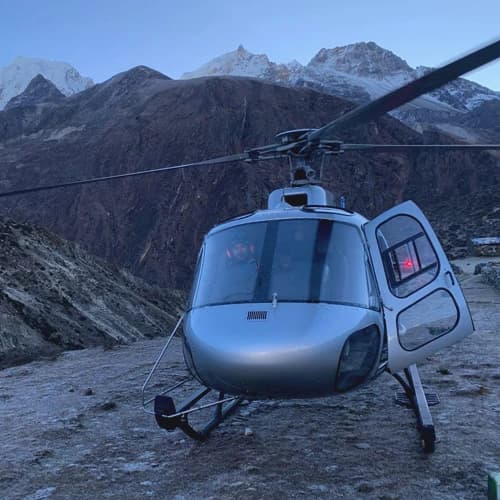
- Touch down at Tenzing-Hillary Airport (2,800m), the famous cliffside airstrip that serves as the gateway to the Khumbu region.
- Hike through Namche Bazaar, Tengboche, Phakding, Monjo and high alpine villages, giving your lungs two full weeks to adapt to thin air before race day.
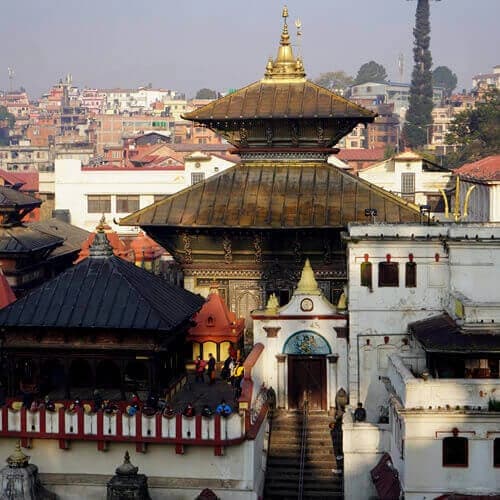
- Visit the spiritual heart of the Khumbu at 3,867 meters and get blessed by local monks beneath the peaks of Ama Dablam and Everest.
- Spend nights at Everest Base Camp (5,356m), sharing beautiful moments with international runners and expedition climbers right on the ice.
- Hike up to this legendary vantage point for up-close, panoramic views of Everest, Nuptse, and Lhotse.
- Line up on May 29th the historic date Tenzing Norgay and Sir Edmund Hillary climbed Everest in 1953 and run 42.195 km from Khumbu Icefall (5,356m) down to Namche Bazaar (3,440m).
- Choose the distance that fits your physical build: the 42km Full Marathon, the demanding 70km Extreme Ultra, or the 21km Half Marathon starting from Dingboche.
- Run in an eco-conscious event capped at roughly 250 runners to protect delicate alpine trails and support local Sherpa community initiatives.
Be part of the Everest Marathon Trek, the Highest in the World
Starting at an elevation of 5,364 meters near Everest Base Camp, the Tenzing Hillary Everest Marathon holds the official title as one of the world's highest. First organized in 1987, this high-altitude event takes place every year on May 29 to honor the historic 1953 first successful ascent of Mount Everest by Tenzing Norgay Sherpa and Sir Edmund Hillary. Today, it draws endurance runners from across the globe to Nepal for a rare combination of mountain heritage, physical challenge, and Himalayan culture.
The event begins with a multi-day trek through Sagarmatha National Park. Following the legendary trails through Sherpa settlements, participants adapt to the thin air before pitching their tents directly on the glacier at Everest Base Camp. Along the way, you will pass by villages like Khumjung & Khunde (3,790 m), Thame (3,900 m), Pangboche & Dingboche (3,985 m & 4,410 m), and Namche Bazaar (3,440 m).
The full 42.195-kilometer marathon trail winds through the Khumbu region before finishing at Namche Bazaar (3,446 meters). Leaving Base Camp the trail descends through Gorakshep down toward Dingboche, where runners complete a loop at Bibre before pushing past Kyanjuma to reach the finish line. While the general descent drops in elevation, running on narrow, rocky trekking trails requires sharp focus, controlled pacing, and extreme caution.
Consistently ranked among the top five hardest and most extreme marathons in the world, this race requires far more than typical endurance training. For instance, high altitude, freezing temperatures, and jagged mountain terrain push participants to their limits. Success on this trail comes down to mental resilience, careful altitude preparation, and physical conditioning rather than raw stamina.
What makes the Everest marathon so attractive is that you will get great satisfaction from overcoming the challenge. The experience of running marathons under the Himalayan peaks and the support of the local community of Sherpas is simply invaluable. This race is a journey that will take you through some of the most awe-inspiring landscapes in the world and test your personal limits.
What is the History of the Tenzing Hillary Everest Marathon?
In 1985, trekkers Jan Turner and Tony Hunt dreamed up the idea of a high-altitude race while hiking toward Everest Base Camp, leading to the first official run two years later, in 1987. By 2003, the event took on even deeper meaning when it was renamed the Tenzing Hillary Everest Marathon to mark 50 years since Sir Edmund Hillary and Tenzing Norgay first reached the summit. Today, this iconic annual event stands as one of the highest marathons on Earth, guiding runners along the same historic trails of Sagarmatha National Park that Everest's greatest pioneers once walked.
What is the Eligibility Criteria for 2027? Who can Participate?
The Everest Marathon is an extreme high-altitude challenge that tests you mentally as much as your endurance. Every year, fit adventure runners from across the globe gather at Everest Base Camp and share the start line with elite local Sherpa athletes known for their legendary mountain stamina. Because running at such high altitude carries real physiological risks, the eligibility rules, health checks, and prep protocols are strict and straightforward to keep everyone safe on the trail.
- Age Guidelines (18 to 65 Years)
To register, runners must be at least 18 years old by race day. The standard upper age limit is 65 (participants must be under 66 on race day), and you must not have any underlying cardiovascular conditions. If you fall outside this bracket but have extensive high-altitude endurance experience we can review exceptions on a case-by-case basis with prior fitness verification.
- Open to Fit Athletes & Endurance Enthusiasts
You don't need to be an elite marathoner to participate, but you do need solid endurance and strong physical fitness. The course winds through rugged, unpaved Himalayan trails, rocky steps and steep single-track descents. Prior experience with long-distance trail running or mountain trekking isn't strictly mandatory but it helps immensely. If you are physically fit, mentally resilient, and willing to train specifically for high-altitude adventure this race is open to you.
- Medical Clearance is Mandatory
Before stepping onto the trail every runner must provide an official medical clearance form signed by a licensed physician. This certificate must confirm that you are injury-free, in sound cardiorespiratory health and physically fit for strenuous activity in low-oxygen environments. Getting this health check early in your training regimen helps you prepare safely.
- Required High-Altitude Insurance
Standard travel policies rarely cover extreme outdoor activity at high elevation. All runners participating must have a comprehensive travel and medical insurance policy that explicitly covers high-altitude trekking, medical treatment and emergency helicopter evacuation above 5,000m in the Khumbu region.
- Mandatory Acclimatization Journey
Flying directly into Base Camp to run a marathon can lead to severe altitude sickness. We suggest that you give your body adequate time to rest and adapt to the increasing elevation. It is also crucial to maintain a steady pace and take plenty of rest along the way to avoid overexertion. For your safety our itinerary includes dedicated acclimatization rest days at Namche Bazaar and Dingboche. These extra rest stops significantly reduce the risk of Acute Mountain Sickness (AMS) ensuring you arrive at the starting line feeling strong, adapted and ready to run.
How to Register for the 2027 Everest Marathon in Nepal: Registration Steps
To help you get from application to the starting line smoothly, here is a simple step-by-step breakdown of how to register for the 2027 race, what documents you need and the key deadlines to keep in mind.
- Fill Out the Online Registration Form
Your first step toward the starting line is filling out the official application form. Because high-altitude regulations cap the total number of entries each year we recommend registering early to secure a slot and give you plenty of time to focus on physical training and altitude preparation.
- Submit All Mandatory Forms Before April 30, 2027
The participants of Everest Marathon 2027 should prepare and submit all the required documents by April 30, 2027. The race organizers request all the participants to get their three mandatory documents ready before this date to confirm their registration. The documents needed are:
- Your completed Registration Form
- A signed Medical Form
- Your Payment Confirmation Form
The early submission of the documents will ensure that you avoid any last-minute hassle with the necessary paperwork that will guarantee you a slot in the race and trek arrangements.
- Email Your Complete Document Package
After completing and cross-verifying all the mandatory forms, the participants are required to directly email the complete file package to the organizing team at [email protected]. With people joining the marathon from different parts of the world, it is essential that each one of them emails the complete file with all the necessary documents attached to the email.
- Provide a Valid Doctor-Signed Medical Certificate
The organizers strongly recommend giving a valid medical certificate signed by a doctor confirming that the participant is in good health with no injuries or underlying health conditions to ensure they can withstand the marathon in the mountainous terrain of the Himalayas.
- Complete Your KYC (Know Your Customer) Form
The participants need to submit their KYC (Know Your Customer) form, a short verification document for all international and local runners, to complete their registration confirmation. It is a mandatory step to cross-verify the details of the marathon runners in the medical and contact records to provide an organized and safe support system across the race route.
- Select Your Payment Method
The participants can make the payment offline through various digital platforms for the Everest Marathon registration. Choose your preferred mode of payment:
- Visa or MasterCard
- International Wire Transfer
- Bank Draft/Bank Wire Transfer
Save your receipt of the bank or card transaction and attach it to your email.
- Reserve Your Spot Early (Limited Runner Slots)
To maintain the safety measures and high-end management system at the Base Camp, Tenzing Hillary Everest marathon organization strictly follows a limited runner policy for every year’s event. The organizers recommend registering early as it is essential to secure your slot against last-minute cancellations. The first-come-first-served basis is followed for the registration process, and to be a part of the world’s highest marathon, it is essential to complete your paperwork early.
Have Questions? Let Outfitter Nepal Assist You
Navigating international race registration, high-altitude logistics, and trek itineraries can feel overwhelming. At Outfitter Nepal, our team is on the ground in Nepal and ready to help you every step of the way—from paperwork and permits to training advice and trail support. Feel free to reach out to us anytime to start planning your 2027 Everest Marathon journey!
How Your Participants Make a Positive Impact on the Environment
Taking part in the Everest Marathon is a direct initiative in favor of mountain conservation. As climate change rapidly alters the Himalayan landscape, this journey gives runners and trekkers a platform to draw global attention to rising temperatures, melting glaciers and fragile alpine ecosystems.
This marathon also makes a significant contribution to protecting and preserving the local environment because it helps to ensure the safety of many endangered animals such as the Himalayan musk deer and the Himalayan tahr. Moreover, during the marathon, thanks to measures aimed at preserving and protecting nature, animals’ habitats are saved from pollution, so mountain plants and flowers are saved from being trampled.
Finally, another factor that increases the importance of this event is that it allows for restoring and maintaining the natural landscape of the lower valleys. For example, you can sign up to participate in the marathon to help plant trees needed to hold back the erosion of the valleys and to restore the mountain ecosystem.
You can also join us as a Non-Runner.
You don’t need to race 26 miles to be a part of the Tenzing Hillary Everest Marathon. Every year, hundreds of non-runners join us to experience the electric energy of the world’s highest race. The trek itself is a real adventure as you’ll follow the classic trail from Lukla through Namche Bazaar, Deboche, Dingboche, and Lobuche to Gorakshep. While the runners head into Everest Base Camp (5,364m) to prepare for race day, trekkers who haven't participated in the marathon begin making their way back toward Namche to catch the big finish.
Before heading down, you'll still get the absolute best views of the trek. Before race day, you will climb Kala Patthar, a black rock peak at 5,545m right below Mt. Pumori, for a front-row, panoramic view of Mt. Everest (8,848m), Nuptse (7,861m), and Lhotse (8,516m). Once you descend to Namche for the finish line, the whole town turns into a celebration. You’ll join the Namche Women’s Group as they host local food stalls, traditional music, and colorful yak dances to welcome the runners home.
How much does the Everest Marathon Full Package Cost?
Our standard Tenzing–Hillary Everest Marathon package starts at USD 2,550 per person. This covers most major on-the-ground trip logistics. This includes accommodation across Nepal, daily meals throughout the journey, all required park permits, domestic flights, private ground transfers, licensed local guides and porters, and a memorable two-night tented camp stay right at Everest Base Camp.
Keep in mind that the final price may vary depending on the group size, trek duration, preferred accommodation standards and means of transportation. We believe in upfront, transparent pricing so you know exactly where your investment goes. For more information read our detailed "Cost Includes" and "Cost Excludes" sections below for the full breakdown.