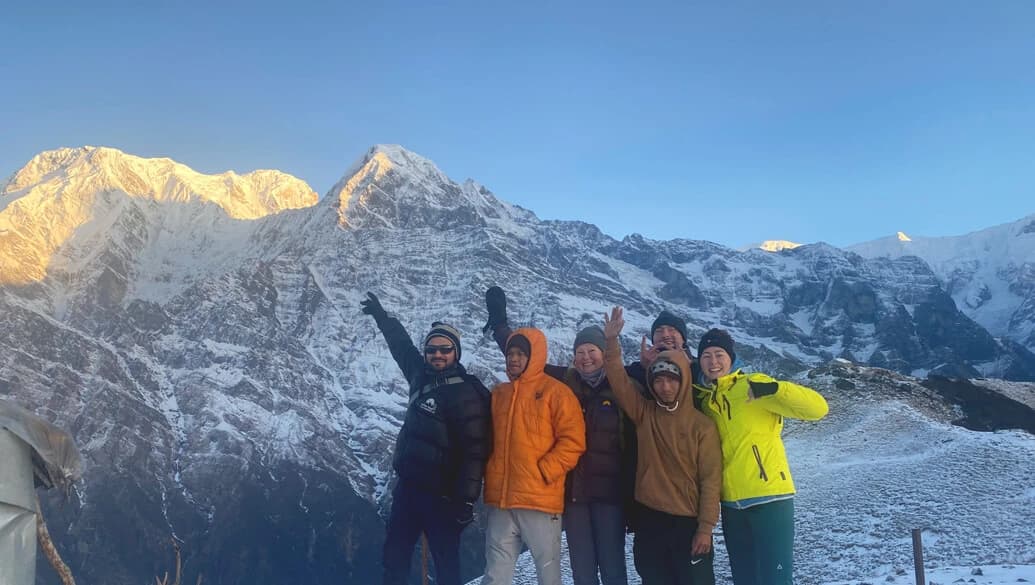










Mardi Himal Trek from Pokhara - 4 Days

4 Days Mardi Himal Trek from Pokhara Itinerary and cost for 2026/2027
Mardi Himal Trek from Pokhara

Conquer the 4 Days Mardi Himal Trek from Pokhara, a remarkable journey reaching the 4,500 m base camp with breathtaking Annapurna range panoramas. Suitable for beginners and active travelers, this short trek takes you to spectacular vantage points through lush forests and high alpine ridges. Secure your spot in our small-group departures, featuring a fully guided experience that includes all meals, trekking permits, and expert logistics.

facts icon

What to see & do

Specific information about Mardi Himal Trek from Pokhara - 4 Days
duration icon
Duration4 Days
grade icon
Trip GradeModerate
i
altitude icon
Max Altitude4500M
start icon
Starts atPokhara
end icon
Ends atPokhara
travel-style icon
Travel StyleLodge to Lodge Trek
group-size icon
Group Size10
transportation icon
TransportationPrivate Vehicles
cloud-sun-rain icon
Best SeasonMarch to May, and Sept to Dec

Key Highlights of the Mardi Himal Trek from Pokhara

  • Start the adventure in Pokhara, the gateway to many adventurous treks of the Annapurna region.
  • Leave the noisy tourist crowds behind for a path that is secluded, where the only sound is the breeze and your own footsteps.
  • Walk through trails decorated with shades of red and pink rhododendrons.
  • Varied landscapes that shift from lush green jungle to wind-swept rocky ridge as you hike further up the valley.
  • Experience local hospitality and learn about the culture and traditions of the Gurung and Magar people in villages like Sidding.
  • Stand face-to-face with the sacred Machhapuchhre peak (6,993 meters/22,943 feet) at High Camp (3,580 meters/11,745 feet).
  • Spend a memorable time at scenic vantage points like Low Camp and High Camp.

Overview 4 Days Mardi Himal Trek from Pokhara

The 4-day Mardi Himal Trek is a compact and outstanding alternative trek route in Nepal’s famous Annapurna region. You’ll reach a maximum altitude of (4500 m/14,763 ft) at the Mardi Himal Base Camp, making it a high-altitude adventure that fits perfectly into a short vacation. Starting with a beautiful but brief ride from Pokhara to Kande, the hike to Kokar and High Camp begins. From here, you will walk through rhododendron forests and eventually reach high ridges that make you feel like you’re standing right above the clouds.

Mardi Himal (5,587 m/18,330 ft) is one of the lesser-known hidden gems of the Annapurna region, offering stunning views throughout the trek. It’s an ideal choice for fit hikers, and beginners who want to see Machhapuchhre (Fishtail) and Annapurna South (7,219 m/23,684 ft) up close, but without having to deal with larger crowds that you would encounter on the more mainstream routes. You’ll be surrounded by snow-capped peaks and incredible natural diversity, making every step feel like a new discovery. The path takes you through beautiful alpine forests filled with oak, juniper, and colorful rhododendrons, which bloom in spring.

Along the way, you can spot some of the most famous mountains in the world, including Dhaulagiri (8,167 m/26,795 ft), Gangapurna (7,455 m/24,459 ft), and Hiunchuli (6,441 m/21,132 ft). The panoramic 360-degree views make this one of the best short treks in the country. This is also an excellent opportunity to experience local culture by passing through traditional Gurung and Magar villages, allowing participants to truly understand what it's like to live in the mountains and learn more about their customs and way of life.

If you’re looking for a trail that is both quiet and comfortable, this four-day itinerary delivers a real Himalayan experience in a fraction of the time. While other routes like the Annapurna Circuit have been popular for decades, this trail only officially opened in 2012. Since it is relatively new, the environment feels more pristine and less commercialized than the other popular commercial trails.

Witness the Mesmerizing Sunrise at Mardi Viewpoint

The Mardi Viewpoint (4,200 m/13,780 ft) is one of the best places in the Annapurna region to catch a Himalayan sunrise during your 4-day adventure. It sits on a dramatic ridge just below the Mardi Himal Base Camp at 4,500m, offering one of the most intimate views in the Annapurna region . To reach it, you will start a pre-dawn hike along a steep, rocky path that climbs quickly above the tree line. This short, early-morning push ensures you are standing on the ridge long before the first light touches the mountains.

Once the golden hour begins, the sight is truly magical as the sun paints Machhapuchhre (Fishtail) and Annapurna South in warm, glowing shades of yellow and gold. You will get an incredible close-up view of Hiunchuli and the Mardi Himal peak itself. The best part is the peaceful atmosphere; while Poon Hill and Annapurna Base Camp can be crowded, this viewpoint offers a tranquil setting with very few trekkers . It is the perfect moment to soak in the beauty of the Himalayas in total peace.

How Difficult is the 4 Days Mardi Himal trek?

The 4-day Mardi Himal Trek is generally classified as moderately challenging. While it’s a shorter journey than the ABC and Annapurna circuit trek, the condensed timeframe means you’ll be covering a lot of ground quickly, averaging 6 to 7 hours of trekking each day to reach the 4500m base camp.

To give you an honest look at what to expect, the difficulty often comes down to two specific sections. First, you'll face a rapid ascent on Day 2, where the trail climbs steeply from the rhododendron forests up toward High Camp. Because you are gaining altitude quickly, maintaining a steady, slow pace is vital to avoid altitude sickness. Second, you must prepare for the steep descent on Day 4 to Sidding. You will drop roughly 2500m in elevation in a single day, which can be quite punishing on your knees and ankles.

From a technical standpoint, the good news is that no technical climbing or mountaineering gear is required. However, for additional safety, we always warn that the path is not just a simple walk. You will navigate thousands of stone-paved stairs and traverse narrow ridgelines where the terrain can feel exposed and steep. On the other hand, during the monsoon, these trails become incredibly slippery and are prone to leeches, while winter can bring heavy snow and poor visibility above High Camp.

To safely pass these hurdles, we highly recommend hiring a professional guide and porter. Their service and professional touch will enhance your travel experience, and you won’t have to worry about any logistics issues as well. While this 4-day short version is perfect for fit travelers with limited time, we can always customize the journey to 5 or 6 days if you prefer a more stable, comfortable pace.

Can Beginners Trek to Mardi Himal from Pokhara?

If you are new to trekking, the Mardi Himal route is one of the best ways to experience the Himalayas without needing years of experience. This means you don’t need a background in professional climbing or trekking to reach the Mardi Himal Base Camp.

Compared to some of the more grueling high-altitude expeditions in Nepal, Mardi Himal is significantly more approachable. While you will certainly encounter some steep ridges and rugged paths along the way, the trail is generally considered manageable. A major advantage for beginners is that the elevation is not as extreme as other routes, which helps keep the risk of altitude sickness much lower.

However, even though it is beginner-friendly, you shouldn't skip your pre-trek workouts. A solid level of physical stamina is important because you’ll be walking about 6 to 7 hours each day on trails that consist of constant uphill and downhill sections. So, being in good shape will help you focus on the views rather than feeling physically or mentally drained by the end of the day.

Similarly, mental preparation is just as vital as physical fitness. You’ll be navigating unfamiliar terrain and changing mountain weather in a remote setting, which can be a new experience for many. We suggest you research and learn what to expect before you arrive, which will go a long way in building your confidence.

In addition to that, it’s a non-technical trek (you don’t carry ropes or climbing gear or need specialized technical climbing skills). The trails are very well-supported by many local teahouses who provide warm and simple accommodations. These two factors mean that all of this makes the experience much easier. Therefore, if you prepare properly and remain positive, then beginners can absolutely have a positive experience while on the Mardi Himal trek.

Why Choose the Mardi Himal Trek 4 Days?

  • Spectacular Mountain Views: Get ready for a front-row seat to iconic peaks like the sacred Machhapuchhre and the massive Annapurna range. This dramatic panorama creates memories that truly last a lifetime.
  • Exploring Nature and Wilderness: The trail and the scenery shift beautifully as you climb higher. You will wander from lush, green jungles into the quiet, rocky world of the high mountains.
  • Rich Biodiversity and Landscapes: In the spring, these forests come alive with the vibrant colors of blooming rhododendrons. The path takes you through ancient oak and bamboo woods before reaching the open alpine ridges.
  • Rural Lifestyle and Cultural Experience: Passing through villages like Dhampus and Siding is the perfect way to meet local Gurung and Magar families. It is a wonderful chance to see authentic mountain life and experience true Nepalese hospitality.
  • Accessible Fitness Levels: This trek is the ideal pick for busy travelers who still crave a real Himalayan adventure. It is a manageable route that welcomes leisure walkers and fits perfectly into a short 4-day trip.
  • Photography and Exploration: The dramatic ridges and golden sunrise moments offer endless inspiration for your photos. It is an incredible journey for anyone who loves telling stories through their camera lens.

How much does a 4-day Mardi Himal Trek Cost?

The cost for this short Himalayan adventure is actually quite reasonable. On average, a 4-day Mardi Himal trek starting and ending in Pokhara costs $295 to $600 per person. The final price usually depends on whether you are traveling alone or with a group. Most professional trekking packages are "all-inclusive," meaning they cover your mandatory Annapurna Conservation Area (ACAP) permit and TIMS card, your meals on the trail, teahouse accommodation, and the cost of a licensed local guide. Since the 4-day version is faster and skips the extra days of walking through lower villages, it is often more affordable than the longer 7-day itineraries.

Bookings are available for the Mardi Himal Trek 2026

Securing your spot for a 4-day Mardi Himal Trek from Pokhara is simple and transparent with Outfitter Nepal. You can reserve your journey directly through our online booking form, or reach out to us via email or phone for personalized support. We provide comprehensive itinerary details, clear package inclusions, and competitive trekking costs upfront so you know exactly what to expect.

While we do accommodate last-minute bookings in person, we highly recommend making an advance reservation during the peak seasons of Spring (March-May) and Autumn (September-November). Planning ahead ensures we can secure the very best licensed trekking guides, reliable porters, and top-tier teahouse accommodations for your high-altitude adventure.

To confirm your Mardi Himal adventure, we require a 10% deposit, which can be paid by bank transfer or credit or debit card. The remaining balance is settled only after you arrive in Kathmandu, where we accept cash USD, Nepali Rupees, Pounds, or any major currency for your convenience.

We also understand that travel plans can be unpredictable, which is why we offer a flexible trip cancellation policy for requests made at least 20 days before departure. Additionally, you have the peace of mind knowing you can reschedule your trip to any date, month, or year in the future, ensuring your dream of seeing the Annapurna Himalayas remains within reach no matter what happens.


Mardi Himal Trek from Pokhara - 4 Days Itinerary Outline

  • Day 01: Drive Pokhara (822 m) to Kande(1,770 m), and trek to Forest Camp(2,600 m)/ 5–6 hrs/7 km
  • Day 02: Forest Camp to High Camp (3,580 m) via Low Camp (3,035 m/9,957 ft)/ 5–6 hrs/6 km
  • Day 03: Hike to Viewpoint (4,250 m) and Mardi Base Camp (4,500m) and descend to Low Camp (2,970 m)/ 6–7 hrs/11 km
  • Day 04: Descend to Sidding, and drive to Pokhara/4–5 hrs/7 km

Cost Details

Good to know before trip booking

What's Included

  • We’ll pick you up from your hotel in Pokhara in a private vehicle and drop you right at the trek's starting point to save you time and energy for the trail.
  • You will be accompanied by a professional, government-licensed trekking guide who knows every bend of the Mardi Himal trail and is an expert in mountain safety.
  • ACAP (Annapurna Conservation Area Project) permit and your TIMS (Trekkers' Information Management System) card.
  • Three nights of cozy accommodation in local mountain lodges (shared basis).
  • Full-Board Meals (3 breakfasts, 4 lunches, and 3 dinners) featuring a mix of traditional Nepali "Dal Bhat" and international varieties.
  • All wages, insurance, food, and lodging for your guide are fully covered by us throughout the journey.
  • Once you finish the trek, we’ll arrange a combination of public buses and jeeps to get you back to the city in comfort.
  • Your package price includes all mandatory government taxes and our company service charge, with no hidden fees.
  • Our guide will carry a comprehensive first-aid kit and perform daily pulse oximeter checks to ensure you are acclimating safely.
  • To mark your achievement, you’ll receive an official Outfitter Nepal trek certificate and a farewell dinner at an authentic Nepalese restaurant.
  • Complimentary use of duffel bag, down jacket, trekking poles, and sleeping bag.
  • Outfitter Nepal’s cap, t-shirt, and travel map.

What's not Included

  • Stays, meals, and transport in Pokhara before we set off on Day 1 or after we return on Day 4.
  • Porter for two trekkers to carry your heavy pack with a weight limit of 20-22 kg, If you require a porter: it cost you 100 USD for 1 porter.
  • This includes items like bottled water, specialty coffees, sodas, and any alcoholic beverages you might want at the teahouses.
  • Your own personal trekking clothes and gear, as well as travel insurance (please ensure your policy covers emergency mountain rescue).
  • Small extra charges for luxuries like hot showers, Wi-Fi access, and battery charging for your electronics.
  • Any medical expenses or costs related to an emergency rescue or evacuation.
  • Tips for your guide and porter are a greatly appreciated gesture for their hard work and dedication.

Detail Itinerary

Trip day to day detail itinerary
Day01

Drive Pokhara (822 m) to Kande(1,770 m), and trek to Forest Camp(2,600 m)/ 5–6 hrs/7 km

Your adventure kicks off with an 8:00 am pickup from your hotel in Pokhara. We’ll leave the lakeside city behind for a scenic one-hour drive to Kande, the official trailhead for the 4-day Mardi Himal trek. This short road trip saves you a full day of lower-altitude walking and offers a glimpse of rural life as we wind along the highway.

From Kande (1,770 m), we start our trek up the mountain through lush rhododendron, oak and pine forest, and eventually stopping at the famous Australian Camp and Pothana for our first spectacular views of the Annapurna massif and Machappuchare.

Approximately four hours of trekking later, we’ll arrive at the tranquil stone houses and terraced farms in Pitam Deurali, where we will enjoy an authentic local lunch.

In the afternoon we will continue down into the deep evergreen jungles and complete the remaining 7 km of the day’s trek. The area is a birding paradise with almost 500 species (including Nepal’s national bird, the colorful Himalayan Monal (Danphe).

Shortly after we pass through this section of trail, we will travel up steep terrain with stone steps and switchbacks on the trail that seem like a completely different world than the busy city. After 5 to 6 hours of trekking, we will arrive at Forest Camp (Kokar) at 2600 meters. You will stay in a comfortable teahouse located away from the rest of the herd of trekkers, in a quiet clearing in the forest - perfect to acclimatise to the altitude and listen to the sounds of the Himalaya.

  • meal iconMeals: Breakfast, Lunch and Dinner
  • accomodation iconAccommodation: Mountain Lodge
  • transportation iconTransportation: Private Vehicles
Day02

Forest Camp to High Camp (3,580 m) via Low Camp (3,035 m/9,957 ft)/ 5–6 hrs/6 km

The journey from Forest Camp to High Camp is arguably the most visually stunning stretch of the trip. The day begins with a 5- to 6-hour climb over 6 km, starting through ancient rhododendron and oak forests. As you steadily ascend toward Low Camp (3,035 m), the dense jungle begins to thin, and the landscape shifts into a rugged alpine zone. This transition is magical, as the mossy trees give way to clear views of the Annapurna range rising in the distance.

The highlight of today is reaching Badal Danda, famously known as "Cloud Hill." True to its name, you will likely find yourself walking above a blanket of clouds, offering a surreal, "top-of-the-world" feeling. From this narrow ridge, you’ll get your first intimate look at the sacred Machhapuchhre (Fishtail) and Annapurna South. Because this section involves significant elevation gain, it is critical to walk at a slow, steady pace and stay well hydrated to help your body acclimatize to the thinning air.

The final leg of the day follows an exposed ridgeline that leads directly into High Camp (3,580 m). The terrain here becomes more semi-arid and rocky, emphasizing the raw power of the Himalayas. Upon arriving at the cluster of mountain teahouses, you’ll be rewarded with a breathtaking sunset that paints the peaks in shades of gold and crimson. Settle into your teahouse accommodation for a warm meal and a good night's rest as you prepare for the early-morning push to the Mardi Himal Base Camp tomorrow.

  • meal iconMeals: Breakfast, Lunch and Dinner
  • accomodation iconAccommodation: Mountain Lodge
Day03

Hike to Viewpoint (4,250 m) and Mardi Base Camp (4,500m) and descend to Low Camp (2,970 m)/ 6–7 hrs/11 km

Your journey to the top begins with an early wake-up call between 4:00 AM and 5:00 AM. This is the most rewarding day of your adventure, as you hike under a starry sky to witness a spectacular Himalayan sunrise. The path toward the Mardi Himal Viewpoint (4,250m) is physically demanding, involving rocky terrain and narrow ridge walks that can be slippery. As you push further to reach the Mardi Himal Base Camp (4,500m), you will notice the air getting thinner, but the "heavenly" atmosphere and the golden light hitting the snowy vistas make every difficult step worth the effort.

Standing at the base camp, you are treated to a breathtaking 360-degree mountain panorama. You will be face-to-face with the iconic Machhapuchhre (Fishtail), Annapurna South, Hiunchuli, and the majestic Mardi Himal peak. After capturing these unforgettable memories, you will begin your descent back to High Camp for a well-deserved lunch. While walking downhill is easier on your heart, it puts more strain on your knees, so we recommend using trekking poles to safely navigate steep, rocky slopes.

The final leg of the day takes you down to Low Camp (2,970m) through beautiful forests of rhododendron and oak. After roughly 6 to 7 hours of trekking, you will settle into a cozy mountain teahouse such as Hotel Machhapuchhre Samjhana. Your stay includes a private room with shared bathroom facilities, and you can access amenities like a paid gas shower, Wi-Fi, and charging for your devices to refresh yourself. It is a perfect evening to relax and reflect on the incredible achievement of reaching the foot of the Annapurna giants.

  • meal iconMeals: Breakfast, Lunch and Dinner
  • accomodation iconAccommodation: Mountain Lodge
Day04

Descend to Sidding, and drive to Pokhara/4–5 hrs/7 km

On the final morning of your 4-day Mardi Himal Trek, you’ll enjoy a hearty breakfast at Low Camp before starting your descent to Sidding. The journey down is a beautiful transition, moving from open alpine meadows back into the deep, shaded rhododendron forests. Keep your camera ready as you pass through lush jungles tucked under the shadow of the mighty Mt. Machhapuchhre.

The trail becomes a bit steeper and narrower as you approach the valley floor, so take your time on sections that might be slippery. After roughly three hours of hiking, you’ll arrive in the traditional village of Sidding. From here, a private jeep will be waiting to transport you on a scenic drive back to Pokhara. You'll arrive in the city around noon, just in time for a celebratory lunch at 12:00 pm before settling into your hotel for a relaxing afternoon by the lakeside.

  • meal iconMeals: Breakfast, Lunch
  • transportation iconTransportation: Private Vehicles
Customize Trip

Mardi Himal Trek from Pokhara - 4 Days Equipment Check List

When you're packing for a 4-day trek to Mardi Himal, the goal is to stay light without leaving the essentials behind. Since this is a fast-paced route with significant altitude gain in a short window, your gear needs to adapt to the changing environment to provide you comfort and efficiency.

Clothing

  • Base Layers: Pack thermal tops and bottoms.
  • Trekking Shirts: Two or three quick-dry shirts.
  • Mid-Layers: Bring a high-quality fleece or a compact down jacket.
  • Outer Protection: A reliable waterproof and windproof jacket is a must.
  • Trekking Pants: Lightweight, breathable pants are best for the day.
  • Head, and Hand: Beanie, a wide-brimmed sun hat, neck gaiter (buff), and a pair of insulated winter gloves.

Reliable Footwear

  • Hiking Boots: Make sure you have waterproof boots with good ankle support.
  • Camp Shoes: A pair of lightweight sandals or sneakers is perfect for relaxing in the evenings.
  • Socks: Pack several pairs of wool or thermal trekking socks to keep your feet dry.

Backpacks and Technical Gear

  • The Bags: Use a 40–60-liter duffel bag and a 20–30-liter daypack to carry your personal items.
  • Sleeping Bag: A good sleeping bag is essential for staying warm at higher altitudes.
  • Trekking Poles: These are highly recommended to save your knees during the steep descent.
  • Lighting and Water: Bring a reliable headlamp with extra batteries.

Sun Protection and Electronics

  • Skin and Eye Care: Pack high-UV sunglasses, SPF 30+ sunscreen, and a lip balm with SPF.
  • Power: Bring a high-capacity power bank to avoid paying extra fee for charging at teahouses.
  • Extras: A quick-dry towel and a rain cover for your backpack.

Personal Items and Health

  • Medical Kit: Carry a basic kit with blister care, pain relief, and any personal prescriptions.
  • Hygiene: Pack biodegradable soap, a toothbrush, toilet paper, hand sanitizer, and wet wipes.
  • Cash and Paperwork: Bring enough Nepalese Rupees to cover your personal expenses. Keep your permits and passport copies in a waterproof folder.

FAQs

Mardi Himal Trek from Pokhara - 4 Days frequently asked questions

The Mardi Himal Trek is a hidden gem in the Annapurna region that has gained massive popularity since officially opening in 2012. It is primarily famous for being a trekking peak that offers a rare, face-to-face encounter with the sacred Mt. Machhapuchhre (Fishtail). Unlike longer expeditions, this route allows you to walk along a dramatic high ridge for several days, providing 360-degree views of the Himalayas that feel close enough to touch.

The maximum altitude you will reach is 4,500 meters (14,764 feet) at Mardi Himal Base Camp. This is the ultimate vantage point of the journey. Many 4-day itineraries also focus on the Upper View Point at 4,200 meters, which offers equally spectacular sunrise views over the entire Annapurna Sanctuary.

One of the main reasons travelers choose this trek is the incredible mountain panorama. You will get clear views of Annapurna South, Hiunchuli, Mt. Machhapuchhre (Fishtail), Annapurna III, and Gangapurna. The unique ridge-top trail ensures that these snow-capped giants accompany you for most of the walk.

We recommend planning for 3 to 5 days in Pokhara. While the actual trekking takes 4 days, you need time to travel from Kathmandu via a scenic flight or tourist bus, organize your gear, and enjoy some well-deserved relaxation by Phewa Lake before and after the trek.

The 4-day itinerary is the most popular compact version of this trek starting from Pokhara. While extremely fit hikers can technically complete a condensed version in 2 or 3 days, we do not recommend it. A 4-day schedule is the minimum required to ensure proper acclimatization and a safe, enjoyable experience without over-exhausting your body.

For a 4-day, fast-paced itinerary, you should expect to walk 6-7 hours per day. The terrain involves steady uphill climbs through rhododendron forests and steeper, rocky sections as you approach the alpine zone near High Camp.

The total distance covered is approximately 40-45 kilometers (25-28 miles). On average, you will cover about 10 to 15 kilometers per day, depending on the specific stops in your itinerary.

Yes, there is always a risk of Acute Mountain Sickness (AMS) when you go above 3,000 meters. Since you will reach 4,500 meters in just a few days, your body has limited time to adjust to lower oxygen levels. It is vital to monitor yourself for symptoms such as headaches or dizziness, and to inform your trekking guide immediately if you feel unwell.

The best way to stay safe is the hiking Slow and Steady, a term locally known as Bistarai, Bistarai. You should drink at least 3 to 4 liters of water daily, maintain a consistent pace, and strictly avoid alcohol at high altitudes. Also, many trekkers also consult their doctors about taking Diamox as a preventive measure.

Yes, according to the latest Nepal Tourism Board and government guidelines effective from April 1, 2023, all foreign trekkers must hire a licensed trekking guide. This policy is in place to ensure your safety on the narrow ridge trails and to help you navigate the Annapurna Conservation Area responsibly.

Yes, our standard 4-day package typically includes a porter to carry your heavier gear (usually one porter for every two trekkers). This allows you to walk comfortably with just a light daypack, making the steep climbs much more manageable.

You can certainly book a solo trek, but you will not be completely alone. You are required to have a licensed guide accompany you throughout the trip. This is actually a great way to enjoy the solitude of the mountains while having a local expert to handle logistics and safety.

An ideal size is a 40 to 50-liter backpack. This capacity is perfect for carrying your daily essentials, extra layers, and water without being too heavy. If you are using our porter service, you will only need a smaller 20-25 liter daypack for your personal items.

We strongly recommend a vegetarian diet while trekking at high altitudes. Meat products are often transported to high camps without proper refrigeration, increasing the risk of stomach upset or infection. So, freshly cooked vegetables and lentils (Dal Bhat) are much safer and provide the long-lasting energy you need for the climb.

Wi-Fi is available in most teahouses at lower elevations, but it becomes weak and unreliable as you climb higher. Most lodges charge an extra fee of around USD 2-5 for internet use. While some spots have mobile reception, we suggest bringing an Everest SIM card or simply enjoying the rare chance to disconnect from the digital world.

Yes, most teahouses offer hot showers, usually powered by gas or solar energy. However, these are not included in your package and will cost approximately USD 2-5 per shower. Note that at High Camp, water is scarce, and showers may not always be available.

You can extend your adventure to include the Annapurna Base Camp (ABC) trek or the famous Ghorepani Poon Hill sunrise viewpoint. Just let us know in advance, and we can customize your itinerary.

Useful Information

Good to know before you travel

Do You Need a Permit for the 4-Day Mardi Himal Trek?

Yes, having the right paperwork is absolutely essential before you head into the mountains. If you try to start your 4-day Mardi Himal Trek without these documents, you won't just face heavy fines. But, you’ll also be stopped at the first official checkpoint and asked to turn back.

These entry passes are more than just a formality. They are part of a vital system that manages the Annapurna Conservation Area. The funds go directly toward protecting the local wildlife, preserving the ancient Gurung culture, and keeping the trails safe for every adventurer.

For your short trek from Pokhara, you will need to organize two specific permits:

Annapurna Conservation Area Permit (ACAP)

The ACAP permit is your primary entry ticket to the region. It remains valid for your entire trip. For foreign trekkers, this permit costs NPR 3,000 (approximately $23–$25 USD). It is a direct funding in the region's sustainability, supporting everything from forest protection to trail repairs. You’ll usually have your ACAP checked and stamped at the very beginning of the trail in Kande or Dhampus.

Machhapuchhre Rural Municipality Entry Fee

In addition to the national park pass, a local municipality fee is collected by the Machhapuchhre Rural Municipality. This small charge helps the local villages manage waste, install clear trail signage, and build emergency shelters for trekkers. For international visitors, the cost is NPR 500 (roughly $4 USD). This is typically paid at a local checkpoint on the first day, often near the trailhead or as you pass through Pothana.

Is the TIMS Card Still Necessary for 2025–2026?

Since the 2023 rule update, Nepal now requires a licensed guide for all foreign trekkers. Because your guide or trekking agency has already registered your details with the authorities for safety tracking, a separate TIMS Card (Trekkers' Information Management System) is often no longer required on this specific trail. However, your guide must always carry their professional credentials, as they are verified at checkpoints such as Pothana and Forest Camp.

What are the accommodation options on the Mardi Himal Trek?

Accommodation on the Mardi Himal Trek is based on the traditional teahouse system, which offers cozy, rustic mountain lodges operated by local families. These wooden establishments provide simple rooms, typically equipped with at least two twin beds, foam mattresses, quilts, and pillows.

While larger rooms are available for group travelers of three to four people, attached bathrooms are rare especially at higher camps. Along the trail, you can find warm hospitality at established spots like the Nice View Lodge and Restaurant, Trekkers Inn Lodge, and the well-known Hotel Forest Camp and Restaurant. Besides, while we provide essential bedding, carrying a sleeping bag is an optional choice for those who prefer extra warmth.

The heart of these lodges is the dining area, where a central log-fire heating system creates a social hub for trekkers to gather in the evening. Facilities like Wi-Fi and hot showers are available for a small daily fee of $1 to $2. It is important to note that power sockets are provided in guest rooms at Pritam Deurali, but higher up, the solar power supply is limited to the dining area.

Some of the popular teahouses and lodges in the region include Hotel Machhapuchre Samjhana and Restaurant, Hotel Trekker’s Paradise and Restaurant, or Hotel Rest Camp and Restaurant. Staying in these authentic accommodations allows you to immerse yourself in the local culture while enjoying the serenity of the Annapurna region.

What meals can I expect on the trail?

Dining on the 4-day Mardi Himal Trek is an authentic experience. You’ll find a surprising mix of Nepalese and international cuisines prepared with fresh, locally sourced ingredients. While the variety of menu options naturally decreases as you climb to higher altitudes, the food remains wholesome, home-cooked, and hygienic.

It is important to remember that although the foods are simple, they are exactly what your body needs to fuel your journey. For breakfast, you can start your day with eggs, pancakes, or traditional Tibetan bread served with honey. For lunch and dinner, options range from pasta and momos to the famous Nepali Thali (Dal Bhat), which comes with unlimited refills of rice and lentil soup to keep your energy high.

If you want to completely immerse yourself into the culture of the Annapurna region, eating the traditional food is a must! Try the regional specialty, Dhido (nutritious mash of either buckwheat or millet), Gundruk (savory, fermented leafy greens), and the buckwheat roti (bread). These staples of the region provide nourishment and energy to the locals and offer a genuine taste of the Himalayas.

For your health and safety, we suggest sticking to vegetarian options at higher elevations like High Camp because they are easy to digest and provide nutrients and minerals. Also, drink garlic soup and ginger-lemon-honey tea, as these are proven local remedies for altitude acclimatization. Besides, if you have specific dietary requirements, such as vegan or gluten-free needs, just let us know at the time of booking so we can coordinate with the lodges in advance.

The best time of the year for the 4- days Mardi Himal trek

Though the Mardi Himal Trek is accessible year-round, based on our guiding expertise, the best times to fully experience its vibrant greenery, wildflowers, crisp air, and rain-washed, crystal-clear mountain views are during Spring (March, April, May), and Autumn (September, October, November). To experience the Mardi Himal Trek at its peak, we recommend planning your trip during April or from late September to October.

In April, the trails are firm and dry, with daytime temperatures at High Camp averaging between 10-15.° C. You'll walk through tunnels of blooming rhododendrons and enjoy crisp mornings before the afternoon clouds roll in. If pristine views are your priority, October offers the clearest atmosphere and the most stable Himalayan views, though it is the busiest time of year. During these months, the ridge trail remains safe and easy to navigate, making it perfect for a rapid 4-day itinerary.

While these months of spring and autumn season are favorites, the transition months offer a unique perspective. September offers an ideal travel window, when the monsoon rain clears the dust, leaving a lush, green landscape before the festival rush of Dashain and Tihar in October and November. Temperatures in September are mild, ranging from 12 to 18°C during the day. If you prefer solitude and don't mind a bit of frost, March and November are excellent alternatives with fewer trekkers on the path. Just remember that nighttime temperatures at 4,500m can dip to -5°C or lower, so quality layering is essential.

For the experienced trekkers, the "off-season" provides a different perspective. The monsoon (June to August) brings heavy rain, up to 680mm in July, creating slippery mud and active leeches in the forest sections. However, the waterfalls are spectacular during this time. Similarly, winter (December to February) is incredibly sunny and dry, but biting cold in the evening. Nights at High Camp can plummet to -15 °C, and heavy snowfall often blocks the final push to Base Camp for multiple days. If you choose to travel during the off-season, always come prepared with the necessary equipment, and travel with a reputable agency and a guide.

Can You Combine Mardi Himal With Other Treks?

Yes, you can easily combine the Mardi Himal Trek with other world-class routes in the Annapurna region to create a longer, more diverse journey. The two best ways to extend your adventure are to link up with the Annapurna Base Camp (ABC) trail or take the loop to Ghorepani Poon Hill.

Annapurna Base Camp with Mardi Himal Trek: This 12 to 15-day package merges the legendary Himalayan sanctuary with the newer, quieter ridges of Mardi Himal. You will trek through lush forests, alpine meadows, and traditional villages within the Annapurna Conservation Area. It is a total adventure package offering deep cultural immersion and dual-peak views, typically costing between USD 900 and USD 1200 per person.

Ghorepani Poon Hill with Mardi Himal Trek: This 9 to 12-day journey is the perfect blend of moderate adventure and world-famous sunrise views. You will climb to the Poon Hill viewpoint for a mesmerizing look at the Annapurna and Dhaulagiri ranges before transitioning to the thrilling ridge trail of Mardi Himal. This loop is ideal for trekkers of all levels seeking a peaceful yet scenic Himalayan experience.

Why Choose OutFitter Nepal

At Outfitter Nepal, we take pride in being a licensed trekking company officially recognized by the Nepal Tourism Board and the Ministry of Tourism. For over fifteen years, we have established ourselves as reputable organizers of safe trekking destinations and well-planned trips that focus on your health and safety during your trek. Our trekking experiences offer more than simply a day of hiking; they will allow you to enjoy stunning mountain views combined with unique cultural experiences and a real connection to the Himalayas.

Your adventure will greatly benefit from our reputable local guides who have been professionally trained and certified by the Ministry of Tourism. Our guides have years of experience leading groups in the Annapurna region. All of our guides speak English fluently, have experience in altitude safety and first aid, therefore providing you with peace of mind knowing you have an expert guide with you that will provide you with an in-depth educational experience throughout your Mardi Himal adventure while adhering to all safety measures when traveling at high altitudes.

We believe in a personal touch, which is why we keep our trekking groups small with a maximum of 10 participants. Our pricing is fully transparent, you can book your 4-day Mardi Himal trek with zero hidden charges. Additionally, as a top-rated agency on TripAdvisor and Bookmundi, we offer all-inclusive packages featuring insured field staff, dedicated porters, and customized itineraries tailored to your fitness level and travel schedule.

Add-ons Trips

You May Also Like
Kathmandu Day Tour
Duration: 1 Days

Kathmandu City Day Tour - 1 Day

Starting from
US$30per person
based on 27 reviews
Pokhara Day Tour
Duration: 1 Days

Pokhara Day Tour - Pokhara City Tour

Starting from
US$45per person
based on 1 review
Chitwan Jungle Safari
Duration: 3 Days

Chitwan Jungle Safari - 3 Days

Starting from
US$180per person
based on 2 reviews

We’re Associated

  • Nepal Government
  • NTB
  • NMA
  • TAAN
  • himalayan rescue
  • KEEP
Need Help? Call Us.+977 9820996633