These two passes take you away from some of the busier sections, offering a more remote and rugged section of the region. But choosing the right route can get a bit overwhelming. If you are stuck trying to decide between the two, you are definitely not alone. Let's break down what makes each pass unique so you can pick the perfect trail for your next big mountain journey.
Quick Comparison: Cho La Pass vs. Renjo La Pass
| Information |
Cho La Pass |
Renjo La Pass |
| Max Altitude |
5,420 meters (17,782 ft) |
5,360 meters (17,585 ft) |
| Route Connection |
Connects Dzongla (EBC side) to Thagnak / Gokyo Valley |
Connects Gokyo Valley to Lungden / Thame (Bhote Koshi Valley) |
| Scenery & Highlights |
Dramatic close-ups of Cholatse, icy crevasses, and rugged alpine glacial landscapes |
World-class panoramic view of Everest, Lhotse, Makalu, and Cho Oyu |
| Challenges |
Technical & Icy: Involves navigating a slippery glacier moraine, ice fields, and rocky boulders |
Physical & Enduring: Involves long, steep climbs via stone staircases and loose scree |
| Success rate |
~90-95% |
~90-95% |
| Best for |
Fit beginners to seasoned trekkers |
Experienced trekkers with altitude history |
| Gear Requirements |
Micro-spikes or crampons are often mandatory due to permanent ice/snow |
Sturdy trekking poles and proper layered clothing; micro-spikes needed in shoulder seasons |
| Crowd Level |
Moderate to busy (part of the standard Everest Three Passes circuit used by EBC travelers) |
significantly quieter and less commercialized than the main EBC highway |
What are the Cho La and Renjo Passes?
These high-altitude mountain crossings are epic gateways connecting some of the most remote and stunning valleys in the Khumbu region. Tackling them takes preparation, good stamina, and a true sense of adventure.
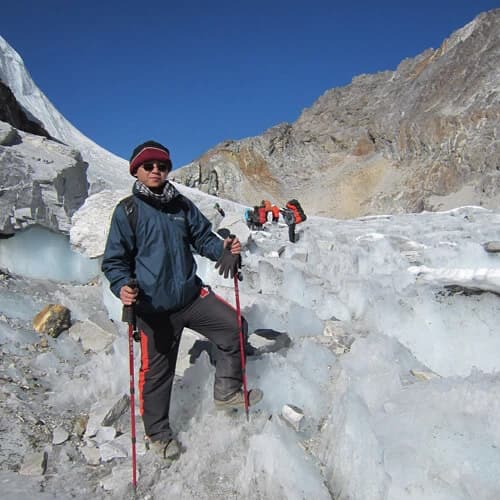
Cho La Pass (5,420 m / 17,782 ft): Widely known as the trickiest of the high passes, Cho La links the Dzongla valley near Lobuche with the breathtaking Gokyo valley. Expect a rugged climb featuring steep rock scrambles and a thrilling crossing over a glacier or snowfield where you will have to use a microspike to navigate. When you reach the top, the up-close views of towering peaks like Cholatse (6,440 m/21,130 ft) make every challenging step completely worth it.
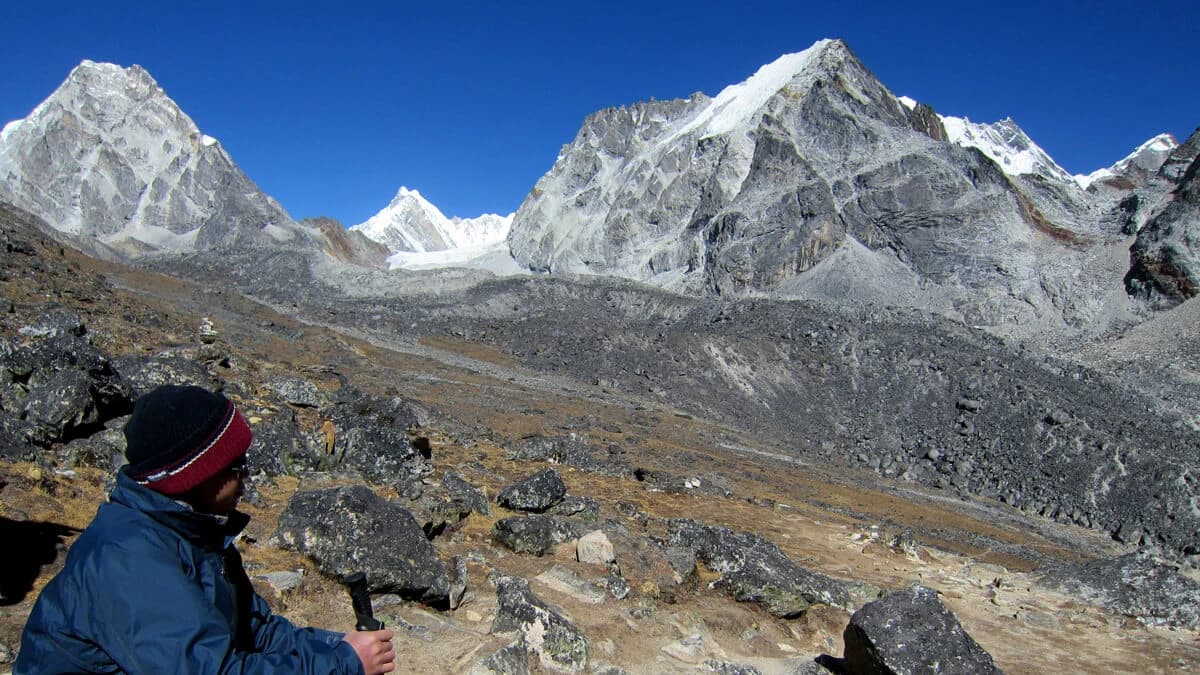
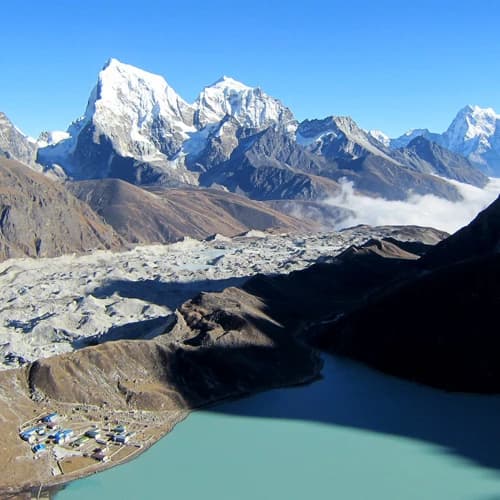
Renjo La Pass (5,360 m / 17,585 ft): Usually the final mountain pass you cross if you are doing the classic Three Passes trek counter-clockwise, Renjo La bridges the gorgeous Gokyo Lakes valley with the quiet, traditional village of Lungden. While it has less technical ice climbing than Cho La, it is still a long, strenuous day of steady walking up stone steps and rocky paths. Your reward at the summit? An unforgettable, wide-open panorama of Everest (8,848.86 m/29,031.7 ft), Lhotse (8,516 m/27,940 ft), Makalu (8,485 m/27,838 ft), and those iconic turquoise lakes shimmering far below.
How technical are these passes?
Cho La Pass
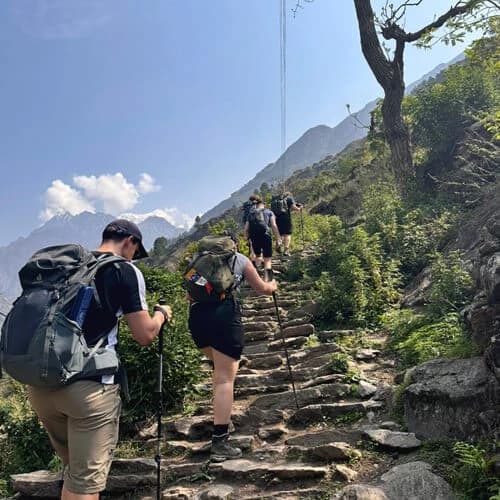
Crossing the 5,360-meter Renjo La Pass requires no advanced mountaineering skills, but it is a true test of your physical endurance. The crossing features a steady, relentless climb up stone staircases on the Gokyo section and rough, rocky paths on the descent toward Lungden. While there are no glacier crossings or dangerous crevasses to navigate, you must carry trekking poles to manage the steep gradients and protect your knees.
The pass connects the turquoise Gokyo Lakes to the east with the quiet Bhote Koshi valley and Thame to the west, covering a long, demanding day of walking. The challenges presented and major considerations for the route are as follows:
- Trekking poles are essential for maintaining balance and rhythm on the long, steep stone steps rising out of Gokyo. They can be purchased or rented in Namche Bazaar.
- Crossing from Gokyo to Lungden offers a well-defined stone stair track on the ascent, though it demands immense stamina. Ascending from the opposite side (Lungden to Gokyo) involves a more rugged, isolated path with loose rock and scree.
Renjo La Pass
At 5,360 meters (17,585 feet), Renjo La Pass in the Khumbu region of Nepal is classified as non-technical and does not require ropes, ice axes, or crampons. However, the trail is physically demanding because the trek involves navigating steep rocky switchbacks, stairways of boulders, scree slopes, and patches of ice.
While often regarded as the "easiest" of the three major Everest High Passes because it avoids walking directly across active glaciers, the pass still presents unique hurdles such as:
- Ascent (Gokyo to Pass): Takes about 3 to 4 hours. The path is a relentless, steep climb winding through giant boulders, stone steps, and loose snow scree.
- Descent to Thame Pass/Lungden: This is a long and often exposed scramble down the mountainside, taking 3-4 hours.
- Navigation & Weather: The trail is simple to follow, but high winds and heavy afternoon fogs can obscure the trail, making it easy to get lost without a guide.
What to expect during the crossing of Cho La and Renjo la Pass?
The Cho La Pass is a mix of high-alpine wilderness, loose rock, and an active glacial crossing. As you approach the pass from high-altitude outposts like Dzongla on the Everest side or Thagnak (or Dragnag) near the Ngozumpa Glacier, the trails consist of rough, steep paths made of moraine debris and massive, unstable boulders.
In addition, getting to the pass involves crossing a flat but slippery portion of the Cho La Glacier. There is always snow and ice to some degree, and one must either walk carefully or wear microspikes for better traction. Parts of the steep ascent and descent feature shifting, gravelly scree slopes. So, moving through these sections demands slow, intentional steps to prevent slipping or triggering minor rockfalls along the gorge.
On the other hand, Renjo La Pass offers a deeply remote wilderness experience. While it climbs to a similar altitude, it does not require walking over an open glacier, but it heavily challenges your endurance with steep, stone-carved inclines. As you rise up from the breathtaking, sacred shores of the Gokyo Lakes, the trail involves a continuous climb over thousands of ancient stone staircases and dirt paths that look down over the sparkling turquoise water.
Dropping down toward the quiet, authentic Sherpa community of Lungden in the remote Thame Valley, the trail transitions into a much steeper, rocky, and occasionally icy descent on loose gravel. So, we advise you to expect a combination of uneven stone tracks, rock steps, and snow patches that can turn slippery during early morning hours.
Which of these two passes provides better views?
When it comes to the scenery, both passes offer something completely different, but Renjo La is widely celebrated for having one of the best sweeping panoramas in the entire Everest region.
Here is how their views and experiences stack up side-by-side to help you decide what you want to see most:
Renjo La Pass
- If you want iconic pictures of the Himalayas, Renjo La is hard to beat. Standing at the top, you get a breathtaking wide-angle view of the sparkling turquoise Gokyo Lakes and the Ngozumpa Glacier. On a clear day, you can see four of the world's highest peaks all at once, including Everest, Lhotse, Makalu, and Cho Oyu.
- The trail here tends to be much quieter and more peaceful. Because fewer crowds tackle this side compared to the main trail, you get plenty of quiet space to take in the vast landscape and enjoy a moment of absolute silence.
Cho La Pass
- Instead of a panoramic view of lakes, your eyes are greeted by dramatic ice walls, jagged frozen terrain, and the raw landscape of the Khumbu Glacier. You also get striking, up-close views of neighboring peaks like Cholatse and Ama Dablam.
- The appeal here is less about a peaceful sightseeing viewpoint and more about the raw thrill of traversing in alpine wilderness. The entire experience will feel like a short mountaineering adventure.
Best Time to Cross Cho la and Renjo La Pass
Spring and autumn are ideal seasons characterized by stable weather, mountain views, and safer trails. Choosing the right season can make the difference between a great adventure and an exhausting, dangerous hike. The following information highlights the possible weather conditions you will experience on the trail.
Spring (March to May): Spring is widely considered one of the absolute best times for this trek, as it offers long daylight hours and crystal-clear mountain views,
Trail Conditions: Early months of spring can still have some lingering or melting snow, but paths quickly dry out as you move into April and May. The lower trails burst into color with blooming wild rhododendrons.
Weather & Temperature: Days are pleasantly warm and clear, though high altitudes and passes remain cold. Daytime temperatures at lower elevations range from 10°C to 20°C, while daytime highs at the high passes (around 5,300m to 5,500m) hover between -5°C and 5°C.
Autumn (September to November): Following the summer monsoon, autumn brings crisp air, stunning mountain panoramas and brilliant blue skies, making it the most popular choice for trekkers.
Trail Conditions: The monsoon rains wash away dust, leaving the trails dry, well-maintained, and easy to navigate.
Weather & Temperature: In September, it is still possible to have rainy weather, but in October and November, the weather is calmer. The temperature varies between 10 degrees Celsius and 15 degrees Celsius during the day in the lowlands and between -10 degrees Celsius and 0 degrees Celsius in the higher regions.
Is Cho La harder than Renjo La Pass?
In my opinion, the Cho La Pass is more challenging than Renjo La Pass since it involves navigating a glacier, scrambling rocky outcrops, and traversing slippery ice, requiring more caution and coordination.
Besides, the Cho La requires a trekker to walk through a sloping glacier or snowfield where microspikes or crampons may be needed, and slow, cautious movement is necessary to prevent slipping or dislodging rocks in the gully.
On the other hand, you can cross the Renjo La Pass in a straightforward manner without any technical difficulties. Most users on Facebook Group note that while it has a long, steep staircase and incline, the footing is more predictable and does not involve stressful passage over glacial terrain.
Having said that, both of these passes require 6-to-8 hour walking days, but Renjo La's primary challenge is physical endurance, whereas Cho La demands careful maneuvering over ice and rock.
What are the challenges you might face during the crossing of Cho La and Renjo La pass?
Unpredictable Weather Conditions
The weather is unpredictable at high altitudes in the Himalayas and can change rapidly and dramatically even during a single day on the trek.
- Temperatures: Even during popular seasons like spring and autumn, temperatures at the high passes plummet below freezing. Daytime temperatures around Cho La Pass (5,420m) often hover between -5°C and 5°C, while nighttime lows can plunge to -15°C or even -20°C.
- Snow and ice: It is not rare to encounter a sudden snowstorm any time of the year on the trail. Moreover, the snow-covered patches can be slippery and require special equipment such as microspikes or crampons for safe passage, and the view can be obscured due to bad weather
- Wind: Exposed ridge lines and high-altitude passes frequently experience strong gusts that intensify the cold and make steady progress physically demanding.
Physical and Mental Strain
- Conquering high-altitude passes day after day is as much a mental hurdle as it is a physical test.
- Fatigue: Multiple days of trekking at high elevations take a toll, making proper pacing and rest essential.
- Mental Resilience: Dealing with the physical effort of the trek and isolation from modern infrastructure requires a positive mindset. So, staying determined is your greatest asset when the trail gets tough.
How to prepare physically for a safe trek experience?
Success on the high-altitude Cho La (5,420 m) and Renjo La (5,360 m) passes starts long before the beginning of your adventure. Crossing these remote Himalayan passes is not just about raw physical strength; it is about building deep stamina, preparing your body for increasing altitude, and developing a mindset needed to walk for 6 to 8 hours a day on rugged terrain.
To get your body ready for the demands of the trail, you should kick off a targeted fitness routine 8 to 12 weeks prior to your departure date. Your training should focus on three core pillars: cardiovascular endurance, lower-body strength, and weighted hiking simulation.
Cardiovascular Endurance
- Stair Climbing & Stepmills: An incredible way to simulate the endless uphill stone staircases you will face on both passes.
- Running, Cycling, or Swimming: Great for building overall aerobic capacity and keeping your breathing steady under exertion.
Strength Training
- Legs: Focus on bodyweight or weighted squats, walking lunges, step-ups, and calf raises to bulletproof your quads, glutes, and calves.
- Core: Planks and Russian twists to build a solid midsection, which helps immensely with balance and posture when carrying a pack over uneven moraines.
- Back and Shoulders: Incorporate exercises that strengthen your upper back to prevent fatigue from carrying your daypack hour after hour.
Is altitude sickness a concern?
When planning a journey to either EBC via Cho La or Renjo La Pass, one of the most important questions every trekker asks is whether altitude sickness will be an issue. The short answer is yes: altitude sickness is a major safety concern on both Cho La Pass (5,420 meters / 17,782 feet) and Renjo La Pass (5,360 meters / 17,585 feet).
Because both of these iconic mountain passes sit well above the 5,000-meter threshold, the air contains significantly less oxygen than it does at sea level. As you climb higher, your body needs to supply enough oxygen to your muscles and organs. So, you will have to maintain a steady pace with plenty of rest regardless of your fitness level to prevent it from developing.
Here are the warning signs to look out for on the trail:
- Common early signs of Acute Mountain Sickness include a persistent headache, nausea, dizziness, unusual fatigue, and a loss of appetite.
Never push through these symptoms, as severe forms like High Altitude Pulmonary Edema (HAPE) or High Altitude Cerebral Edema (HACE) can develop rapidly and become life-threatening emergencies.
How do I minimize the risk of altitude sickness?
- Ascend at a steady pace: Keep your steps slow and never hurry uphill. Listen to your body and always tell your guide if you feel the slightest bit uneasy.
- Follow the "Climb High, Sleep Low" rule: on your acclimatization days (such as when you are trekking to Namche Bazaar or Dingboche), you will be walking up to higher altitudes each morning, then returning to your hotel or tea house to spend the night.
- Skip the booze and cigarettes: Avoid alcohol, tobacco, and caffeine because they are major dehydrators.
- Stay hydrated: Aim to drink 3 to 4 liters of fluids daily, and consume ginger tea, garlic soup, or lemon water during breaks and at the teahouse.
- Maintain a balanced diet: Eat carb-rich meals, warm soups, fruits, and vegetables for the needed nutrients and minerals to keep your body healthy and active.
- Take medications: Consult your doctors before the trip about carrying preventative medication like Acetazolamide (Diamox).
Can You Do Both with the Everest Base Camp?
Yes, if you want more than the standard trek experience, you can easily combine Cho La Pass and Renjo La Pass with the classic Everest Base Camp route. The trip is often referred to as the Everest Two Passes Trek; this extended 16- to 20-day trek takes you to the base camp of Mount Everest and Kala Patthar, then connects to the breathtaking, peaceful Gokyo Valley. During this journey, you get to witness iconic giants like Everest, Lhotse, and Cho Oyu from entirely different perspectives while walking past turquoise glacial lakes and remote Sherpa settlements.
Who is this combined trek recommended for
- Experienced Hikers: Ideal for individuals who have previously completed high-altitude treks.
- Physically Fit Individuals: You need to be able to comfortably handle 6 to 8 hours of daily hiking on varied terrain, rocky moraines, and the icy, sloping paths found on the glacier sections of Cho La Pass.
- Adventure Seekers: If you love quieter off-the-beaten trails and want to escape the heavier crowds found on the main EBC route, the serene Gokyo and Renjo La sections offer a much more peaceful wilderness experience.
Our Final Verdict
When it comes to choosing between these two Himalayan adventures, it all boils down to what kind of traveler you are. If you are a serious trekker who loves challenging mountain passes, then Cho La Pass is a must-include on your list. But if you want to enjoy spectacular views of the surrounding snow-capped peaks and the beautiful Gokyo lakes, Renjo La pass is the right choice for you.
Do I need a guide for the Cho La and Renjo Passes?
It is necessary to hire an experienced local guide even if it is not officially mandatory because of the potentially dangerous and unpredictable conditions on the pass. Navigating through the Cho La glacier at 5,420m and crossing the steep stone steps on Renjo La requires professional skills and competencies.
What type of equipment is necessary when climbing the Cho La and Renjo Passes?
It is crucial to pack plenty of warm clothes and some type of ice traction devices. It is also vital to bring along a jacket, long-sleeve shirt, windproof jacket, boots, trekking poles, a headlamp, and sunglasses.
How can I book the trekking package?
To book a trip with us, send your details to [email protected] or drop by our head office on the fourth floor, right above the Dancing Yak Cafe in Thamel, Kathmandu.
What type of insurance should I have before coming to Nepal?
Comprehensive travel insurance with emergency helicopter evacuation is mandatory. The insurance policy must cover medical treatment, emergency rescue up to 6,000 meters, and trip cancellations.
Will I be able to keep in touch with my family?
Yes, you can stay connected using local mobile phone operators’ networks; our guides also have satellite phones to ensure that you can maintain contact even at the highest altitudes of the trek.