









Highlights of Himlung Himal Expedition Nepal
- Prepare to be spellbound by some of the most dramatic mountain vistas on Earth. You will look out at towering peaks like Api Himal (7,132 m/23,399 ft), Nanda Devi (7,816 m/25,643 ft), and Rajramba (6,537 m /21,447 ft).
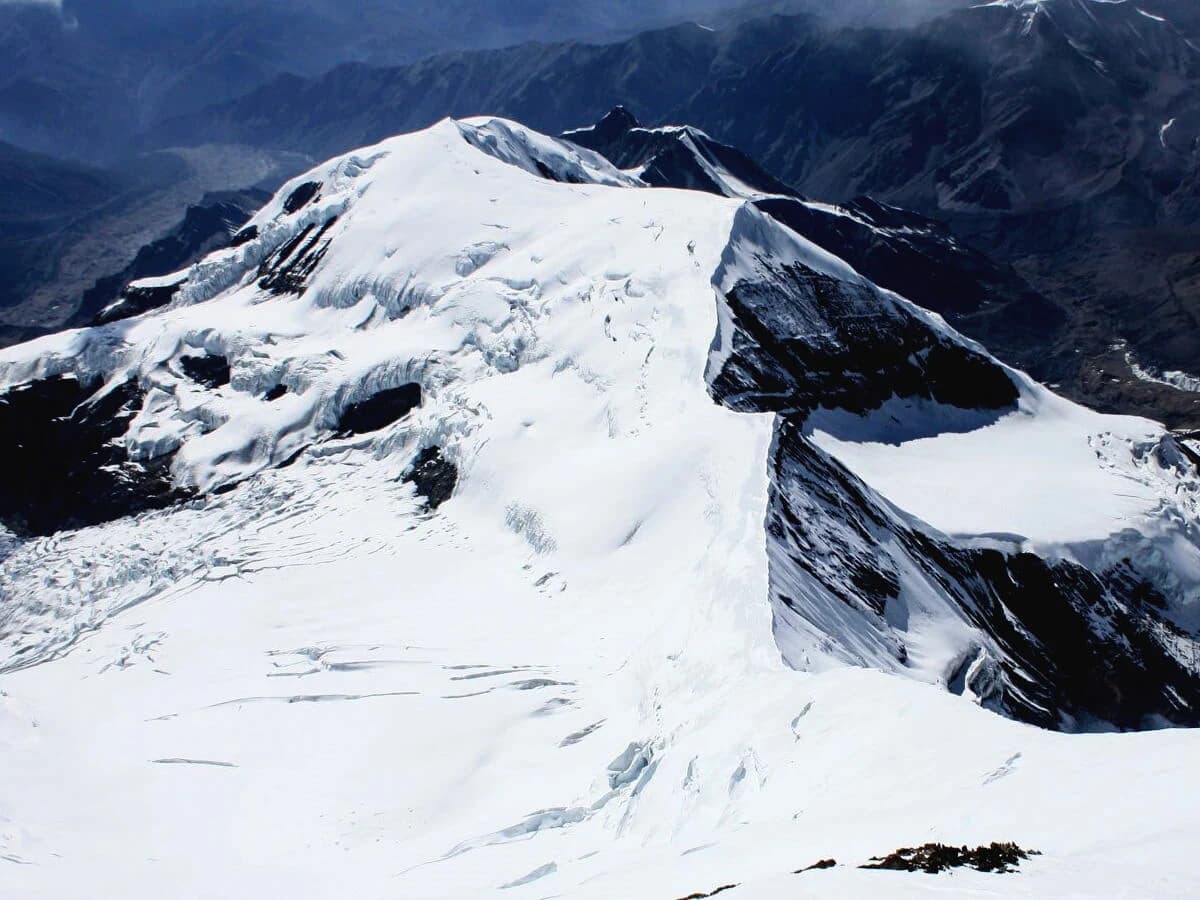
- Standing on the summit of Himlung Himal (7,126 m/23,379 ft) is a feeling of pure triumph. The breathtaking 360-degree views stretch across the vast Tibetan Plateau and overlook legendary peaks like Manaslu (8,163 m/26,781 ft) and Annapurna II (7,937 m/26,040 ft).
- This expedition is as much a cultural journey as it is a physical challenge. As you wander through the remote Nar and Phu valleys, you will step back in time to discover centuries-old Tibetan Buddhist traditions.
- If you are tired of crowded tourist trails, this hidden route is your perfect escape. We take you far off the beaten path into the pristine, wild landscapes of the restricted Nar Phu Valley.
- Himlung Himal is widely celebrated as one of the most achievable 7,000-meter peaks in the Himalayas.
- Thanks to stable snow conditions and a simple climbing profile, it offers one of the highest summit success rates in Nepal, making it an ideal first high-altitude challenge for aspiring climbers.
- This expedition offers a rare chance to explore the spectacular landscapes bordering the Manaslu and Annapurna regions.
- The route to Himlung Himal was much less technical, passing over rocky outcrops and icefalls not as steep as those on other Himalayan peaks. Therefore, it is a good choice for less-experienced climbers attempting to conquer higher summits.
- Your adventure begins with an incredibly scenic drive from Kathmandu to the trailhead village of Koto. Along the way, you will wind past terraced farms, rushing rivers, and beautiful cascading waterfalls.
- The initial leg of our approach follows a portion of the world-famous Annapurna Circuit. Walking this classic path gives you a taste of legendary trekking terrain surrounded by towering alpine ridges.
- Safety is our highest priority, and our slow, steady trek to higher altitudes protects your body by allowing you to gradually adapt to lower oxygen levels.
- The landscape of sheer-walled canyons and ancient stone villages has remained remarkably pristine. It is a breathtaking area, one that feels like a lost world in many ways.
- Our team of elite, high-altitude Sherpa guides will support you every step of the way. Before heading above Base Camp, they will run hands-on technical training sessions to refresh your rope and crampon skills. Their unmatched expertise and calm guidance will keep you safe and confident.
Overview Himlung Himal, An Entry-Level 7,000m Expedition
Located at an altitude of 7,126 meters in the remote Peri Himal mountain range near the Tibetan border, Himlung Himal is a safer, non-technical climb than many other peaks of similar profile, such as Island Peak or Mera Peak. The mountain offers exceptionally well-preserved snow slopes, which make it very attractive to climbers who want to minimize the challenge posed by unpredictable avalanche risk.
If you've done the Alpine PD+/ AD route or have climbed Scottish grade I/II winter routes before, you should have fun on Himlung. It's a reasonably straightforward but very strenuous climb, and it takes between 10 and 15 days to reach the summit and return to base camp. Historically, a team of Japanese climbers led by Akio Koizumi reached the peak on October 3, 1992. Since then, it has become an increasingly popular choice for mountaineers due to its relatively high summit success rate. The climb is not considered technically difficult, but it is a serious high-altitude hike that requires tremendous perseverance and resilience.
What makes this climb truly special is the journey through the restricted Nar-Phu Valley, a hidden Tibetan Buddhist region that was closed to foreigners until 1992. Your journey starts with an adventurous drive from Kathmandu to Koto, where you quickly break away from the heavily crowded Annapurna Circuit to step into an untouched, medieval world. Over five days of approach trekking, the lush green forests slowly give way to dry, barren, and otherworldly canyonlands dotted with ancient prayer flags, active yak pastures, and centuries-old chortens.
A stop in Phu Gaon is, without a doubt, one of the best parts about this trek. This ancient stone village is a great place to unwind as you acclimatize. As you wander through the narrow pathways, you feel the spiritual heart of this traditional community. Because this region remains closed to the public, only a few trails are open to hikers, which means fewer crowds than you might find on other popular hiking routes in Nepal. This makes the trail ideal for travelers seeking peace and quiet, making it a destination worth pursuing if you want to experience something truly unique.
After the trekking phase, the ascent from the expedition base camp to the summit follows a progressive three-camp establishment on the Southwest Ridge at 5,450 meters (Camp I), 6,000 meters (Camp II), and 6,350 meters (Camp III). The technical challenge of the climb is unique; while it is possible to walk to Camp II in ordinary hiking boots over rough moraines and glaciers, above Camp II, climbers must switch to high-altitude mountaineering boots, crampons, harnesses, and mechanical ascenders to negotiate the 30- to 45-degree snow slopes.
Furthermore, during the climbing period, we will be using the classic “climb high, sleep low” acclimatization method. It allows you to spend enough time at higher altitudes to properly adapt to the low oxygen level and air pressure. This will ensure your safety during the final 10-12-hour ascent to the top. After reaching the peak, you will enjoy incomparable views over the Tibetan Plateau, which extends in a white desert towards Annapurna II, Gangapurna, and Manaslu peaks.
If you have been looking for an honest, raw, and deeply rewarding challenge that tests your endurance while respecting your safety, this peak is where your next chapter begins.
What Happens During the Climbing Phase?
Once we reach Himlung Himal Base Camp at an elevation of 4,900 meters, the real adventure will begin. Our goal is to spend 10-12 days preparing and acclimating. Our staff will then set up your personal four-season tents and provide hot, freshly prepared meals in the heated dining tent. Your climbing guide will be conducting his own thorough inventory of all your personal equipment.
We will also be practicing technical climbing in preparation for higher altitudes. This will be done on the lower-lying glaciers, focusing on rope techniques, climbing on fixed lines, and practicing with crampons so that you are fully prepared for our higher-altitude climbing. Additionally, to get your body adjusted to the thin air, we establish three distinct high camps on the mountain's Southwest Ridge using a classic "climb high, sleep low" strategy.
We begin our climb today, carrying a heavy pack up to camp 1 at 5,450 meters, where we spend the night acclimating. Then, we continue up the slope to camp 2, which is strategically located at 6,000 meters. It is crucial that we spend a night here to adjust to the new altitude, since it is on a steep, rocky ridge and the glacier ahead is quite challenging. In case of bad weather, we might have to set up camp 3 at 6,350 meters. All of these gradual camps are a safe way of preparing you for a rapid ascent.
The strategic part of the trip is a flexible 6 to 10-day active climbing window. These buffer days give us plenty of room to wait out bad weather, which is essential because the weather at this altitude can change in an instant. When our lead guide spots a perfect weather window, we start our summit push from the high camp around midnight. It is physically demanding and intensely cold, but we will maintain a steady composure and ascend the 45-degree snow slopes to reach the 7,126-meter summit.
How the Multiple Rotation Phase helps in Acclimatization
Climbing Mount Himlung Himal is an extremely rewarding adventure. However, the biggest challenge to a successful expedition here is the altitude. Although this mountain peak is lower than the 8000-meter summits, it is crucial to approach the altitude responsibly.
Your health should be the top priority during your Mount Himlung Himal climbing tour. Our strategy is to guide you through a safe, proven cycle of climbing high and sleeping low. These active rotations naturally build effective adaptation to the increasing elevation, keeping your body ready for the final summit push.
- Our Strategic Approach Above Base Camp
We set up Camp 1 (5,435 m), Camp 2 (5,800 m), and Camp 3 (6,210 m) above our 4,925 m Base Camp. This allows us to take on the mountain in stages and conserve energy.
- First Rotation
You will hike up to Camp 1 at 5,430 meters and back down to base camp to sleep. This helps you get used to high altitude.
- Second Rotation
On your second run, you climb to Camp 1 to sleep, then push to Camp 2 at 6,000 m the next day. You then descend all the way back to Base Camp to rest and recover.
- Push to Camp 3
We make our way to Camp 1, spend the night, and move forward to Camp 2 the next day. This allows for a more gradual acclimatization to the altitude and reduces the risk of acute mountain sickness at the higher camps.
- Moving Safe and Fast from Camp Two to Camp Three
We use secure fixed ropes to bridge the steep two-hour climb up from Camp 2 to Camp 3 at 6,350 m.
- Conquering the 7,126 m Summit and Safely Descending
From Camp 3, you will navigate steep snow and ice slopes to the summit of Himlung. After celebrating the sweeping views, we make a controlled descent back to Base Camp.
Tips and Preparation for the Himlung Himal Expedition
- Physical Conditioning: Practice jogging and brisk walking for three to four months before your trip with a pack weighing 15-20 kg. Then, do a 12-week aerobic development program to improve cardiovascular fitness to help you climb the summit.
- High-Altitude Acclimatization: Spend enough time trekking above 4,000 meters to help your body adapt to high-altitude conditions. The rugged, secluded trails of the Tsum Valley Trek offer the perfect setting to acclimate naturally.
- Technical Skills: You need to know how to ascend a mechanical ascender (jumar) while tired and rappel down a fixed rope. This will ensure that you can tie yourself to a fixed rope without hesitation.
- Gear Familiarity: Break in your double- or triple-layered high-altitude climbing boots to avoid blisters. Also, test your crampons to ensure a proper fit. Learn to adjust your harness, mitts, and headlamp in the dark.
Support Staff for the Himlung Expedition
Climbing Himlung Himal is not a solo endeavor—it’s a team effort backed by experienced professionals. Outfitter Nepal provides you with a skilled climbing crew, including:
- Government-Licensed & UIAGM/IFMGA Climbing Guides: You will be accompanied by elite, English-speaking Sherpa guides. Operating at a strict 1:1 or 2:1 ratio, they fix your safety lines on the mountain ridges and make a critical weather call.
- Porters & Logistics Crew: Navigating the shifting boulders of the Pangri Glacier and hauling gear up to Camp 3 is incredibly grueling. We ensure our local porters are fully insured, well-equipped for alpine conditions, and fairly paid, and that they carry up to 22 kg of luggage for every two people, so you can focus entirely on conserving your climbing energy.
- Expedition Cooks & Base Camp Kitchen Staff: Our crew members will be responsible for making energy-rich meals and beverages to fuel your rotations, keeping the entire team healthy and strong.
When is the Best Time to Attempt Himlung Himal?
Planning your climb during the autumn window, typically from September to November, gives you some of the most reliable weather conditions of the year. Since the monsoon rains have just cleared out, the trails are dry, which significantly minimizes your risk of slipping during the trek. Similarly, the skies are crisp and offer mind-blowing, sharp visibility of the Manaslu and Annapurna peaks.
The temperatures at Base Camp (4,900 meters) sit around -4 to 4 degrees Celsius during the day and drop to -18 degrees Celsius once night falls. By November, the wind speeds on the high ridges can turn ferocious, making October the better option for a successful summit push.
If you want to avoid the crowds, the spring season from April to May is a gorgeous time to climb. The lower trekking route is warmer with daily temperatures hovering around 15 to 20 degrees Celsius and trails lined with brilliant, blooming rhododendrons. Up at Base Camp, daytime temperatures are quite pleasant—often warming up to 15 degrees Celsius—while nighttime temperatures hover around a manageable -5 degrees Celsius.
Overall, no matter the window you choose, always remember that the final summit push can be a strenuous 10- to 12-hour climb in high-alpine conditions. While the high camps (above 5,450 meters) drop to -20 degrees Celsius, the 7,126-meter summit frequently plunges to a bitter -30 degrees Celsius, requiring top-tier down suits and double-layered climbing boots.
What are the Permits Required for the Himlung Expedition?
Obtaining permits is an integral part of the Himlung Himal Expedition, as it allows control of the number of tourists in the region. In addition, the control point staff can track group movements by collecting relevant data at different checkpoints, ensuring rapid localization of hikers in case of an emergency.
Because Himlung Himal lies in a highly sensitive border zone near Tibet, the Nepalese government legally prohibits independent or solo climbs. You are required to climb with a group of at least two people and hire a registered, government-licensed guide, which is why booking through a fully authorized local agency like Outfitter Nepal is mandatory.
Here is the exact breakdown of the three main permits necessary for the expedition:
- Himlung Himal Climbing Permit (Royalty Fee): Issued directly by the Ministry of Tourism. A climbing permit during the peak autumn season costs USD 250 per person, while a spring permit costs USD 500 per person.
- Nar Phu Valley Restricted Area Permit (RAP): The trail to base camp deviates from the classic Annapurna Circuit at Koto and enters the restricted Nar Phu region. This special permit costs USD 100 per person per week during the autumn and spring seasons.
- Annapurna Conservation Area Permit (ACAP): Since the Nar Phu Valley sits within the wider Annapurna conservation boundaries, you will also need an ACAP card. This costs USD 25 (approx. NPR 3,000) per person.
Note: Our team handles 100% of the paperwork, payments, and passport submissions while you rest at your hotel in Kathmandu. All you need to do is send us a copy of your passport with at least 6 months of validity.
How much does the Himlung Himal Expedition Cost?
The average cost for a 31-day package ranges from USD 7,500 to USD 9500 per person. It includes hotel stays, transport to Koto, restricted-area permits for the Nar-Phu Valley, high-quality gear rentals, and the standard of meals cooked at our 4,900-meter Base Camp.
The cost of the expedition also depends on the number of participants. For example, if you are participating alone, you will pay a considerably higher price. On the other hand, if you are traveling with a group or joining a group, you will have more benefits, including a lower price.
What is the Booking Process?
Secure your spot on our next climb by messaging our travel expert Raj on WhatsApp (+977 9820996633) or email at [email protected]. You can also instantly book an open departure on our website. If our scheduled dates do not align with your departure dates, we will happily arrange an expedition according to your schedule. To officially confirm your trip, we require a 20% advance payment via our secure online gateway or direct bank transfer. You can pay the remaining amount upon your arrival at our office in Thamel, Kathmandu.
Why Choose Outfitter Nepal?
- Our team is made up of fully certified, insured, and experienced guides and Sherpa climbers.
- Our custom itinerary is built around gradual elevation gains and active rest days.
- We ensure your safety by supplying heavy-duty expedition tents and reliable group safety gear.
- We work with you individually to plan your physical training and help arrange necessary gear for the expedition.
- The Nar Phu Valley is a restricted, isolated region near the Tibetan border. Our deep local partnerships ensure that all complex paperwork is handled smoothly behind the