








Manaslu Circuit Trek with Serang Gompa - 16 Days

Manaslu Circuit Trek with Serang Gompa – Cultural Trek in Nubri Valley

Explore the 500-year-old spiritual sanctuary of Serang Gompa on this immersive Manaslu Circuit extension. Stay at the Nubri Monastery, and cross Larkya La Pass (5,106m) with local experts.

facts icon

What to see & do

Specific information about Manaslu Circuit Trek with Serang Gompa - 16 Days
duration icon
Duration16 Days
grade icon
Trip GradeStrenuous
i
altitude icon
Max Altitude5106M
start icon
Starts atKathmandu
end icon
Ends atKathmandu/Pokhara
travel-style icon
Travel StyleLodge to Lodge
group-size icon
Group Size8
transportation icon
Transportationby Local Transport
cloud-sun-rain icon
Best SeasonMarch to May, and Sept to Dec

Manaslu Circuit Trek with Serang Gompa: A Spiritual Retreat

In this 16-day journey to Serang Gompa, you’ll leave the commercial main trail of the Manaslu region and step into the Kyimolung Beyul. Commonly known as the "Hidden Valley of Happiness," it is a sacred sanctuary prophesied by Guru Rinpoche in the 8th century. Located far away from the crowded trails at an elevation of 3,100 meters (10,170 ft), this 500-year-old monastery remains an active center of Tibetan Buddhist practice in the Nubri region.

You are not simply walking past a historic location; instead you will have the opportunity to sleep inside of the monastery. When you stay overnight inside of the monastery, you are able to attend the puja (ritual) before dawn, get blessings from one of the resident monks, and enjoy a cup of yak butter tea in the common area. These interactions and experiences will enhance both the cultural aspects and spiritual significance of your high elevation trek.

The Manaslu Circuit with Serang Gompa trek encircles Mount Manaslu (8,163 M), the world’s eighth-highest peak, and passes through a wide range of landscapes. The trail follows an ancient salt trade route, which once connected Nepal with Tibet. And later, the Manaslu region remained restricted for decades, until 1991, when it was officially opened to foreigners. So, even today, it remains raw and untouched by modernization.

Your trip begins at Machha Khola, and gradually passes through dramatic river gorges to traditional villages like Jagat, Deng, and Bihi. The final test of the 16-day Himalayan expeditions is the push towards Larkya La Pass (5,160m/16,952 feet), the highest point of the trek. We begin the ascent early at 4:00 A.M to avoid the strong winds in the afternoon. You will strap on a headlamp and use microspikes with your trekking boots to navigate icy sections and avoid slipping.

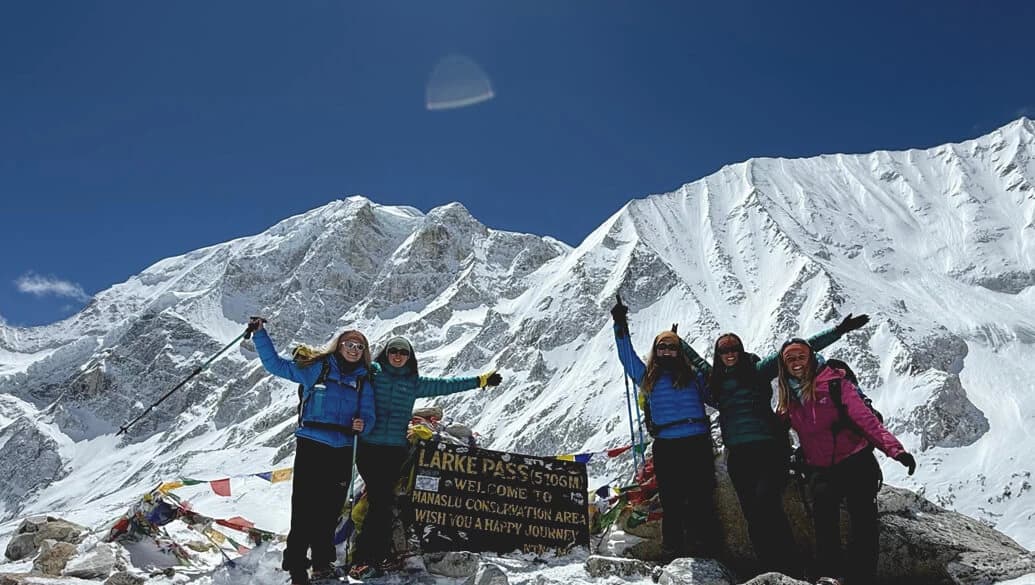
At the top, the summit is adorned with prayer flags, and you can finally take a deep breath and feel a sense of achievement. The reward does not end here, as you are greeted by picturesque panoramic views of Annapurna II, Himlung Himal, and Cheo Himal. This moment is quiet, serene, and breathtaking, and feels like you have stepped into another world. It is an adventure well-suited for travelers who love venturing in the raw wilderness and immersing themselves in the centuries-old Tibetan-Buddhist culture.

Serang Gompa Manaslu Circuit Trek Highlights

  • Remote Exploration: Step away from the crowds and into the quiet, restricted heart of the Manaslu region.
  • The Eighth Giant: Hike through the massive foothills of Mt. Manaslu, which towers as the world’s eighth-highest peak at 8,163 meters.
  • Mountain Hospitality: Staying overnight in traditional tea houses, which are operated by local families, while tasting the authentic flavor of the region.
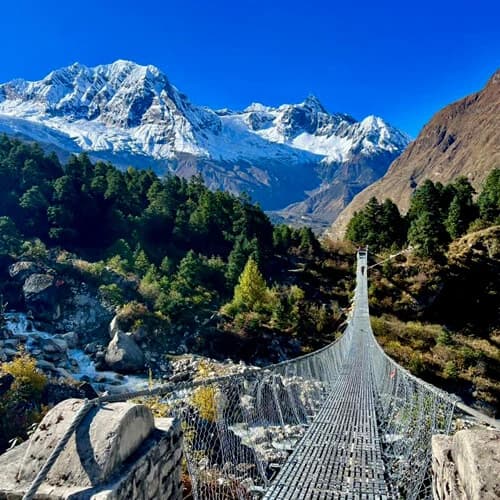
  • Glacial Rivers: Follow the winding path of the Budhi Gandaki River through deep valleys and over swaying suspension bridges.
  • Floral Diversity: Wander through shifting landscapes that range from vibrant rhododendron and bamboo forests to high-altitude birch and alpine shrubs.
  • Cultural Tapestry: Encounter the incredible cultural diversity of the Gurung, Tamang, and Tibetan communities living along the route.
  • Photogenic Horizons: Catch the mountains at their most magical during golden-hour sunrises and fiery Himalayan sunsets.
  • Secluded Sanctuary: Take a detour to the ancient and secluded Serang Gompa, a sanctuary known for its historic meditation caves.
  • Monastic Immersion: Spend a night within the Nubri Monastery to experience the daily rhythm of chants, prayers, and quiet meditation.
  • Traditional Settlements: Explore high-altitude villages such as Samagaon, Lho, and Samdo, where Tibetan-influenced culture is beautifully preserved. Walking through these remote villages feels like stepping back into a world of ancient heritage.
  • Turquoise Waters: Visit the tranquil shores of Birendra Tal, a turquoise glacial lake set beneath the ice-clad slopes of Manaslu.
  • Spiritual Landmarks: Immerse yourself in the spiritual heart of the mountains at sacred sites like Serang, Pungyen, and Ribung Gompas.
  • Historic Trade Routes: Reach the high reaches near the Nepal-Tibet border, where the history of ancient salt trade routes comes alive.
  • Symbols of Devotion: Walk alongside ancient Mani walls and colorful prayer flags that flutter in the high-altitude wind.
  • The Larkya La Triumph: Test your spirit by crossing the legendary Larkya La Pass at a staggering 5,106 meters. Standing at the peak of the trek is a rewarding triumph that offers some of the most dramatic views in the Himalayas.
  • Panoramic Mountains: Gaze out at a spectacular horizon featuring Annapurna II, Himlung, and the towering Cheo Himal.
  • Rare Wildlife: Opportunity to encounter blue sheep, Himalayan tahr, and the rare musk deer. While they remain secretive, this region is also one of the few places where you can spot them in the wild.
  • Experience Local Traditions: Schedule your journey with local celebrations like Losar or traditional Buddhist rituals to experience the culture at its most vibrant. Participating in a seasonal monastery ceremony in villages like Lho or Samagaun is an experience that stays in your memory forever.

What makes the Serang Gompa Trek spiritually significant

The mythical aspect of Serang Gompa is rooted in a 500-year-old legacy that began with the arrival of the first Lama from Kham, Tibet. He was accompanied by three sons, each a "Druptob" with extraordinary mastery over the five elements. Legend tells of their unique gifts, the eldest could carry water in a loosely woven basket, the second could drive a dagger into solid rock, and the youngest, Nyime Cho Kyi Gyaltsen, could fry rice on a single sheet of paper.

It was this youngest son who was chosen by the locals to remain, eventually laying the foundation for a spiritual lineage that would guide the Nubri people for over five centuries, until the family lineage ended in 2006. In the present day, Serang Gompa is a vibrant community, currently guided by the 4th Dodrup Chen Rinpoche.

Travelers are invited into this region of spiritual discipline, where the air is filled with the low hum of mantras and the soft glow of butter lamps illuminating ancient thangka paintings and Buddha statues. Trekking here gives you the opportunity to observe vibrant masked dances during Losar or explore the meditation caves once used by masters such as Milarepa. Overall, the experience is more than a hike; it is an immersion into a centuries-old monastic life that remains largely untouched by the commercialization found on more popular Himalayan routes.

Experience the sacred Shayagya Tradition in Kyimolung Beyul.

Serang Gompa serves as the spiritual and cultural heart of the "Kyimolung Beyul." The trek is defined by a living commitment to non-violence known as the Shayagya tradition. In 1920, there was an agreement to declare the area an "Ahimsa" zone when a deer found safety in the meditative sanctuary of a lama.

As a result, all hunting, trapping, or killing of anything living is not permitted in this Valley of Peace, where animals such as the Himalayan tahr and many birds have free range without fear. This deep ethical basis allows visitors to go hiking through an area with a living history of unbroken commitments to uphold the balance between nature and spirit.

How is the Serang Gompa route different from the regular Manaslu Circuit Trek route?

While the standard Manaslu Circuit is a 12-to-14-day journey that stays largely in the Budhi Gandaki river valley, the Serang Gompa extension is a detour to the region’s hidden gem. Most trekkers on the regular route bypass the Nubri, rushing from Deng to Ghap. But in this itinerary, we ascend from Bihi Village (also known as Krack), leaving the main trail behind, and making our way to Kyimolung Beyul, or the Hidden Valley of Happiness.

In this once restricted region, you’ll witness a level of biodiversity that regular trekkers simply miss. You’ll find yourself witnessing the daily lifestyle of the natives at small settlements like Tsak or Kogpa. On the regular circuit, monasteries like Pungyen are usually "day-trips" or quick stops, but at Serang Gompa, you stay overnight inside a functioning monastic center that is home to over 100 resident monks and nuns.

Permit Required for the Manaslu Circuit with Serang Gompa Trek

Due to the fact that this mountainous area borders Tibet & has delicate ecosystems at high altitudes, access is strictly controlled by the Government of Nepal, both for environmental protection and to maintain the culture of the Nubri and Tsum people. To legally do the Manaslu Circuit including the Serang Gompa extension, you need 3 specific permits. At Outfitter Nepal we will take all of the logistical barriers associated with getting the permits off of your shoulders by taking care of the entire application process in Kathmandu; however, it is important to be aware of these permit requirements to ensure smooth travelling!

The Manaslu Restricted Area Permit (RAP): It is the primary document required, and unlike standard trekking permits, the RAP is issued only to registered trekking agencies and requires you to be accompanied by a government-licensed guide. For 2026, the cost is seasonally adjusted, from September to November (peak season), it is 100 USD for the first seven days, while from December to August, the price is 75 USD. If you extend your stay in the restricted zone, an additional fee of 15 USD per day (peak) or 10 USD per day (off-peak) applies.

Manaslu Conservation Area Permit (MCAP): This permit is implemented to support the local communities and the natural habitat of the Manaslu region. It grants you access to protected lands where you might spot unique wildlife, such as the Himalayan Tahr or even the elusive snow leopard. The fee is approximately 3,000 NPR (about 25 to 30 USD) for foreign nationals and has no day limit.

Annapurna Conservation Area Permit (ACAP): Even though your primary focus is the Manaslu region, the trail officially enters the Annapurna jurisdiction once you cross the 5,106-meter Larkya La Pass and descend toward Dharapani. Just like the MCAP, this permit costs 3,000 NPR (roughly 25-30 USD) and is required to legally complete the final leg of your journey through the Marsyangdi Valley.

Note: Additionally, for 2026, be prepared for the Chum Nubri Rural Municipality Fee, a local entry tax of 1,000 NPR (approx. 7 USD) collected at the Jagat checkpoint to fund village infrastructure.

What is the average cost of the Manaslu Circuit Trek with Serang Gompa?

Planning a journey through the Manaslu region often brings up the big question of budget. You can expect to pay between USD 900 and USD 2,000 per person, depending on the service type, itinerary, and included facilities. This wide range exists because every adventurer has different priorities; some prefer a longer, slower pace for better acclimatization, while others travel in larger groups which helps bring the cost down.

Transparency is a core value of our company; we offer an all-inclusive fair rate with no surprise charges or hidden fees. We believe you should spend your time focusing on the towering peaks and local culture, not worrying about extra fees popping up once you’re already on the trail.

How to Book this Trip?

Securing your place on our spiritual journey through the Serang Gompa and the Manaslu Circuit is straightforward and safe, designed to give you peace of mind before your adventure even begins. To reserve your spot, we only require a 10% deposit of the total trip cost, which you can conveniently submit through our secure online payment portal. You can make your deposit through our safe online payment system. After making your deposit, we will immediately send an email to you with your receipt, confirming your reservation. You can pay the remaining balance when you arrive in Nepal. In order to expedite the permits we need to complete, we will need a clear scan of your passport, a recent passport-size photograph and any flight information you have.

Why choose Outfitter Nepal as your Travel Partner

  • Deep Local Roots: Our guides aren't just trail experts, they speak the local dialects, allowing you to move beyond sightseeing and form genuine connections with the monks and villagers of the Nubri region.
  • Confirmed to Go: We offer 100% guaranteed departures for every Serang Gompa – Manaslu Circuit Trek on our calendar. Once you book, your adventure is set in stone—no last-minute cancellations, ever.
  • Find Your Tribe: Adventure is better shared. On our fixed departures, you’ll know exactly who your companions are ahead of time, allowing you to trek with confidence alongside like-minded explorers.
  • One-on-One Briefings: The moment you touch down in Kathmandu, we sit down for a personalized, detailed briefing to walk through your itinerary, permits, and the spiritual highlights of your Serang Gompa visit.
  • 24/7 Professional Support: Our friendly, multilingual team is always a WhatsApp message or email away, providing dedicated help before, during, and after your high-altitude journey.
  • All-Inclusive Logistics: From complimentary private airport transfers to handling every restricted area permit and piece of paperwork, we take the stress out of Himalayan planning.
  • Quality Gear Included: Travel lighter and stay warm without the extra luggage fees. We provide high-quality trekking essentials, including down jackets and sleeping bags, at no extra cost.
  • The Best Local Lodging: As an established operator, we have deep relationships with the finest available teahouses and lodges, ensuring you have the most comfortable beds even in the remotest corners of the trail.
  • Specialist Route Expertise: Trek with extremely experienced guides who are specifically recognized for their deep knowledge of the unique Serang Gompa detour and the traditions of its resident monks.
  • Safety Without Compromise: We maintain strict emergency protocols, carry full first-aid kits and oximeters, and have our guides ready to coordinate rapid helicopter rescue services if needed.
  • Transparent & Honest Pricing: We believe in absolute transparency. You’ll enjoy per-person group discounts and full-value packages with zero hidden fees—exactly what you see is what you pay.
  • Streamlined Booking: Our secure online system lets you pay by credit card and manage all your necessary documents in one place, ending the need for complicated email chains.
  • Thamel Luggage Storage: Feel free to travel light; you can safely leave your extra gear and city clothes at our central office in Thamel for the duration of your trek.
  • A Practical Keepsake: If you book a porter to ease your climb, we provide a waterproof Outfitter Nepal-branded duffle bag for your gear—and it's yours to keep as a memento of your achievement.


Manaslu Circuit Trek with Serang Gompa - 16 Days Itinerary Outline

  • Day 01: Drive from Kathmandu to Machha Khola by bus (930 m / 3,051 ft) - 8 to 9 hours/157 km.
  • Day 02: Trek from Machha Khola to Jagat (1,340 m / 4,396 ft) - 7 hours/17 km.
  • Day 03: Trek from Jagat to Deng (1,804 m / 5,918 ft) - 7 hours/20 km.
  • Day 04: Trek from Deng to Bihi Village (2130 m / 6988 ft) - 4 to 5 hours/8 km.
  • Day 05: Trek from Krack to Serang Gompa (3,100 m / 1,0170 ft) - 5 to 6 hours/10 km.
  • Day 06: Trek from Serang Gompa to Ghap (2,397 m / 7,864 ft) - 7 to 8 hours/14 km.
  • Day 07: Trek from Ghap to Lho (3,180 m / 10,433 ft) - 6 to 7 hours/11 km.
  • Day 08: Trek from Lho to Shyala (3,500 m / 11,482 ft) – 4 hrs/10 km.
  • Day 09: Shyala to Samagaun (3,530 m / 11,581 ft) – 3 hrs/6 km
  • Day 10: Acclimatization Day in Samagaun- Trek time 3 Hours
  • Day 11: Trek from Samagaun to Samdo (3,875 m / 12,713 ft) – 5 hrs/10km.
  • Day 12: Acclimatization Day in Samdo
  • Day 13: Samdo to Dharmasala (4,460 m / 14,632 ft) – 5 hrs/7km.
  • Day 14: Dharmasala to Bimthang via Larke Pass (3,590 m / 11,778 ft) – 10 hrs/18km.
  • Day 15: Bimthang to Dharapani (1,860 m / 6,102 ft) – 7 hrs/20km.
  • Day 16: Dharapani to Kathmandu Via Besi Sahar – 9 hrs/8 to 9 hours/240 km / 150 miles

Cost Details

Good to know before trip booking

What's Included

  • We handle your arrival and departure with private vehicle transfers, so your transition from the airport to your hotel is completely stress-free.
  • Your journey from Kathmandu to the trailhead at Machhekhola is done by public transportation, giving you a real taste of the local Nepalese travel style.
  • We arrange all your accommodations at teahouses and lodges throughout the trek, as outlined in our route.
  • To keep your energy up, we provide three full meals a day (breakfast, lunch, and dinner) while you’re in the mountains.
  • Stay warm with three daily cups of tea or coffee at the teahouses.
  • You’ll be accompanied by a government-licensed, English-speaking local guide who is familiar with the Manaslu terrain and Nubri culture.
  • Porter to carry your heavy pack, who can be shared between two trekkers, carrying up to 20-22 kg total.
  • We take full responsibility for our guides' salaries, meals, insurance, equipment, and transportation.
  • We handle all your logistics and paperwork, covering the Manaslu Restricted Area Permit (RAP), MCAP, ACAP, TIMS, and all necessary local entry fees.
  • We provide fresh fruits, nuts, and cookies every day to help fuel those long climbs.
  • A major highlight of this trip is an overnight stay at the 500-year-old Serang Gompa monastery, tucked away at 3,100 meters.
  • This package includes guided excursions to the ancient Pungen Gomba and the spectacular Manaslu Base Camp.
  • Our team carries a comprehensive first-aid kit, an oximeter, and is trained to manage health issues in remote environments.
  • At the end of the trail, we provide shared jeep transportation from Tilche to Besishahar, followed by a comfortable tourist bus ride back to Kathmandu.
  • Government taxes and a celebratory farewell dinner in Kathmandu are all included.
  • You’ll receive a trekking map, a t-shirt, a cap, and complimentary use of a duffel bag, a down jacket, trekking poles, and a sleeping bag.

What's not Included

  • These are paid upon arrival and are currently structured as $30 USD for 15 days, $50 USD for 30 days, or $125 USD for 90 days.
  • You’ll need to arrange your own international airfare to and from Kathmandu.
  • We strongly recommend a comprehensive policy that specifically covers medical emergencies and high-altitude helicopter rescue up to 6,000 meters.
  • It’s wise to plan for a few "buffer" days in case of unpredictable Himalayan weather or flight delays.
  • Small comforts at teahouses like hot showers, bottled water, Wi-Fi access, laundry, and device charging are usually extra (ranging from NPR 300 to 800).
  • Any additional snacks, alcohol, or soft drinks beyond the standard meal plan should be budgeted for independently.
  • This includes souvenirs, extra snacks, or any personal items you might need during the trip.
  • Tipping your guide, porter, and driver is a common custom in Nepal to show appreciation for their hard work.
  • You’ll need to arrange your personal trekking equipment before the trek starts.
  • We encourage travelers to be financially prepared for any unexpected costs that may arise due to illness or route changes.

Detail Itinerary

Trip day to day detail itinerary
Day01

Drive from Kathmandu to Machha Khola by bus (930 m / 3,051 ft) - 8 to 9 hours/157 km.

Your adventure into the heart of the Gorkha District begins with an early morning bus ride from Kathmandu. The day starts at the Gongabu Bus Park, where you’ll likely find your luggage being hauled onto the rooftop of a colorful local bus—a true rite of passage for any trekker in Nepal.

As you travel the valley, the initial 9-hour journey is a fascinating study in transitions; you’ll see terraced rice fields and vibrant green hillsides that define the rural landscape. The drive follows the winding Prithvi Highway, alongside the banks of the Trishuli River, where you can catch a glimpse of rafters paddling through the white water far below.

After a stop in Dhading Besi, where, on a clear day, you’ll get your first teasing view of Mount Manaslu. Eventually, the bus stops for a lunch break in Jyamire to fuel up and stretch your legs after the long ride. Moving on, the road ahead winds through the dramatic cliffs of the Budi Gandaki river valley, and leads us to settlements including Tari Beshi, Soti Khola, Lapu Beshi, and Arughat.

By the time you pass through Nauli and Khani Beshi, the river water takes on a stunning "bright blue" hue. Your day concludes at Machha Khola (870m), a settlement perched right on the sandy banks of the Budi Gandaki, where the sound of the rushing water adds to the ambiance of your stay in a cozy riverside teahouse.

  • meal iconMeals: Breakfast, Lunch, and Dinner
  • accomodation iconAccommodation: Lodge
  • transportation iconTransportation: By Local Transport
Day02

Trek from Machha Khola to Jagat (1,340 m / 4,396 ft) - 7 hours/17 km.

Today marks the official start of your Manaslu Serang Gompa Trek. As you leave the riverside settlement of Machha Khola behind, you’ll follow the powerful Budhi Gandaki River as it carves through steep, emerald gorges. The journey itself is a sensory feast, beginning with a walk along the riverbed that leads you to the village of Khorla Beshi.

An important part of the journey is stopping at Tatopani, which means ‘hot water’ (and these hot springs have deep cultural significance). They are believed to help you ‘cleanse’ your body and soul before you begin your climb up into the higher, more sacred peaks. Eventually you will walk through the cobbled streets of Jagat, which is where it is located near the entrance to the restricted area.

The terrain shifts from lush forests to dramatic rocky sections as you pass through Dobhan and the wide lunch spot at Yaruphant. The final stretch involves climbing ancient stone steps and crossing high bridges before arriving at the neat, flagstone-paved streets of Jagat. Here at the official checkpoint, your permits are verified, signifying your transition into the pristine, protected wilderness of the Manaslu Conservation Area.

Guide’s Insights: The spring sun in the Budhi Gandaki gorge can be surprisingly fierce, even when the air feels cool. I always tell my trekkers to apply high-SPF sunscreen early and keep a buff or light scarf around their neck.

  • meal iconMeals: Breakfast, Lunch, and Dinner
  • accomodation iconAccommodation: Lodge
Day03

Trek from Jagat to Deng (1,804 m / 5,918 ft) - 7 hours/20 km.

The challenge in today’s hike lies in a series of climbs and descents on ancient stone steps. While the 6 to 7 hours of trekking will certainly test your stamina as you gain nearly 520 meters of elevation, the rewards are deeply immersive. Every time you catch your breath, the sight of a new waterfall cascading down a vertical cliff or the first striking glimpse of Shiringi Himal (7,161 m).

The journey begins by winding through the stone-paved streets of Salleri and Sirdibas. After crossing a high suspension bridge over the turquoise, rushing waters of the Budi Gandaki, you reach the large Gurung village of Philim for a permit verification. From here, the trail narrows and plunges into dense bamboo and pine forests.

After you eat your lunch (Dal Bhat) in Chisapani, you will walk over rocky pathways until you get to the Ekle Bhatti (junction). Then the landscape of the area and the high altitude (1860 m, 6102 ft) will start to look more like Nepal, with traditional Tibetan stone houses, which mark your arrival in the very culturally rich Nubri region.

Guide’s Insight: You’ll encounter your first major Mani walls (prayer stone walls) today—always remember to pass them on your left (clockwise) out of respect for local Buddhist traditions.

  • meal iconMeals: Breakfast, Lunch, and Dinner
  • accomodation iconAccommodation: Lodge
Day04

Trek from Deng to Bihi Village (2130 m / 6988 ft) - 4 to 5 hours/8 km.

As you trek further into the Manaslu region you will notice how the weather begins to transition from hot humid low lands, to cool shaded high mountain areas. This manageable 5-hour journey involves a series of steady climbs that serve as the perfect introduction for the treks to come. The reward for your effort is a sense of "stepping back in time" as you enter the Nubri region. The journey itself is a sensory masterpiece, winding through dense, primeval forests of pine, fir, and rhododendron.

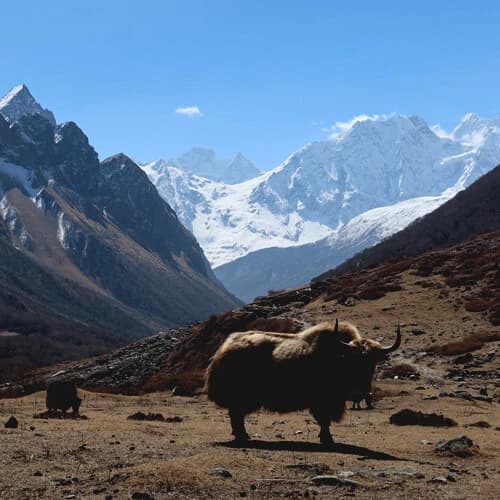
The path opens into vibrant terraced fields of barley and buckwheat, where yaks graze in open pastures near the Rana village. As you navigate the patchwork of stone steps, you’ll pass traditional mani walls—stones intricately carved with Buddhist prayers. This final stretch into Bihi grants you your first clear views of the lower flanks of Mt. Manaslu, the "Mountain of the Spirit".

Guide’s Insight: When you see a pack of mules approaching you, always move to the uphill side of the trail. It ensures you aren't accidentally bumped toward the steep, exposed edge of the river gorge.

  • meal iconMeals: Breakfast, Lunch, and Dinner
  • accomodation iconAccommodation: Lodge
Day05

Trek from Krack to Serang Gompa (3,100 m / 1,0170 ft) - 5 to 6 hours/10 km.

Leaving the main Manaslu circuit route behind at Bihi Phedi, you’ll head toward the Kyimolung Valley, a sacred "Beyul" or Hidden Valley of Happiness blessed by Guru Rinpoche. It’s a day that truly tests your stamina with a significant 970 m elevation gain over roughly 6 hours. But the hike is equally rewarding, reaching Serang Gompa (3,100 m), a 500-year-old sanctuary officially known as Sancen Rabten Norbuling.

The journey begins with a crossing of a long wooden bridge before the trail shoots upward through a dense tapestry of pine, juniper, and rhododendron forests. Since there are no teahouses on this rugged ascent, you'll find a quiet spot in the wilderness to enjoy your lunch before tackling the final push. As you arrive at the monastery guesthouse, you’ll have the rare chance to sit in on evening prayers with the crimson-robed monks.

Guide's Insight: Join the monks for their 4:00 PM salt butter tea, and listen to local stories about the monastery’s founder, Chokyi Gyaltsen.

  • meal iconMeals: Breakfast, Lunch, and Dinner
  • accomodation iconAccommodation: Lodge
Day06

Trek from Serang Gompa to Ghap (2,397 m / 7,864 ft) - 7 to 8 hours/14 km.

Your morning begins with a quiet breakfast in the Serang monastery dining hall. The trail winds through dense, fragrant stands of pine and the chance to spot Himalayan tahr perched on the rugged cliffs above. With the Shiringi Himal standing guard in the distance, the path provides a constant panorama of lush green hills and the deep river valley below.

The change in scenery is from quiet woodlands down to a series of glacial streams connected by the traditional wooden and bamboo bridges. After the remote settlement of Kwak, the trail rejoins the main river for two final hours of walking. You will arrive in Ghap (2,170 m) in the late afternoon where an excellent local lodge is available to you for the night.

  • meal iconMeals: Breakfast, Lunch, and Dinner
  • accomodation iconAccommodation: Lodge
Day07

Trek from Ghap to Lho (3,180 m / 10,433 ft) - 6 to 7 hours/11 km.

As you ascend from Ghap, the landscape transforms into a dramatic corridor of nature, as you follow the Budhi Gandaki River through a steep, narrow gorge. The trail leads you across swaying suspension bridges and into the heart of ancient oak and bamboo forests. This stretch is a haven for wildlife, so keep a sharp eye out for the Himalayan monal or the grey langur monkeys.

Upon reaching the checkpoint at Namrung, the horizon widens to reveal the towering peaks of Shringi and Ganesh Himal, marking your official entry into the Upper Nubri region. Continuing deeper, you’ll wind through the terraced fields of Lihi and the traditional stone architecture of Sho village, where the jagged silhouettes of Ngadi Chuli and Manaslu North dominate the skyline.

Your journey today ends at 3,180 meters in Lho, a village steeped in Tibetan spirituality and adorned with intricate mani walls and chortens. After checking in your teahouse, take a short ten-minute stroll up to the Ribung Monastery viewpoint just before sunset. On the walk back to your hotel, the sight of yaks grazing peacefully against the backdrop of Naike Peak offers a final, perfect glimpse into the timeless rhythm of Himalayan life.

  • meal iconMeals: Breakfast, Lunch, and Dinner
  • accomodation iconAccommodation: Lodge
Day08

Trek from Lho to Shyala (3,500 m / 11,482 ft) – 4 hrs/10 km.

If the weather is on your side, the first light of dawn hits the massive snowy pyramid of Mount Manaslu, turning the golden roofs of the hilltop Ribung Gompa into glowing beacons. Today is a shorter stretch, technically, about 4 hours of walking, but it’s an emotional and physical threshold. While the distance isn't grueling, you are now moving past that 3,500 m (11,483 ft) mark, where you will begin to experience the effects of high altitude.

The reward for this slow, steady ascent is Shyala, a picturesque herding settlement that serves as a massive 360-degree amphitheater for the Himalayas. Standing there, surrounded by ice-clad giants, you finally understand the deep spiritual gravity that has pulled pilgrims to these valleys for centuries.

Leaving the stone-paved alleys and ancient mani walls of Lho, the trail draws you back into the cool, shaded embrace of a forest thick with blue pine and rhododendron. Just as you reach the village of Lho, you are greeted by the views of Himalchuli (7,893 m) and Ngadi Chuli (7,871 m) to the east.

  • meal iconMeals: Breakfast, Lunch, and Dinner
  • accomodation iconAccommodation: Lodge
Day09

Shyala to Samagaun (3,530 m / 11,581 ft) – 3 hrs/6 km

After making your way down from Sereng Gompa on a relatively straight trail, you will find that you are entering the high-altitude plains of Shyala. This section alone will give you a 360-degree view of Ngadi Chuli, Himalchuli and Ganesh Himal. Furthermore, the open alpine meadows where the Yaks graze peacefully are populated by the Bhotia people. These native people are distinguished by their traditional woolen chubas and a lifestyle that has remained largely unchanged for centuries.

As you walk towards Nubri, you will encounter numerous stone mani walls which have the Buddhist prayer carved into them. By mid-afternoon, you arrive in Samagaun, the cultural hub of the Manaslu Circuit. After settling into this bustling Tibetan village, you’ll embark on a breathtaking detour to Pungen Gomba (4,000m). Located at the foot of Nagdi Chuli and Manaslu, the hike takes you across glaciers and moraine fields to an ancient shrine surrounded by soaring, snow-capped peaks.

After soaking in the spiritual atmosphere and the massive scale of the Manaslu Glacier, you’ll return to the stone-paved streets of Sama village. With the evening air getting cooler, it’s the perfect time to retreat to your lodge, zip into a heavy-duty sleeping bag, and rest for the night.

  • meal iconMeals: Breakfast, Lunch, and Dinner
  • accomodation iconAccommodation: Lodge
Day10

Acclimatization Day in Samagaun- Trek time 3 Hours

Today is dedicated to active recovery and deep rest to ensure your body adapts to the thinning Himalayan air. You will start the morning with a gentle trek to Birendra Lake, which is a beautiful blue lake which receives its water directly from the Manaslu glacier. The trail winds through rocky ridges, where you might hear the thunderous crack of shifting ice or spot local wildlife such as marmots and blue sheep.

Reaching the lake takes about an hour, offering a perfect spot to watch the emerald waters mirror the surrounding peaks. It’s a vital step in staying healthy and avoiding altitude sickness before the trek continues upward. For those feeling strong and energized, the day offers an optional, more challenging ascent to Manaslu Base Camp.

This is a full-day commitment, roughly 8 to 9 hours round-trip, pushing through snowy paths to reach the foothills of the world's 8th-tallest mountain. Whether you choose the demanding climb or a peaceful afternoon exploring Samagaun’s stone-paved streets and ancient mani walls, the goal remains to stay active and acclimatize. The day ends at your teahouse, sharing a cup of traditional butter tea with the Nubri people, and the serene atmosphere of this high-altitude sanctuary.

  • meal iconMeals: Breakfast, Lunch, and Dinner
  • accomodation iconAccommodation: Lodge
Day11

Trek from Samagaun to Samdo (3,875 m / 12,713 ft) – 5 hrs/10km.

From Samagaun, the scenery changes completely to the dry, high-altitude trans-Himalayan landscape. Following the flowing Budhi Gandaki River to eventually reach a narrow stream, you will encounter ancient prayer-engraved mani walls and cross over solid wood bridges. Once above 3,800m, you will begin to see lush trees replaced by hardy junipers or other bushes along the wide pastureland.

Finally, after a little while you will pass through a Kani, which is a traditional white gate, and eventually arrive at Samdo. This stone-built village, founded by Tibetan refugees in the 1950s, feels like a living museum of the old salt trade routes. It serves as the final permanent settlement before the formidable Larke Pass. Spend your evening soaking in the quiet mountain atmosphere, perhaps chatting with the locals or watching yak caravans arrive.

  • meal iconMeals: Breakfast, Lunch, and Dinner
  • accomodation iconAccommodation: Lodge
Day12

Acclimatization Day in Samdo

Prioritizing your well-being at this altitude is the secret to a successful trek. Today is all about "climbing high and sleeping low" to prepare your lungs for the Larke Pass challenge. To ensure the body acclimatizes properly, we recommend a scenic hike toward the ancient Tibetan border trade route.

Not only does this offer a front-row seat to some of the most dramatic mountain panoramas in the Manaslu region, but it also gives you a great chance to spot Himalayan blue sheep. Once you’ve soaked in the views, head back down to the village to lean into the slower pace of mountain life.

The afternoon is yours to spend, whether that means reading a book, swapping stories with fellow trekkers over steaming cups of butter tea, or simply observing the local lifestyle of Samdo. Remember to stay hydrated and eat well; these quiet moments of recovery are exactly what will keep you feeling strong and energized for the high-altitude days ahead.

  • meal iconMeals: Breakfast, Lunch, and Dinner
  • accomodation iconAccommodation: Lodge
Day13

Samdo to Dharmasala (4,460 m / 14,632 ft) – 5 hrs/7km.

Beginning with a hearty breakfast at our mountain home of Samdo, we walk away from the comforts of this village and cross a suspension bridge over glacial waters that flow out from the Tibetan border towards Larkya Bazaar. It is a historically significant trade area previously used by Himalayan merchants and over the years has now become an important staging point before moving onto an area that is considerably more rugged.

The 9 km trek follows an open, moraine-filled path that rises steadily through a landscape where the air grows thin, and the greenery fades into hardy junipers and dwarf rhododendrons. Every step toward the 4,460 m mark requires a steady pace, offering a meditative pace against the backdrop of staggering mountain vistas and the vast, icy expanse of the Larkya Glacier.

Expect a four-hour trek that feels increasingly raw and isolated as we approach Dharamsala, also known as Larkya Phedi. This isn’t a permanent village, but a high-altitude base camp consisting of simple stone lodges and tented shelters designed for one purpose: preparing for tomorrow’s pass crossing.

The atmosphere here is profound and quiet, occasionally greeted by the distant chime of yak bells or the sight of a Himalayan tahr scaling the rocky slopes. As the final stop before we tackle the formidable Larkya La Pass, the evening in Dharamsala is all about rest and soaking in the majestic views of Himalayan peaks under the starry sky.

  • meal iconMeals: Breakfast, Lunch, and Dinner
  • accomodation iconAccommodation: Lodge
Day14

Dharmasala to Bimthang via Larke Pass (3,590 m / 11,778 ft) – 10 hrs/18km.

In the predawn hours of 3:00 AM, you prepare for the final segment of your expedition—the climb to the top of Larkya La pass. You'll use your headlamp to guide you across frozen moraines and trek around jagged edges of Larkya Glacier, passing multiple high-altitude lakes. You’ll notice the air growing thinner as you maintain a rhythmic, steady pace toward the Larkya La Pass (5,106 m).

Reaching the summit at sunrise, as the sun is just beginning to rise above the eastern horizon, will be a spiritual experience. The burning sun will illuminate the peaks of Himlung Himal, Cheo Himal, and Annapurna II—and the fluttering prayer flags will provide a beautiful backdrop to this celebration of accomplishment and hard work during this exact moment. This 18-kilometer journey is physically demanding but rewards you with the most profound sense of achievement.

After soaking in the panoramic views at the summit, the journey back is a dramatic 1,500-meter descent that requires careful footing over scree and patches of snow. As you drop lower, the stark, glacial landscape softens, revealing the turquoise Ponkar Lake nestled between massive ice flows.

The descent eventually leads you into the lush green vegetation of Bimthang (3,720 m), where pine forests and wide meadows replace the high-altitude terrain. After 7 to 10 hours on the trail, the relief of the comfort of a warm lodge at the foothills of Manaslu provides the perfect end to your hardest day of trekking.

  • meal iconMeals: Breakfast, Lunch, and Dinner
  • accomodation iconAccommodation: Lodge
Day15

Bimthang to Dharapani (1,860 m / 6,102 ft) – 7 hrs/20km.

The primary challenge today isn't the ascent, but the massive 1,730-meter (5,675 ft) descent over roughly 20 kilometers (12.4 miles). As you might have to frequently catch your breath, your knees will also certainly feel the constant downward pressure on the trail. So, we suggest you maintain a steady pace, taking several breaks along the way. As you leave the "Hidden Valley," take a final look back at the north face of Mount Manaslu—its twin peaks often glow with a sharp, silver light in the early morning.

The journey follows the banks of the Dudh Khola, also known as the "Milk River" for its frothy, glacier-fed white waters. You’ll have to walk through a patchwork of ancient stone steps and winding earth tracks that lead you from alpine meadows into some of the most beautiful forests in the Gorkha district. As you move through lush alpine meadows, you will be surrounded by forests filled with native rhododendrons, pines, and oaks.

At midday, you will reach Tilje, a tidy village of stone houses known for its apple orchards and deep Gurung heritage. The final stretch takes you across a metal suspension bridge over the thundering Marsyangdi River to enter Dharapani (1,860 m / 6,102 ft). Here, the solitude of the Manaslu Circuit officially meets the bustling energy of the Annapurna Circuit, marking the end of your remote wilderness trek.

Guide’s Insight: As you descend the steep stone steps near Kharche, use your trekking poles to reduce the strain on your ankles and knees.

  • meal iconMeals: Breakfast, Lunch, and Dinner
  • accomodation iconAccommodation: Lodge
Day16

Dharapani to Kathmandu Via Besi Sahar – 9 hrs/8 to 9 hours/240 km / 150 miles

The transition from the rugged serenity of the high Himalayas to Kathmandu is a sensory roller coaster that most trekkers aren't quite ready for. After leaving Dharapani, the Marsyangdi River remains your constant, roaring companion as the trail dips into lush, sub-tropical forests.

This section of the trek ends at Besisahar and is known for its very rough, muddy jeep trails. But the views of the cascading waterfalls, which often mist the windows of your vehicle, offer a final, refreshing goodbye to the wild. You’ll notice the air getting warmer and the temperature rising, marking the definitive end of the high-altitude leg and the beginning of the long, winding drive back toward the capital.

The final push from Besisahar to Kathmandu takes anywhere from 6 to 8 hours, depending on the inevitable "Nepali traffic" and road conditions near Mugling. While the drive can be grueling, stopping at roadside hotels for a final plate of authentic, local dal provides a necessary break and refreshment.

After arriving in Kathmandu, you’ll be escorted to a designated hotel, where you can unpack your belongings and enjoy the evening after a relaxing hot shower.

  • meal iconMeals: Breakfast, Lunch
  • transportation iconTransportation: By Local Transport
Customize Trip

Manaslu Circuit Trek with Serang Gompa - 16 Days Equipment Check List

Preparing for the high-altitude terrain and spiritual detours of the Manaslu region requires more than just standard hiking gear; you need a layering system that can handle everything from humid river valleys to the freezing winds of the Larkya La Pass. As you get ready for your journey to the sacred Serang Gompa, use this guide to ensure your pack is both practical and lightweight.

Clothing

  • Moisture-Wicking Base Layers: Pack thermal tops and bottoms.
  • Lightweight Trekking Shirts: Two or three quick-dry shirts are perfect for the lower, warmer sections of the trail.
  • Insulating Mid-Layers: A high-quality fleece or a compact down jacket.
  • Outer Protection: You’ll need a reliable waterproof and windproof jacket (Gore-Tex or similar).
  • Versatile Trekking Pants:Convertible pants for the daytime and a heavier, insulated pair.
  • Nighttime Warmth: Thermal underwear and comfortable sleepwear.
  • Extremity Protection: A warm beanie, a wide-brimmed sun hat, and a neck gaiter or "buff".
  • Gloves: Lightweight pair of insulated winter gloves.

Reliable Footwear

  • Waterproof Trekking Boots: High-quality and well-worn-in boots to avoid trail-ending blisters.
  • Camp Shoes: A pair of lightweight sandals or sneakers.
  • Hiking Socks: Several pairs of wool or thermal trekking socks.

Backpacks and Technical Equipment

  • Trekking Bag: A 40 to 60-liter duffel bag with good lumbar support.
  • Daypack: A 20 to 30-liter pack for carrying your water, camera, and extra layers during the day.
  • Sleeping Bag: You will want a bag rated to at least -10°C (14°F).
  • Trekking Poles: Important for protecting your knees on the steep descent from the Larkya La Pass.
  • Lighting: A reliable headlamp with spare batteries.
  • Hydration: Bring reusable water bottles or a bladder system.

Sun Protection and Electronics

  • Eye and Skin Care: High-UV sunglasses, SPF 30+ sunscreen, and lip balm with SPF.
  • Power on the Go: A high-capacity power bank.
  • Capturing Memories: A smartphone or a dedicated camera for taking pictures and videos.
  • Essentials: A quick-dry towel and a rain cover for your backpack.

Personal Items and Trail Health

  • Medical Kit: Carry a basic first-aid kit with Diamox, blister care, pain relief, and any personal prescriptions.
  • Hygiene: Pack biodegradable soap, a toothbrush, toothpaste, toilet paper, hand sanitizer and wet wipes.
  • Paperwork: Keep your trekking permits and passport copies in a waterproof folder.
  • Cash: Bring enough Nepalese Rupees to cover expenses such as snacks, showers, and battery charging for the duration of the trek.
  • Extras: A pair of earplugs, and energy bars

Useful Information

Good to know before you travel

How difficult is the Manaslu Circuit with the Serang Gompa Trek?

It is a challenging journey suitable for experienced trekkers with prior high-altitude trekking experience. The journey takes you through remote and restricted areas with limited infrastructure. So, expect isolated trails that can become quite narrow and steep. Navigating them requires not just physical endurance and cardiovascular stamina, but also mental determination to handle the solitude and the trek's raw nature.

On most days, you are looking at five to seven hours of hiking. The terrain is often rocky and rough, involving constant shifts between steep ascents and descents that demand reasonable physical fitness and a steady pace. The biggest challenge will be the altitude gain as you eventually reach the highest point of the trek (Larkya La Pass) at approximately 16,734 feet, where there is a very real danger of suffering from altitude sickness if you do not take time to properly acclimatize yourself before starting the trek.

Additionally, the weather in the Himalayas is notoriously unpredictable. And the sudden temperature drops, biting winds, and fresh snow can make the higher sections significantly more strenuous. So, when you are planning to trek in these mountainous areas, having the proper preparation is non-negotiable. The safest and most comfortable way to manage risks associated with this unpredictable environment is by trekking at the right time of year, hiring a qualified guide, and a reliable porter.

How can I prepare for this journey?

Training for this trek requires dedication and consistency to develop your physical and cardiovascular fitness. We suggest you follow a workout routine at least 2 months before the trek to condition your body and to ensure a safe journey.

  • The 16-Week Rule: Use the first month for developing core muscles, months two and three for strength training, and the final two weeks to maintain stamina and recovery.
  • Hike Simulation: If you don't live near hills, find a stadium or high-rise. Climb at least 15 floors per session, repeating the circuit three times with a 10kg pack to mimic the Serang Gompa ascent.
  • Balance and Flexibility: Spend 10 minutes a day on a BOSU ball or standing on one leg while doing chores to prep your stabilizer muscles for the swaying suspension bridges over the Budhi Gandaki.
  • Hydration Habit: Practice drinking 3-4 liters of water daily during training to get your body used to the volume required to prevent Acute Mountain Sickness (AMS) on the trail.

The risk of altitude sickness and its remedies

Acute Mountain Sickness (AMS) or altitude sickness is essentially your body’s response to a rapid drop in atmospheric pressure and oxygen level at high altitudes. When you climb too quickly to high altitudes, your cells don't have enough time to adjust to hypoxia (oxygen shortage). This results in your heart and lungs working double-time to keep your body moving.

Besides, in our experience leading groups through the Manaslu region, we’ve found that AMS affects you regardless of your fitness level or age. So, if you ignore the signs, mild AMS can escalate within hours into High Altitude Pulmonary Edema (HAPE) or Cerebral Edema (HACE). These are serious conditions involving fluid in the lungs or brain that require immediate medical attention.

Symptoms to watch for

  • Persistent headache, nausea, loss of appetite, and dizziness.
  • Insomnia, fatigue, and overexhaustion.
  • Severe vomiting and shortness of breath while resting.
  • Inability to walk in a straight line, confusion,

Prevention

  • We design our itineraries so your sleeping altitude never jumps more than 300-500 meters per day once you cross the 3,000-meter mark.
  • Consume a lot of carbohydrates because they require less oxygen to metabolize than fats or proteins, giving you more efficient energy for the climb.
  • Drink 3 to 4 liters of water daily to stay hydrated.
  • We include mandatory acclimatization days in Sama Gaon (3,530m) or Samdo (3,860m) to ensure active acclimatization and recovery.
  • Drink natural remedies like ginger tea and garlic soup.
  • Take Diamox under medical supervision before crossing 3,000m to stimulate breathing and speed up oxygenation of the blood.

What are the means of transport to reach Macha Khola?

The bus ride to Manaslu is one big adventure before you even reach the start of your trek! Travelling to and from the Gorkha area is very much a reflection of how rugged and remote this area of Nepal is. Most guests travel on local buses, which are the standard form of transport. These local buses are the cheapest options available from Kathmandu to trailhead at Machha Khola and back to Besisahar after your trek.

The experience on a local bus is definitely immersive. You’ll find yourself sitting alongside local families and fellow trekkers. Local buses will provide you with an authentic experience to experience the daily rhythm of rural life in Nepal but are generally not comfortable. The roads can be rough, dusty, and incredibly bumpy, and the vehicles often get crowded, especially if you happen to be traveling during festivals like Dashain, and Tihar. It’s a great choice if you want a slice of real Nepalese life, but it requires a bit of patience and an adventurous spirit.

On the other hand, if you desire comfort and want more flexibility after a long trek, we highly recommend upgrading to a private 4WD jeep. A private vehicle lets you travel on your own schedule, avoid frequent stops along the way to your destination, and traverse difficult road conditions much more easily than public transportation would. A private jeep from Kathmandu to the Machha Khola trailhead costs approximately USD 200, while the return trip is around USD 250. This upgrade is an excellent option if you're traveling in the monsoon or winter months, when the trails can become quite difficult to travel on.

What’s the accommodation like in the Manaslu region?

Accommodation in the mountains consists of traditional family-run tea shops. In the villages of Jagat, Lho and Samagaun, these lodges provide refuge for relaxing at the end of a long hiking day. You aren't just a guest; you’re essentially staying in the homes of local families who have lived in these valleys for generations. The atmosphere centers on genuine hospitality and shared stories around a communal stove, offering an intimate look into the resilient cultures of the Nubri and Gurung communities.

Accommodations will consist of very basic, yet adequate rooms that generally will offer two shared wooden cot-style beds, with standard, foam-filled mattresses and clean sheets. While these spaces are cozy, they lack central heating, and as you climb toward the high-altitude markers of Samdo and the Larkya La Pass, the nighttime temperatures drop significantly. To stay comfortable, we suggest using a high-quality sleeping bag with a blanket.

The bathrooms are mostly provided on a shared basis and range from simple squat toilets to Western-style facilities, with hot water available for a small additional fee. The most memorable experience of this trek will be spending one night at Serang Gompa. Rooms at the monastery are very simple, often consisting of shared dormitories that prioritize quiet reflection over luxury. You won't find hot showers or modern amenities here. But the level of spiritual energy and the opportunity to witness morning rituals make this experience the most memorable and rewarding of the entire trek.

Local Food and Beverages to Try in Manaslu

Most people will tell you to eat Dal Bhat every day, and honestly, you should; it's the fuel that keeps you energized. But here in the Manaslu region, you will eat meals made with local buckwheat and barley grown in the high-altitude fields of Samagaon and Samdo. Unlike the white rice you find in Kathmandu, these mountain grains provide a slow release of energy that makes a huge difference when you’re pushing through a 7-hour trekking day. The achar (pickle) has a very distinct, almost pungent flavor and is an appetizing way to increase your appetite.

If you want a real taste of Nubri culture, look past the standard menu for dishes like Rikikur and Rildok. Rikikur are these incredibly satisfying potato pancakes, finely grated and pan-fried with fresh nak (female yak) butter until golden; they are best enjoyed with yak cheese. Then there’s Rildok, which is a personal favorite for cold nights. It is a soup made from pounded potatoes that have been ground in a wooden mortar until smooth and stretchy like soft, fluffy gnocchi. Both of these dishes are common staples found in the mountains, and therefore represent the ingenuity of local people who depend on potatoes for survival at such high elevation.

Besides, you can’t leave Manaslu without trying Su Chya, the traditional salt butter tea. It’s an acquired taste, more like a warm, salty soup than a standard brew. But it’s a lifesaver for staying hydrated and keeping your body warm in the cold temperatures. In Tibetan-influenced villages like Lho and Samdo, a host will constantly top off your bowl as a sign of respect, so leave it half-full if you've reached your limit. On the other hand, you can also try the local apple brandy in Tilije village. It is a sharp, clear spirit that’s a perfect way to toast your successful descent into the Marsyangdi Valley.

Do I need Travel Insurance for this Trek?

Trekking through the Manaslu region is another-worldly, but the raw beauty of the Himalayas creates serious logistical challenges. Since the Serang Gompa route takes you from a starting elevation of about 930 meters all the way to the 5,106-meter Larkya La Pass, a basic insurance plan won’t be enough. You need a comprehensive policy specifically designed for high-altitude trekking above 5,000m.

Your plan must cover adventure activities in addition to medical care. It must also protect you against theft, personal liability, and, most importantly, emergency helicopter evacuation. If you have a medical emergency in Nepal, a rescue flight can easily cost thousands of dollars.

Also, a lot of hospitals won't start treatment until they get payment up front or confirmation from your provider right away. We strongly suggest that you pick an insurance company that is known for paying facilities directly or for quickly reimbursing claims. Before you leave, make sure that the insurance policy includes the altitude limits and claim requirements. This will save you trouble later.

How Can I Obtain A Nepal Visa?

Getting your entry permit for Nepal is actually quite a smooth process. Most of our guests find the Visa on Arrival at Kathmandu’s Tribhuvan International Airport to be the most convenient way. It usually takes just a few minutes to process the visa after you land. You can also apply to receive a visa through a local Nepalese embassy or consulate in your country. Just be sure that your passport is valid for at least 6 months after your arrival in Nepal.

When it comes to costs, the fees are based on how long you plan to stay. The cost of the 15-day visa is $30, while the 30-day visa will cost you $50; for those wanting to spend more time in the Himalayas, the cost of the 90-day visa is $125. While most of the counters at the airport do have the ability to take credit cards, we suggest that you have a little cash available in US dollars, Euros or Pounds for easier payment.

Add-ons Trips

You May Also Like
Manaslu Circuit Trek
Duration: 14 Days

Manaslu Circuit Trek - 14 Days

Starting from
US$920per person
based on 5 reviews
Manaslu Trek 12 Days
Duration: 12 Days

12 Days Manaslu Circuit Trek Package

Starting from
US$899per person
based on 7 reviews

We’re Associated

  • Nepal Government
  • NTB
  • NMA
  • TAAN
  • himalayan rescue
  • KEEP
Need Help? Call Us.+977 9820996633