










Langtang Circuit Trek - 13 Days

A Langtang Circuit Trekking of Whole Langtang Region of Nepal !
Langtang Circuit Trek

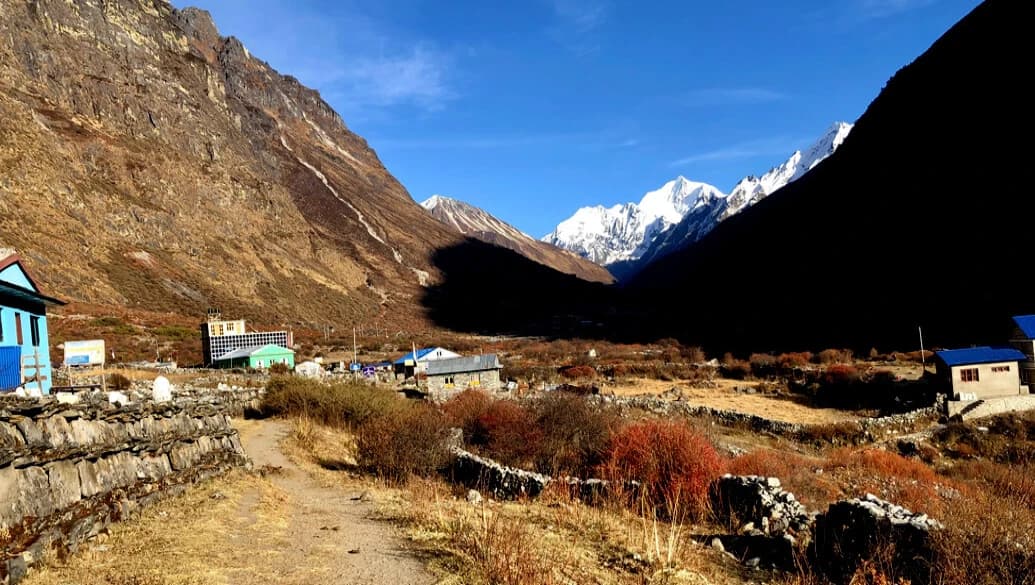
"Begin your exceptional journey to the heart of the Langtang valley with the 13-day Langtang Circuit Trek. Hike the off-the-beaten trail on Nepal's most diverse and resilient mountain terrain to the Kyanjin Gompa, and immerse yourself in the culture of the Tamang-Sherpa community. Brace yourself for the raw alpine challenge and cross the thrilling Lauribina Pass, and visit Gosaikunda Lake."

facts icon

What to see & do

Specific information about Langtang Circuit Trek - 13 Days
duration icon
Duration13 Days
grade icon
Trip GradeStrenuous
i
altitude icon
Max Altitude5033m
start icon
Starts atKathmandu
end icon
Ends atKathmandu
travel-style icon
Travel StyleLodge to Lodge Trek
group-size icon
Group Size10
transportation icon
TransportationLocal Transportation
cloud-sun-rain icon
Best SeasonSpring and Autumn

Best Features of the Langtang Circuit Trek 13 Days

  • A scenic 8-hour drive from Kathmandu to Syabrubesi with picturesque views of hills, rivers, forests, and distant villages.
  • Steady hike through the fragrant rhododendron and pine forests of the Shivapuri and Langtang National Park.
  • Experience the rich biodiversity of the region, featuring vibrant flora and fauna, with an exclusive chance to encounter elusive wildlife, such as the Himalayan Tahr and Red Panda.
  • Immerse yourself in the spirituality of the monasteries in Kyanjin Gompa (3,870 m/12,697 ft), and savor the locally made yak cheese.
  • Stay in traditional, built teahouses in villages like Thulo Syabru (2,120 m/6,955 ft) and experience the hospitality of the local people.
  • Interact with the indigenous group known as the Hyolmos, who are native to the Langtang region.
  • Walk past beautiful rural settlements, such as the Langtang village, which are adorned with prayer flags and mani walls.
  • Witness a mesmerizing sunrise view of the snow-capped mountains from the Tserko Ri (5,033 m/16,512 ft) and Kyanjin Ri (4,773 m/15,659 ft) viewpoints.
  • Panoramic 360-degree vista of shimmering mountains like Langtang Lirung 7,234 m/23,734 ft), Ganesh Himal (7,429 m/24,373 ft), Yansa Tenji (6,567 m/21,545 ft), Dorje Lakpa (6,966 m/22,854 ft), and Kimsung peak (6,781 m/22,247 ft).
  • Experience the thrill of crossing the Lauribina Pass (4,610 m/15,121 ft), and be awestruck by the view of the Langtang Glacier.
  • Explore the wonderful Kimsung and Lirung glaciers.
  • Visit the holy Gosaikunda lake, a sacred pilgrimage site for both Hindu and Buddhist followers.

Langtang Circuit Trek Overview

The Langtang Circuit trek is a 13-day hike in Nepal, which combines the Gosaikunda Lake with the classic Langtang Valley trail. This adventurous journey offers you a diverse experience of the Tamang-Sherpa culture, sacred religious heritage sites, alpine landscape, and challenging high passes. The trek is described as moderately difficult but rewarding, requiring decent physical fitness, and is recommended for completion in the spring and autumn seasons.

Trekking the Langtang Circuit is an excellent alternative to renowned treks such as the Annapurna Circuit Trek and the Manaslu Circuit Trek. You will enjoy a less crowded trail, cultural landmarks, and fantastic mountain views from vantage points like Tserko Ri and Kyanjin Ri peak, the highest point of the trek. Our 13-day itinerary is designed with strategic acclimatization stops at Kyanjin Gompa and includes exploration of some parts of the Tamang Heritage trail and the Helambu region.

Our journey begins at Syabrubesi, the gateway to the Langtang region, which is 122 kilometers from Kathmandu. You will follow the Bhotekoshi River, and hike alongside the Lamjung Khola, and hike deeper into the Langtang National Park. As you ascend higher, you will witness a sublime, up-close panorama of Langtang Lirung (7,234m/23,734ft), Ganesh Himal (7,429 m/24,373 ft), Dorje Lhakpa (6,966 m/22,854 ft), Shishapangma (8,027m/26,335ft), and Kang Guru (6,981m/22,904ft).

The trek reaches one of its climaxes at Kyanjin Gompa, a Buddhist monastery, where travelers can experience the region's spirituality and local traditions. We encourage you to participate in the daily prayer meetings with the monks and interact with the locals to gain a deeper understanding of their rich heritage. Moving on, you cross the thrilling Laruebina Pass, a monumental achievement of the journey. Take a moment to feel the adrenaline and soak in the incredible mountain views surrounding you.

After exploring the scenic valley, the trail leads you to the holy Gosaikuda Lake, which is believed to be the abode of Lord Shiva. It is one of Nepal's most revered sacred sites, offering travelers a profound cultural experience that complements the region's natural beauty. Visiting this holy site and witnessing the devotion of Hindus and Buddhists provides a remarkable insight into the tradition of the people who live in the Himalayas.

Our Langtang Circuit Trek package is suitable for travelers of all ages, and can be customized according to your fitness level. Whether you need to extend it to a 14 or 16 day itinerary with extra acclimatization days, we can arrange it to maximize your safety and enjoyment.

How is Langtang Valley recovering after the 2015 Earthquake?

The Langtang region experienced an immense tragedy due to the devastating earthquake in 2015, which destroyed several settlements and guesthouses. However, the people of the region stayed strong, and after a decade, the story of Langtang remains one of comprehensive renewal and extraordinary resilience.

The local Tamang-Sherpa community demonstrated unity and strength in rebuilding the villages with stronger foundations through reconstruction efforts. As a result, the old trek routes that were repaired are now in good condition, eliminating concerns about trail condition. Tourism has also played a vital role in the continued infrastructure and economic development of Langtang.

Today, there are more than 35 teahouses and lodges with adequate modernized facilities. These high-quality accommodations offer vegan/vegetarian meals, and amenities such as attached bathrooms and hot showers. By choosing the Lantang Circuit Trek, you will be directly contributing to the local economy, helping to ensure that mountain communities thrive and remain prosperous and vibrant. Your participation in this journey confirms the region is wonderful and welcoming as it has ever been.

Langtang Trek Permits and Mandatory Guide Rules for 2025

As of February 2025, trekkers visiting the Langtang region will be mandated by the Nepalese government to be accompanied by a licensed trekking guide. This initiative is made to ensure safety and legal compliance in Langtang National Park. In addition, the Langtang National Park and the Trekking Agencies' Association of Nepal (TAAN) advises that the TIMS card can only be arranged through a registered trekking agency. This decision will effectively ban solo or unguided trekking in the Langtang region.

Therefore, any trekkers who are not accompanied by a guide will be denied entry at checkpoints such as Suabrubesi and Dunche, facing penalties set by the authorities. But you don't have to worry, by booking the 13-day Langtang Circuit Trek with Outfitter Nepal, you will eliminate any hassle during the journey. Our travel plans adhere to the law, ensuring compliance and safety by providing a licensed guide, handling payment, and submitting the necessary permits on time.

What permits will I need for the 13-Day Langang Circuit Trek in 2025/26?

Trekkers wishing to access the Langtang region for any trek or expedition must obtain a Langtang National Park Entry Permit and a Group TIMS Card (Trekkers' Information Management System). These two permits cannot be arranged by yourself and must be managed through a registered trekking agency.

Langtang National Park Entry Permit: The permit costs approximately 3,000 Nepalese Rupees (around $20 USD), and the fee funds trail maintenance and wildlife conservation within the region. The authorities will check the permit at entry points such as Syabrubesi or Dunche.

Group TIMS Card (Trekkers' Information Management System): The processing fee for this document is $10 USD per person. It is mandatory for the Langtang Circuit trek to ensure your safety, as it registers your trek and tracks your movements on the trail, making it easier for your rescue in case of an emergency. Since solo trekking is now banned, only the Group TIMS card is issued via a trekking agency for travelers.

Note: You don't need to worry about the complexity of the application process for these permits. As part of your booking, our travel planner and Director of Outfitter Nepal, Raj, will secure all necessary documents to facilitate a hassle-free and smooth permit process.

Meet the Experts Who Will Guide Your Langtang Circuit Trek.

The professional leading you largely determines the difference between a challenging trek and an unforgettable adventure. Due to the remote nature of the Langtang Circuit trek and the government's new mandatory guide rule, your guide is crucial for your safety and an enhanced travel experience.

Your journey will be led by experienced and government-licensed individuals, such as Sanjaya Adhikari and Kapil Gauli. They have firsthand expertise in the Langtang and Gosaikunda regions, and will provide you with an immersive experience and understanding of the unique geology, traditions, heritage, and history. Our guides have a broad understanding of safety protocols and are experienced in wilderness first aid, allowing them to handle injuries and illnesses on the trail.

They also have years of trekking experience in the high-altitude region, and can proactively manage Acute Mountain Sickness (AMS) or altitude sickness. Our guides are equipped with an oximeter to check your pulse rate and oxygen saturation while you ascend in the mountains. This is an essential step in monitoring your vital signs, allowing immediate action to be taken if any symptoms arise.

Langtang Circuit Trek Cost

The cost of the 13 days Langtang circuit trek for a group of 10 people starts at US$ 895. This is the price of a standard package from Outfitter Nepal. If you have a group of more than 10 persons, we can adjust the package budget to meet your needs. Similarly, if you're a solo trekker or a small group of trekkers, the circuit trek for Langtang may cost anywhere from US$ 995 and US$ 1150, depending on your budget. Please keep in mind that if you want to change the accommodation or food services included in the overall standard pricing package, the trek cost will change.

Wherever possible in the trekking, we can upgrade your lodging options for better tourist quality accommodation with attached toilets. We can surely enhance your stay in Kathmandu or nearby towns with a luxury hotel, but most lodgings in the Langtang region are basic. Regardless, we strive to make your trekking experience as pleasant as possible.

Thus, the cost of a trekking package in the Langtang region can vary depending on whether you want to personalize your accommodation or make modifications to the itinerary! To learn more about the services offered with the standard Langtang trek cost, read the cost including and excluding parts!

Why choose Outfitter Nepal as your Travel partner?

We don't just manage your logistics for the trek, but provide a legally compliant, authoritative, and experience-backed journey for your enjoyment and confidence. Since our establishment in 2009, we have guided over 100 adventurers on popular expeditions, including the Everest Base Camp (EBC), Annapurna Base Camp (ABC), Annapurna Circuit, and Langtang Circuit.

Our dedication to providing you an exceptional trek experience is demonstrated by our high rate of returning clients, with almost 60% of our trekkers being repeat clients!. This loyalty shown by travelers is a strong reflection of our personalized service, reliable hospitality, and trip management skills. We have over 800 reviews on TripAdvisor and 200 on Google, which you can review to understand the level of satisfaction our clients have experienced during their treks.

Outfitter Nepal is also registered and associated with regulatory government bodies that oversee safe travel in Nepal. We visibly display our affiliation with Trekking Agencies' Association of Nepal (TAAN), Nepal Mountaineering Association (NMA), and Nepal Tourism Board (NTB), reinforcing our commitment to ethical and legal operational standards. Our extensive expertise and collaboration with the authorities ensure seamless logistical management throughout your 13-day Langtang Circuit trek.


Langtang Circuit Trek - 13 Days Itinerary Outline

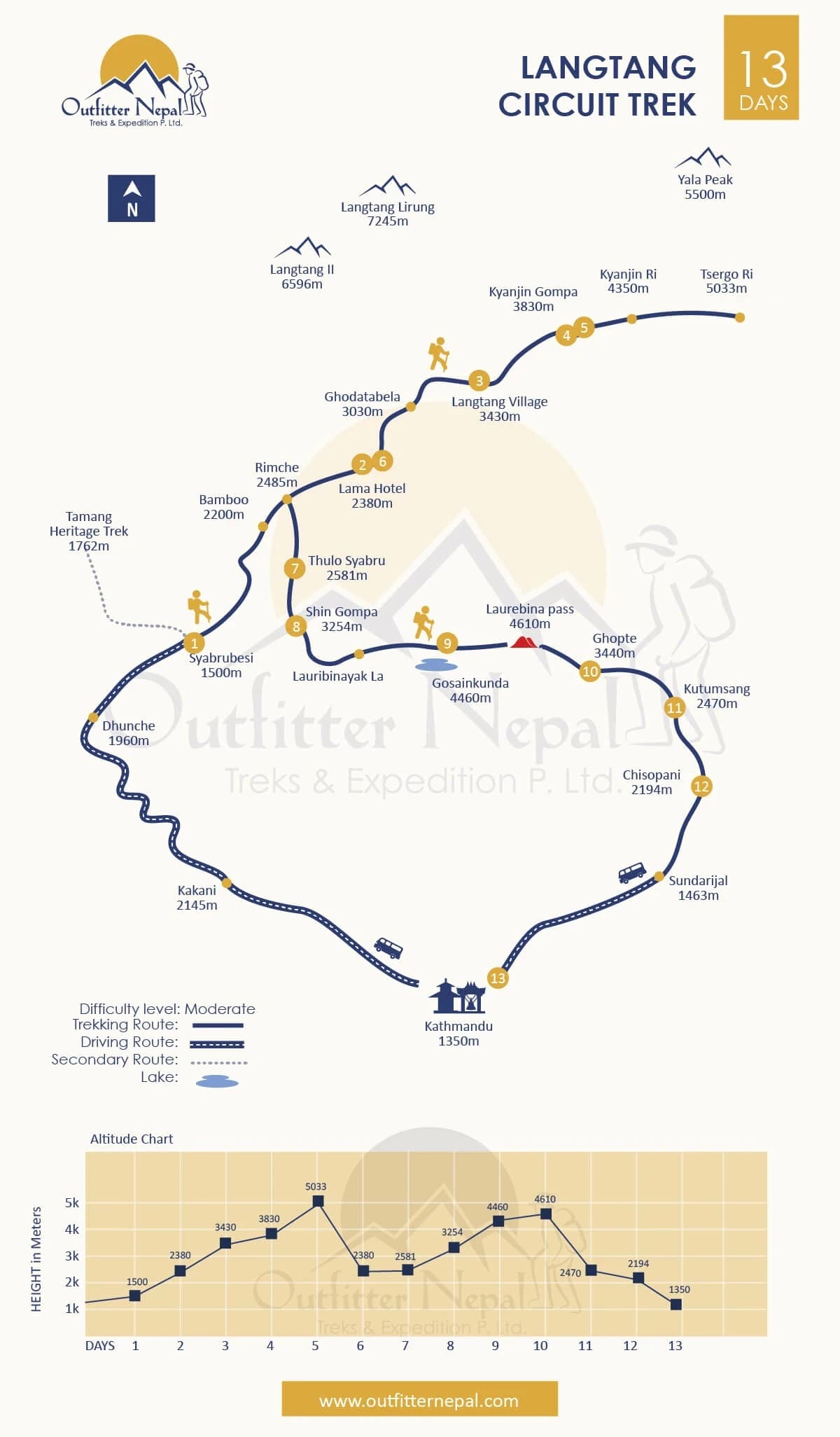
  • Day 01: Drive from Kathmandu to Syabrubensi (1,500 m / 4,921 ft) 120 km/ 6-7 hrs (drive)
  • Day 02: Trek from Syabrubeshi to Lama Hotel (2,470 m / 8,104 ft) 15km/ 6-7 hrs
  • Day 03: Trek from Lama Hotel to Langtang village (3,430 m / 11,253 ft) 12km/ 5-6 hrs
  • Day 04: Trek from Langtang Village to Kyangjin Gompa (3,870 m / 12,694 ft) 7km/ 4-5 hrs
  • Day 05: Rest day at Kyangjin Gompa and we do some excursions around (3,870 m / 12,694 ft)/ 5-10km (optional)/ 4-5 hrs
  • Day 06: Trek from Kyangjin Gompa to Lama Hotel (2,470 m / 8,104 ft) 15km/ 6-7 hrs
  • Day 07: Trek from Lama Hotel to Syabru Gaon (1,900 m / 6,234 ft) 15km/ 6-7 hrs
  • Day 08: Trek from Thulo Syabru to Sing Gompa (Chandan Bari) (2,250 m / 7,382 ft) 12km/ 6-7 hrs
  • Day 09: Trek from Sing Gompa to Gosaikunda via Lauribine (4,380 m / 14,370 ft) 14km/ 7-8 hrs
  • Day 10: Trek from Gosaikunda to Ghopte via Lauribinayak Pass (4,400 → 3,400 m / 14,436 → 11,155 ft) 12km/ 6-7 hrs
  • Day 11: Trek from Ghopte to Kutumsang (2,900 m / 9,514 ft) 14km/ 6-7 hrs
  • Day 12: Trek from Kutumsang to Chisopani Danda (2,200 m / 7,218 ft) 15km/ 6-7 hrs
  • Day 13: Trek from Chisopani to Sundarijal and drive to Kathmandu (1,400 m / 4,593 ft ) 37km/ 4-5 hrs (trek) and 1 hr (drive)
Langtang Circuit Trek Route Map

Cost Details

Good to know before trip booking

What's Included

  • Airport pick-up and drop-off service to make your arrival and departure hassle-free.
  • All essential paperwork, including National Park entry permits and the TIMS card.
  • A licensed, skilled, English-speaking guide who will ensure a safe and smooth journey.
  • Salary, meals, accommodation, transport, and insurance for our guides and staff.
  • Round-trip transportation between Kathmandu and the trailhead by local vehicle.
  • Simple, comfortable lodging in tea houses or mountain lodges throughout the trek.
  • Full board meals during the trek, covering breakfast, lunch, and dinner, with morning tea or coffee.
  • Seasonal fruits served as dessert after dinner.
  • Complimentary use of sleeping bag, down jacket, and duffel bag provided when needed (returned after the trek).
  • A complete first-aid kit and oximeter for health monitoring.
  • Outfitter Nepal T-shirt, cap, and trekking map.
  • A farewell dinner in Kathmandu at the end of your trek.
  • A trip completion certificate for your memories.
  • Emergency helicopter arrangements are available when required and are covered by your travel insurance.
  • All government taxes, VAT, and service charges are included.

What's not Included

  • Fee for Nepal entry visa (you may simply issue the visa upon your arrival at Tribhuwan International Airport in Kathmandu)
  • Your travel insurance policy (mandatory)
  • International airfares and airport transfers
  • Porter to carry your luggage during the trek (if you require a porter to carry your stuff, it will cost you USD 260 each porter and 1 porter for 2 trekkers; the porter has a 20-22kg weight limit)
  • Accommodation and meals in Kathmandu
  • Drinks, snacks, and all personal expenses
  • Laundry, phone, hot shower, and internet fee
  • Tips for the guide and potter
  • Anything not covered in the included section

Add-Ons & Options

Outfitter Nepal Treks & Expedition introduces an extensive selection of add-ons that you can add to the standard trekking packages at the time of checkout. These premium add-on options are designed to customize your trips according to your liking without any hassle. Add an extra night’s accommodation in Kathmandu or a private vehicle to the trailhead with just a couple of clicks. Enjoy your Langtang Circuit trip to the fullest with our tailor-made add-ons!

Hotel Kathmandu for $40 to $45

Need accommodation for extra nights in Kathmandu? Add a single room for $40 per night and a double room for $45 per night in a 3-star hotel with breakfast.

Single Supplement for $300

Want some privacy during the trek? You can now get a whole room to yourself at teahouses and lodges during the entire journey by paying an extra $300. By adding this add-on, you no longer have to share your teahouse room with fellow trekkers. 

Porter Service for $20 per day

Too much weight on your shoulders? Hire a porter to carry your backpack for an additional $20 per day. You can share the porter’s wage with another trekker as a porter can carry a maximum of 25 kg. 

Kathmandu to Syabru Besi in a Private Vehicle

Not a fan of bus rides? Now, you can travel in comfort from Kathmandu to Syabru Besi (the starting point of the trek) in a private jeep for an additional cost of $170. Travel at your own pace with frequent stops to admire the scenery along the way. Extra bonus for a group, you can share the Jeep fare amongst each other. 

Note: You can add the return trip from Syabru Besi to Kathmandu in a private jeep for another $170.

Dates & Prices

Book your trip with confidence

Plan It Your Way (A Trip Tailored to Your Pace)

Your 13-day Langtang Circuit Trek can begin on any date that suits your schedule. Since this is a fully customizable private trip, you're free to customize the entire trip. Please select your desired departure date, and our team will handle all the necessary arrangements to make your journey smooth and stress-free.

Guaranteed Departures (No Group-Size Restrictions)

Once you confirm your booking, your trek is guaranteed. Whether you're traveling solo, with a partner, or in a small group, your trip will never be canceled. Even if the number of participants is less than the standard group size, the 13-day Langtang Circuit Trek continues exactly as planned, with the same level of service and inclusions promised.

Flexible Cancellation & Rescheduling Policy

We know plans can change, so we offer a flexible system to support you. If you need to cancel, please inform us at least 30 days before departure with a valid reason. Your deposit will be refunded or held for a future trip, allowing you to reschedule your Langtang adventure to any date, month, or year. If cancellation occurs less than 20 days before the trek begins, the paid amount becomes non-refundable. For any questions or help with date changes, our team is always ready to assist.

Select a departure month

Showing Departures of Dec 2025
Starts: Monday
Dec 15, 2025
Ends: Saturday
Dec 27, 2025
Price (Per Person)
US$865
Availability
Guaranteed
Starts: Wednesday
Dec 17, 2025
Ends: Monday
Dec 29, 2025
Price (Per Person)
US$865
Availability
Guaranteed
Starts: Friday
Dec 19, 2025
Ends: Wednesday
Dec 31, 2025
Price (Per Person)
US$865
Availability
Guaranteed
Starts: Monday
Dec 22, 2025
Ends: Saturday
Jan 03, 2026
Price (Per Person)
US$865
Availability
Guaranteed
Starts: Wednesday
Dec 24, 2025
Ends: Monday
Jan 05, 2026
Price (Per Person)
US$865
Availability
Guaranteed
Starts: Friday
Dec 26, 2025
Ends: Wednesday
Jan 07, 2026
Price (Per Person)
US$865
Availability
Guaranteed
Starts: Monday
Dec 29, 2025
Ends: Saturday
Jan 10, 2026
Price (Per Person)
US$865
Availability
Guaranteed
Starts: Wednesday
Dec 31, 2025
Ends: Monday
Jan 12, 2026
Price (Per Person)
US$865
Availability
Guaranteed

Detail Itinerary

Trip day to day detail itinerary
Day01

Drive from Kathmandu to Syabrubensi (1,500 m / 4,921 ft) 120 km/ 6-7 hrs (drive)

The departure from Kathmandu to Syabrubensi marks the start of your adventure in Langtang, as you will spend a whole day driving through the beautiful mid-hills of Nepal. The road journey begins by taking you out of the busy capital city and then into quiet rural communities with terraced fields, small villages, and winding rivers. Along the way, you can stop at viewpoints overlooking deep valleys, forested ridges, and, on clear days, your first distant glimpse of the Langtang Himal.

The route follows the Trishuli River, giving you continuous views of mountain cliffs and waterfalls as you move closer to the trekking start point. Although the drive can be bumpy in places due to mountain roads, it provides a unique experience as you move closer to the mountains of Nepal.

By the time you reach Syabrubensi, you'll feel the shift in atmosphere—quiet surroundings, fresh mountain air, and the gentle rhythm of village life. It's a relaxing evening when you settle into your teahouse, enjoy a warm meal, and mentally and physically prepare for your first day on the trail.

  • max-altitude iconMax. Altitude: 1550m/5085ft
  • meal iconMeals: Lunch and Dinner
  • elevation-gain iconElevation Gain: 202m/656ft
  • accomodation iconAccommodation: Mountain Lodge
  • walking-hour iconWalking Hours: 7-9 hrs
  • walking-distance iconWalking Distance: 122 km
  • transportation iconTransportation: Local Transport
Day02

Trek from Syabrubeshi to Lama Hotel (2,470 m / 8,104 ft) 15km/ 6-7 hrs

The trek begins as you follow the trail along the Langtang Khola. The path passes through lush forests of bamboo, rhododendron, and oak, with occasional waterfalls and small streams adding natural charm to the hike. You walk across several suspension bridges that offer striking views of the mighty river beneath.

Small villages like Bamboo and Rimche make great spots to enjoy a well-deserved break while you relax and watch the locals go on with their daily life. Moving on, the trail climbs gently, helping you ease into the rhythm of the trek while offering expansive views of terraced hills and distant snowy peaks.

The pace remains steady throughout the trek, allowing your body to adjust to the increasing altitude. By evening, you will reach Lama Hotel, situated on a quiet, forested slope, offering simple yet comfortable accommodation for a restful night's stay. This is your time to relax after the long hike and enjoy a warm meal before preparing for tomorrow.

  • max-altitude iconMax. Altitude: 2380m/7808ft
  • meal iconMeals: Breakfast, Lunch and Dinner
  • elevation-gain iconElevation Gain: 830m/2716ft
  • accomodation iconAccommodation: Mountain Lodge
  • walking-hour iconWalking Hours: 5–6 hours
  • walking-distance iconWalking Distance: 11.3 km
Day03

Trek from Lama Hotel to Langtang village (3,430 m / 11,253 ft) 12km/ 5-6 hrs

Leaving Lama Hotel, the trail rises gradually through thick pine forests, where the sound of the Langtang Khola adds a serene ambiance. You cross the river several times on wooden and suspension bridges, each crossing bringing slightly more expansive views of the valley. As you climb, the small meadows open up, giving you your first glimpses of the Himalayas.

We will stop by at Ghoda Tabela in the afternoon to rest before the long hike ahead. The route continues toward the heart of Langtang, passing small Tamang settlements. The place is dotted with stone-built houses, spinning prayer wheels, and long mani walls carved with Buddhist mantras. These cultural markers signal the region's more profound Tibetan influence.

The final stretch of the hike today brings you close to an alpine region with fewer trees, colder air, and thick layers of snow. Langtang Village is a quiet and welcoming place, where teahouses offer warm meals and provide an opportunity to meet locals, and learn about the valley's history and traditions.

  • max-altitude iconMax. Altitude: 3430m/11253ft
  • meal iconMeals: Breakfast, Lunch and Dinner
  • elevation-gain iconElevation Gain: 1050m/3445ft
  • accomodation iconAccommodation: Mountain Lodge
  • walking-hour iconWalking Hours: 5–6 hours
  • walking-distance iconWalking Distance: 14 km
Day04

Trek from Langtang Village to Kyangjin Gompa (3,870 m / 12,694 ft) 7km/ 4-5 hrs

The hike to Kyangjin Gompa starts with a gentle ascent through vast pastures and open valleys. Here, the long mani walls and scattered prayer stones remind you of the region's deep spiritual heritage. As you walk, the terrain offers views of Langtang Lirung and the snow-draped peaks that define the upper valley.

Along the way, you will see yaks grazing on pastures and villagers going on with their daily chores, giving you a glimpse into the everyday life of the mountain people. With every step, the air feels cooler as you pass by glacial streams and icy landscapes that signal your approach to Kyangjin. The village itself is a serene settlement nestled among dramatic mountains.

It is known for its monastery, traditional yak cheese factory, and several high viewpoints that offer breathtaking panoramas of Langtang Lirung, Dorje Lakpa, and the nearby glaciers. Reaching Kyangjin Gompa marks an important acclimatization point. The place is filled with fresh air and broad horizons, making it the perfect base for acclimatizing to higher elevations while enjoying the stillness of the Himalayas.

  • max-altitude iconMax. Altitude: 3870m/12697ft
  • meal iconMeals: Breakfast, Lunch and Dinner
  • elevation-gain iconElevation Gain: 440m/1444ft
  • accomodation iconAccommodation: Mountain Lodge
  • walking-hour iconWalking Hours: 3–4 hours
  • walking-distance iconWalking Distance: 6.8 km
Day05

Rest day at Kyangjin Gompa and we do some excursions around (3,870 m / 12,694 ft)/ 5-10km (optional)/ 4-5 hrs

Today is designated for acclimatization, allowing your body time to adjust to the higher elevation. Most trekkers choose an early-morning hike to Kyangjin Ri, a rewarding viewpoint that offers sweeping panoramas of Langtang Lirung, Langshisha Ri, Yala Peak, and the shimmering glaciers that dominate the valley. The climb is short but steep, making it a perfect "climb high, sleep low" activity.

If you prefer a slower-paced activity, there are plenty of short explorations around Kyangjin Village. You can visit the Kyangjin Gompa monastery for a quiet moment of reflection or stop by the local yak cheese factory, where traditional production methods have been preserved for generations. Additionally, the broad valley surrounding the village offers gentle trails with incredible views toward Tsergo Ri, Langshisha Kharka, and the glacier streams..

In the evenings, we will gather in the teahouse's communal dining hall to share stories, review the day's experiences, and prepare for the journey back to the Lama Hotel and the lower valley.

  • max-altitude iconMax. Altitude: 5033m/16512ft
  • meal iconMeals: Breakfast, Lunch and Dinner
  • elevation-gain iconElevation Gain: 1163m/3779ft
  • elevation-loss iconElevation Loss: 1163m/3779ft
  • accomodation iconAccommodation: Mountain Lodge
  • walking-hour iconWalking Hours: 7-8 hrs
  • walking-distance iconWalking Distance: 13–15 km round trip
Day06

Trek from Kyangjin Gompa to Lama Hotel (2,470 m / 8,104 ft) 15km/ 6-7 hrs

The journey back from Kyangjin Gompa retraces the familiar trail, offering a different perspective of the scenery. As you walk downhill, you will witness vast pastures of yak grazing areas and open meadows stretching out below, revealing details you may have missed while making your way up. The trail leads back through Langtang Village and continues toward Ghoda Tabela, where the valley begins to narrow and the first signs of forest return.

With each step, the landscape becomes greener with waterfalls, streams, and pine forests. Passing through small settlements like Thangshyap and Rimche, you will continue the hike to a lower elevation. By late afternoon, you will reach Lama Hotel, where we will rest for the night. This stage of the trek helps you recover comfortably while maintaining a steady pace before moving on toward the Gosaikunda section.

  • max-altitude iconMax. Altitude: 2380m/7808ft
  • meal iconMeals: Breakfast, Lunch and Dinner
  • elevation-loss iconElevation Loss: 1490m/4889ft
  • accomodation iconAccommodation: Mountain Lodge
  • walking-hour iconWalking Hours: 5-6 hours
  • walking-distance iconWalking Distance: 21.5Km
Day07

Trek from Lama Hotel to Syabru Gaon (1,900 m / 6,234 ft) 15km/ 6-7 hrs

The hike begins as you follow the Langtang Khola as it winds alongside a familiar trail towards Bamboo and Pairo. The river remains your companion for much of the morning, offering a calming serenity. At Pairo, the route leaves the central valley and ascends toward Syabru Bensi, also known as Syabru Gaon.

The hike ahead is demanding in steeper sections, but the views open up dramatically as you gain height, revealing sweeping vistas of Ganesh Himal and the Langtang range. The day ends with your arrival at Syabru Gaon, a picturesque Tamang village.

The settlement is known for its charming traditional wooden houses, stone pathways, and the warm hospitality of the locals. The peaceful setting and broad mountain views make it the perfect transition point before heading toward the higher trails of Lauribinayak and Gosaikunda.

  • max-altitude iconMax. Altitude: 2581m/8464ft
  • meal iconMeals: Breakfast, Lunch and Dinner
  • elevation-gain iconElevation Gain: 201m/659ft
  • accomodation iconAccommodation: Mountain Lodge
  • walking-hour iconWalking Hours: 6–7 hours
  • walking-distance iconWalking Distance: 11–12 km
Day08

Trek from Thulo Syabru to Sing Gompa (Chandan Bari) (2,250 m / 7,382 ft) 12km/ 6-7 hrs

From Thulo Syabru, you will walk uphill through dense forests, offering cool shade in the morning. As you ascend higher, the trail opens, greeting you with sweeping views of the Langtang Valley and the towering Ganesh Himal. The path is serene and less crowded, making for a relaxing day of steady ascent.

Sing Gompa, also called Chandan Bari, sits on a scenic ridge and is famous for its monastery and a local cheese factory, both of which are worth exploring upon arrival. The village offers expansive mountain vistas and a peaceful atmosphere, making it the perfect spot to rest, relax, and prepare for the ascent to Lauribinayaka Pass.

  • max-altitude iconMax. Altitude: 3254m/10677ft
  • meal iconMeals: Breakfast, Lunch and Dinner
  • elevation-gain iconElevation Gain: 673m/2205ft
  • accomodation iconAccommodation: Mountain Lodge
  • walking-hour iconWalking Hours: 3–4 hours
  • walking-distance iconWalking Distance: 6.8 km
Day09

Trek from Sing Gompa to Gosaikunda via Lauribine (4,380 m / 14,370 ft) 14km/ 7-8 hrs

From Sing Gompa, the hike begins early in the morning as you make your way up the trail with the help of headlamps and trekking poles. Lauribine is one of the most breathtaking sections of the Langtang Circuit. At the top of the vantage point, you will have expansive views of Langtang Lirung, Ganesh Himal, and distant Tibetan peaks unfold, creating a dramatic Himalayan panorama.

Eventually, you will head towards Gosaikunda, and the landscape becomes rugged, dotted with glacial basins and turquoise lakes that shimmer in the crisp mountain air. Gosaikunda is a sacred pilgrimage site, home to holy lakes such as Bhairav Kunda and Saraswati Kunda. The sacred lake holds immense spiritual and religious importance for Buddhist and Hindu followers.

  • max-altitude iconMax. Altitude: (4460m/14633ft) via Lauribinayak La (3920m/12861ft)
  • meal iconMeals: Breakfast, Lunch and Dinner
  • elevation-gain iconElevation Gain: 540m/1772ft
  • elevation-loss iconElevation Loss: 540m/1772ft
  • accomodation iconAccommodation: Mountain Lodge
  • walking-hour iconWalking Hours: 5–6 hours
  • walking-distance iconWalking Distance: 7 km
Day10

Trek from Gosaikunda to Ghopte via Lauribinayak Pass (4,400 → 3,400 m / 14,436 → 11,155 ft) 12km/ 6-7 hrs

Today is a significantly challenging section of the trek as you will be hiking up to Gosaikunda Pass, also called Lauribinayak Pass, the highest point of this section. The trail winds steadily over rocky paths and past frozen alpine lakes, rewarding trekkers with dramatic views across the Langtang and Helambu ranges. Reaching the pass, you are greeted by sweeping panoramic vistas that make the effort worthwhile.

The feeling is exceptional and rewarding as you cherish the unforgettable moment with the other trek members. After crossing the pass, the trail descends sharply through rugged terrain, gradually entering forested zones. Along the way, you pass small settlements like Phedi and continue toward the quieter trail.

Ghopte is a small, tranquil village nestled among thick woodlands, offering basic yet comfortable teahouse accommodation. The day is physically demanding but extremely rewarding, providing a rich experience of altitude variation and Himalayan scenery.

  • max-altitude iconMax. Altitude: Ghopte (3440m/11286ft) via Lauribinayak Pass (4610m/15125ft)
  • meal iconMeals: Breakfast ,Lunch and Dinner
  • elevation-gain iconElevation Gain: 1170m/3839ft
  • elevation-loss iconElevation Loss: 1170m/3839ft
  • accomodation iconAccommodation: Mountain Lodge
  • walking-hour iconWalking Hours: 7–8 hours
  • walking-distance iconWalking Distance: 9 km
Day11

Trek from Ghopte to Kutumsang (2,900 m / 9,514 ft) 14km/ 6-7 hrs

The trek from Ghopte to Kutumsang winds through a scenic mix of forests, ridge walks, and open landscapes as you enter the Helambu region. In the morning, you will make a gradual ascent toward Tharepati, a high ridge offering sweeping views of Dorje Lakpa, Gauri Shankar, and the distant peaks of the Langtang range. The panoramic scenery here makes for a perfect spot to pause and capture pictures and videos to share with your friends and family.

From Tharepati, the trail descends steadily through dense rhododendron and oak forests, passing quiet settlements like Mangengoth. The path is peaceful and less crowded, offering a serene mix of traditional village life and natural beauty. As you descend further, the climate becomes warmer and the trail is lined with terraced fields and local houses, signaling the transition to mid-hill landscapes.

Kutumsang sits on a broad ridge, providing excellent mountain views and a tranquil village atmosphere. It is a significant rest stop on the Helambu trail, offering comfortable teahouses for an overnight stay. This day beautifully blends alpine scenery, cultural immersion, and the charm of traditional Himalayan villages.

  • max-altitude iconMax. Altitude: 2470m/8104ft
  • meal iconMeals: Breakfast ,Lunch and Dinner
  • elevation-loss iconElevation Loss: 970m/3182ft
  • accomodation iconAccommodation: Mountain Lodge
  • walking-hour iconWalking Hours: 7–8 hours
  • walking-distance iconWalking Distance: 15.9 km
Day12

Trek from Kutumsang to Chisopani Danda (2,200 m / 7,218 ft) 15km/ 6-7 hrs

The trail continues south along a scenic ridge, offering majestic views of the rolling Helambu hills and distant snow-capped peaks. Eventually, you will arrive at Gul Bhanjyang, a traditional Tamang village where terraced farmland and warm, welcoming locals provide a glimpse of everyday Himalayan life.

After passing through the village, the route ascends again to a small pass, then descends through lush forests to Chipling and Pati Bhanjyang. Along the way, you encounter hillside settlements, prayer walls, and signs of local farming culture, making this section rich in both scenery and tradition.

The day concludes at Chisopani Danda, a famous ridge-top viewpoint renowned for its breathtaking sunrise and sunset panoramas that span Everest, Langtang, and Ganesh Himal. The peaceful location offers a refreshing end to the day, marking your final night on the trail before returning to the Kathmandu Valley.

  • max-altitude iconMax. Altitude: 2194m/7192ft
  • meal iconMeals: Breakfast, Lunch and Dinner
  • elevation-gain iconElevation Gain: 230m/755ft
  • elevation-loss iconElevation Loss: 276m/906ft
  • accomodation iconAccommodation: Mountain Lodge
  • walking-hour iconWalking Hours: 6–7 hours
  • walking-distance iconWalking Distance: 16 km
Day13

Trek from Chisopani to Sundarijal and drive to Kathmandu (1,400 m / 4,593 ft ) 37km/ 4-5 hrs (trek) and 1 hr (drive)

The last day of your Langtang Circuit trek starts with a leisurely downhill walk through Shivapuri National Park. The trail winds through clear streams, lush forests, and stone steps placed by local villagers.

As you reach Mulkharka, the first views of Kathmandu Valley provide one last view of the rural hillside. The trail heads downhill to Sundarijal, a popular picnic area with waterfalls. A private vehicle will be waiting for you for a short drive back to Kathmandu.

Upon arrival, you can relax at your hotel and reflect on the journey, savoring the memories of your journey, and cultural encounters you experienced throughout the trek.

  • max-altitude iconMax. Altitude: 1463m/4796ft
  • meal iconMeals: Breakfast, Lunch and Dinner
  • elevation-loss iconElevation Loss: 731m/2396ft
  • walking-hour iconWalking Hours: 5-6 hrs
  • walking-distance iconWalking Distance: 15 km
Customize Trip

Langtang Circuit Trek - 13 Days Equipment Check List

What you should pack for a Safe and Enjoyable Trek

The Langtang Circuit Trek passes through varied terrain, weather, and high-altitude sections, all of which require clothing and gear to ensure warmth, protection, and durability on the trail. A carefully compiled packing list helps to mitigate extra weight and ensures you carry everything required for the trek.

So, to make planning easier, we've curated a packing list based on what trekkers genuinely need on this route, from clothing and footwear to personal items and safety essentials. This guide ensures you pack smart and stay ready for every part of the journey.

Head and Face

  • Sun hat or wide-brim hat for daytime sun protection
  • Warm wool or fleece hat for cold mornings and evenings
  • Buff or neck gaiter for dust, cold wind, and sun
  • UV-protection sunglasses with side shields
  • Lightweight scarf or bandana
  • Headlamp with extra batteries for early starts or teahouse nights

Upper Body Clothing

  • Moisture-wicking base layers (long sleeve and short sleeve)
  • Insulating mid-layer fleece or softshell jacket
  • Lightweight windproof jacket
  • Down jacket (for cold nights)
  • Waterproof and breathable shell jacket with hood
  • Quick-dry trekking shirts
  • Undergarments
  • Lightweight thermal for sleeping

Lower Body Clothing

  • Moisture-wicking trekking pants
  • Fleece or insulated trekking pants for higher altitudes
  • Lightweight shorts (optional)
  • Waterproof shell pants for rain and snow
  • Thermal leggings for cold nights and early mornings
  • Comfortable sleeping trousers

Hands

  • Lightweight liner gloves
  • Warm insulated gloves (fleece or wool)
  • Waterproof outer gloves for cold and windy sections

Footwear

  • Trekking boots with ankle support
  • Lightweight camp shoes or sandals for evenings
  • Trekking socks (moisture-wicking)
  • Thermal socks for high-altitude cold
  • Gaiters (optional but helpful in snow or muddy trails)

Backpacks and Bags

  • Main trekking backpack (40–50L carried by potter)
  • Daypack (20–30L) for daily essentials
  • Waterproof pack covers
  • Compression sacks or dry bags to organize clothing
  • Sleeping bag rated to at least -10°C
  • Sleeping bag liner for extra warmth and hygiene
  • Travel pillow (optional)

Personal Accessories

  • Reusable water bottles (2 liters total capacity)
  • Water purification tablets or a filtration bottle
  • Trekking poles (highly recommended for steep ascents and descents)
  • Quick-dry travel towel
  • Small lock for duffle
  • Lightweight wallet or pouch
  • Plastic zip bags for organizing electronics and documents

Toiletries and Personal Hygiene

  • Biodegradable soap and shampoo
  • Toothbrush, toothpaste, floss
  • Wet wipes and tissues
  • Sunscreen (SPF 50)
  • Lip balm with UV protection
  • Hand sanitizer
  • Nail clipper
  • Deodorant
  • Razor (optional)
  • Feminine hygiene products

First Aid

  • Basic personal first aid kit
  • Diamox for altitude (consult your doctor)
  • Ibuprofen or paracetamol
  • Antiseptic cream
  • Blister treatment (Band-Aid, moleskin)
  • Anti-diarrhea tablets
  • Electrolyte powders
  • Motion sickness medication (for the drive to Syabrubensi)
  • Prescription medicines

Electronics

  • Phone and charger
  • Power bank (10,000–20,000 mAh)
  • Camera and extra memory cards
  • Universal adapter
  • Optional: Kindle, GoPro, lightweight tripod

Documents and Money

  • Passport
  • Nepal visa
  • Trekking permits (company handles this, but keep copies)
  • Travel insurance policy details
  • Cash in NPR for snacks, hot shwifi, Wi-Fi, and extras
  • Emergency contact list

Optional Comfort and Extra Items

  • Energy bars, chocolates, nuts
  • Small notebook and pen
  • Playing cards or travel games
  • Reusable shopping tote
  • Eye mask and earplugs
  • Lightweight thermos for hot drinks
  • Small sewing kit
  • Extra shoelaces
  • Foot powder

Seasonal Extras

  • Microspikes (only in the heavy snow season around Gosaikunda Pass)
  • Warm balaclava for winter treks
  • Heavy-duty gloves for extreme cold

Useful Information

Good to know before you travel

When is the Best Time to Trek the Langtang Circuit Trail?

The ideal time of year to trek the Langtang Circuit trail is during Autumn (September, October, November) and Spring (March, April, May). These months offer travelers optimal trek conditions, including clear skies, pristine mountain views, mild temperatures, and landscapes filled with vibrant rhododendrons.

Autumn (September, October, November)

The post-monsoon rain clears the skies of the Langtang region, offering crisp atmosphere and scenic mountain views. The weather is stable, with plenty of sun during the day and temperatures ranging from 12°C to 20°C, dropping below freezing at night. Keep in mind that it might snow at higher elevations, so it is recommended to pack layered, warm clothing for comfort and safety.

Spring (March, April, May)

Spring is the most popular time of year for travelers visiting Nepal, as it offers splendid visual experiences and favorable weather. The weather is warmer than in autumn, with dry trails and lush vegetation. Moreover, the Langtang Circuit Trail is vibrant with colorful wildflowers, offering an aesthetically pleasing travel experience. Temperatures range from 10 to 20°C during the day and 0°C to 5°C at night.

Note: These trails are busy during this time of year, so it is essential to book your trek in advance to secure accommodation.

Can I Trek in the Monsoon and Winter Season? How Should I Prepare Myself?

Yes, the Langtang Circuit Trek is accessible year-round. But undertaking the journey during the challenging Winter (December, January, February) or Monsoon (June, July, August) seasons requires specialized gear, expert guidance, and a flexible itinerary.

Your preparation must focus specifically on temperature extremes and moisture management. To better understand, we have listed the rewards and challenges of traveling to Langtang in this season, along with how you should prepare to ensure a safe and comfortable journey.

Winter Season (December to February)

Trekking during the colder months of the year is highly rewarding for its clear, crisp views, but it is defined by intense cold and snow, making it a difficult season.

  • Temperatures often drop well below zero at night, especially at Kyanjin Gompa (3,870m), so you must pack high-quality, professional-grade down jackets and zero-degree-rated sleeping bags.
  • Snowfall is common above 3,000 meters, creating icy, potentially slippery conditions, so we recommend packing microspikes or crampons to attach to your boots for safe navigation on frozen paths.
  • Expect freezing teahouse rooms, so stay warm with layered clothes and sleeping bags.

Monsoon/Rainy Season (June to August)

This season offers lush green landscapes and fewer crowds but introduces logistical challenges related to moisture and trail conditions.

  • Trails can quickly become muddy, slippery, and hazardous, so it is advised that you follow our guide and his navigation.
  • Anticipate heavy rain showers and mist, which require high-quality waterproof clothing (jacket and trousers) and a waterproof rain cover for your backpack to keep you and your gear dry.
  • Wear waterproof, high-ankled hiking boots and carry extra quick-drying socks to prevent moisture-related issues like blisters and trench foot.

How Difficult is the Langtang Circuit Trek?

The 13-day Langtang Circuit Trek is graded as moderately complex and suitable for both experienced and beginner trekkers. But participants must have an average fitness level to walk 6-7 hours on steep slopes and uneven terrain. While the trek is not technical and does not include any climbing, the elevation gain and the distance needed to be covered require physical training and mental preparedness.

The highest point you'll reach on the trek is the summit of Tserko Ri at 4,984 meters (16,347 feet). Symptoms of acute mountain sickness can begin to manifest regardless of your age or fitness after reaching the 3,000-meter mark (9,842 feet). So, it becomes essential to maintain a slow, gradual pace throughout the journey.

Similarly, during the approach to Gosaikunda, you will cross the Laurebinayak Pass, which requires proper hydration and plenty of rest along the way. This is crucial to avoid over-exhaustion and keep your body relaxed. Moreover, you will need to rely on trekking poles to maintain balance and footing while descending on loose rocks to Ghopte.

Apart from terrain and elevation, the challenging nature of the Langtang trek is also contributed to by unpredictable weather. So, it's equally important to layer your clothing and pack essential gear, such as waterproof trekking shoes, gaiters, and raincoats, to navigate the trail even in rain and snow.

How should I prepare my body and mind for the Langtang Circuit?

After having learned about the difficulty of the Lantang Circuit Trek, you might be wondering how to face its challenges. A rule of thumb is that there are no shortcuts in preparing yourself. It is generally recommended to train for 2-3 months before departure to get used to hiking on the trail.

  • Physical preparation: Focus on exercises that increase your cardiovascular endurance, like jogging, brisk walking, swimming, and cycling, to build stamina for long hikes. The Langtang trail features numerous steps and steep slopes, so you will need to build up strength in your back and leg muscles. It is highly recommended to engage in workouts such as stair climbing and treadmill running with a loaded backpack.
  • Mental conditioning: As the trek requires sustained effort over several days, it is essential to stay calm and maintain a positive mindset throughout. You might be anxious about the risk of altitude sickness and about being isolated. But we advise you to trust our guide's expertise and follow his lead to avoid injuries or illness on the trail. Focus on enjoying every moment rather than the destination to enhance the overall travel experience significantly.

The Risk of Altitude Sickness on the Lantang Circuit Trek

The risk of acute motion sickness or altitude sickness on this trek is low. But it can affect you regardless of your age or fitness level, so it is essential to be mindful of its symptoms and severity. The risk significantly increases as you ascend past the 3,000-meter mark on your way to Langtang Village and Kyanjin Gompa.

While serious incidents are rare, you should know the early signs of the illness, which include headache, dizziness, nausea, and fatigue. This happens when trekkers don't take time to acclimate to the increasing elevation and thinner air. Thus, to ensure our travelers are properly acclimatized, we start our trek from Syabrubesi, with a rest day at Kyanjin Gompa to allow maximum adaptation to the changing environment.

How to Prevent and Manage Altitude Sickness (AMS) on the Langtang Circuit?

Mitigating altitude sickness on the trek is a collaborative effort between you and our guide. It is possible to effectively avoid acute motion sickness with discipline and adherence to safety protocols. Here are some rules you must follow to ensure your safety and experience a truly remarkable journey in the Langtang Valley.

  • Do not rush the ascent to higher-altitude regions; always maintain a steady, slow rhythm during the hike.
  • Drink 3 to 4 litres of water every day, and avoid alcohol and caffeinated beverages.
  • Consume foods rich in carbohydrates, such as potatoes, and Nepali staples like dal bhat and tarkari.
  • Cooperate with our guide, who will analyze your vitals, such as oxygen level in your blood, with an oximeter daily to identify potential issues with your body.
  • If you experience any early signs of AMS, inform your guide immediately, who will then assess your condition.
  • If the symptoms worsen, our guide will descend you to a lower elevation or, in severe cases, arrange a helicopter evacuation to a health facility for further medical intervention.

Is Travel Insurance Mandatory? Emergency Evacuation & Rescue Protocols

While travel insurance is not mandatory to join the 13-day Langtang Circuit trek, it is highly recommended due to the trek's high-altitude nature. Your travel insurance policy must include coverage for medical bills and emergency air evacuation above 5,500 meters (18,044 feet).

If such circumstances were to arise, we would have a definitive plan in place that our guides are trained to execute. In the event of altitude sickness or injury, your guide will take the necessary measures, including providing first aid and escorting you to the nearest health facility for treatment.

However, in case of serious complications with your health, we will swiftly arrange an emergency helicopter evacuation for you. In this situation, your travel insurance plays a vital role by triggering the rescue operation, and rapid support is a key safety measure if any unfortunate incidents were to occur.

based on

Client Reviews

Travelers talk about Outfitter Nepal
Write a review
These sincere and candid reviews come from travelers who have shared their journey with Outfitter Nepal. The testimonials and experiences reflected here are sourced from credible platforms, such as TripAdvisor, Trustpilot, Google, Facebook, etc.
863 reviews in TripAdvisor
View all reviews
206 reviews in Google
View all reviews
27 reviews in Trustpilot
View all reviews

Recent Reviews

M
Michael Krämer
Germany,April 25, 2019
Excellent Experience

As usual has done a great job and everything organized top Raj and his team. The high hospitality and the friendly staff at Outfitter Nepal make very good yet the "excellent".

We had done Trekking with Raj many years back, who is owner of this company and now we used...

read more +
M
Matt W
Spain,April 24, 2019
Excellent Experience

We did a 13 day track to Langtang . It was one of the best experiences we ever had. Everything went just perfect due to the organization and the team of Outfitter Nepal.

We are very grateful and will most certainly come back and do some more tracking.

THANK YOU...

read more +
M
Matt W
Spain,April 24, 2019
Excellent Experience

We did a 13 day track to Langtang . It was one of the best experiences we ever had. Everything went just perfect due to the organization and the team of Outfitter Nepal.

We are very grateful and will most certainly come back and do some more tracking.

THANK YOU...

read more +
8
82Malibu
United States,August 20, 2018
Excellent Experience

My wife and I spent 13 days with Outfitter Nepal hiking the Langtang, Gosaikund, and Helambu treks as a singular trek. Overall, the experience was fantastic.

Our guide, Raj, spoke great English, and provided leadership, direction, information, and translation where we needed it... he did a good...

read more +

Add-ons Trips

You May Also Like
Kathmandu Day Tour
Duration: 1 Days

Kathmandu Day Tour - 1 Day

Starting from
US$30per person
based on 27 reviews
Chitwan Jungle Safari
Duration: 3 Days

Chitwan Jungle Safari - 3 Days

Starting from
US$180per person
based on 2 reviews
Everest Base Camp Helicopter Tour
Duration: 6 Hours

Everest Helicopter Tour with Kalapathar Landing

Starting from
US$1900per person

We’re Associated

  • Nepal Government
  • NTB
  • NMA
  • TAAN
  • himalayan rescue
  • KEEP
Need Help? Call Us.+977 9820996633